The Story
Plant Bio
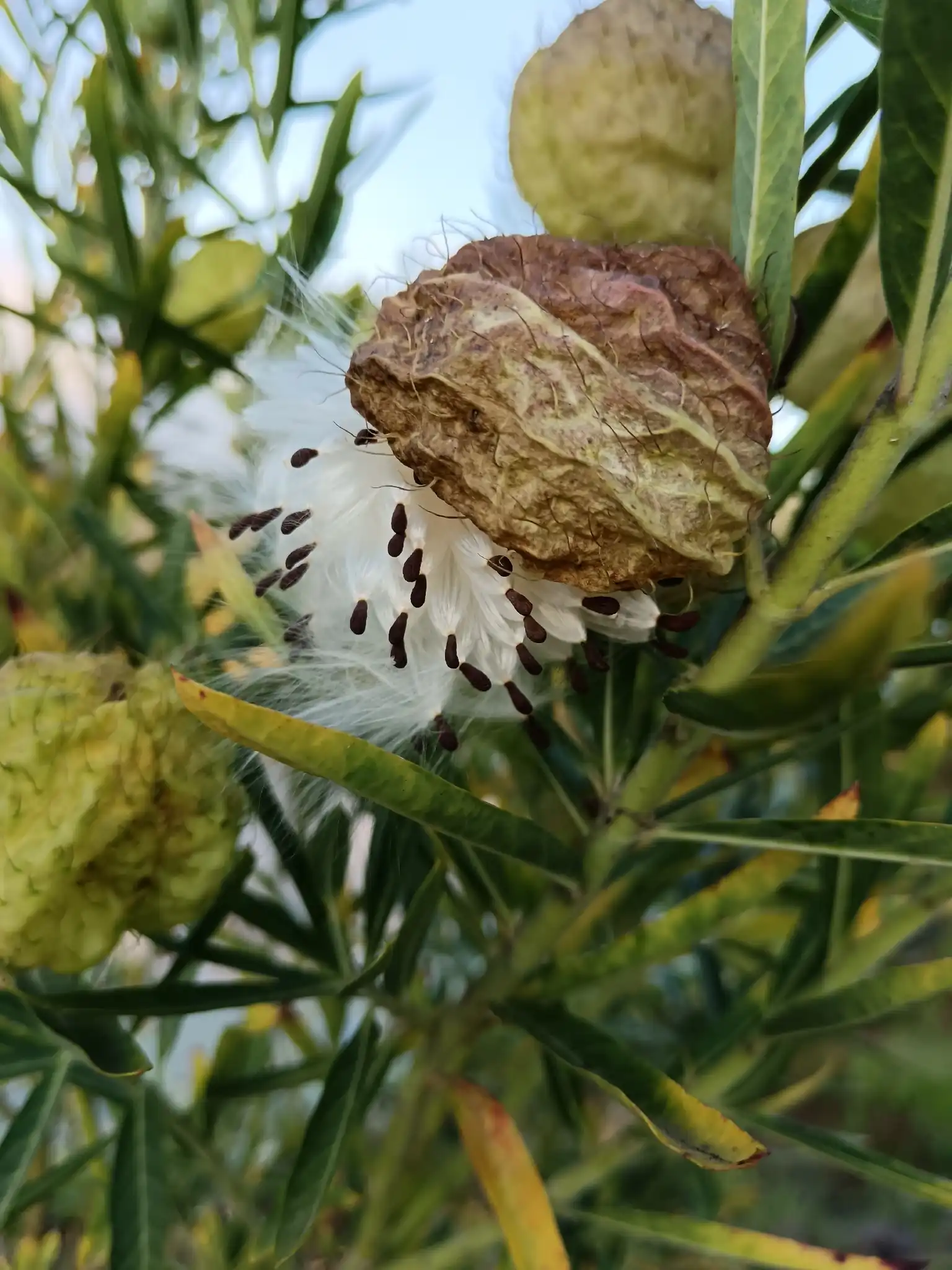
Gomphocarpus physocarpus is an upright, vase-shaped subshrub native to southeastern Africa, characterized by slender, pale green stems and narrow, light green leaves. In late spring and summer, it produces drooping clusters of small white flowers with purple-tinged coronas, followed by large, inflated, translucent green seed pods covered in soft bristles.
This species is highly sought after by conservation gardeners as a critical larval host plant for monarch and queen butterflies. The distinctive, balloon-like seed pods persist into fall, providing unique architectural interest before splitting to release silky-tailed seeds.
Uses & Benefits:
Essentials
At a Glance
Plant Type
Perennial
Height
72"
Width
30"
Light
Full Sun
Zones
8, 9, 10
Water
Low
Humidity
Moderate
Lifespan
Perennial
Native To
Southeastern and tropical Africa
Toxicity
Toxic to humans and animals
Bloom period
Late spring – Autumn
In flower about 7 months of the year
Planting
How to Grow
- Select a planting site in full sun with excellent drainage, such as sandy loam or a raised bed.
- Sow seeds indoors in early spring, or plant nursery-grown plugs directly into the ground after the last frost.
- Water moderately during the establishment period, then reduce frequency to allow the soil to dry between waterings.
- Apply a light top-dressing of compost in spring, avoiding heavy fertilizers that cause weak, leggy growth.
Pro Tip
Avoid planting in heavy clay or poorly drained soils, as excess moisture quickly triggers fatal root rot. Monitor the stems for dense colonies of orange oleander aphids, but refrain from spraying broad-spectrum insecticides to protect feeding monarch caterpillars.
Keep It Thriving
Care Guide
Do
- Plant in full sun to ensure robust stem development
- Prune back hard in late winter to encourage fresh basal growth
- Wear gloves when handling the plant to avoid skin irritation from the milky latex
Don't
- Do not plant in heavy, waterlogged clay soils
- Do not cut back into old, dead, leafless wood lacking dormant buds
- Do not use broad-spectrum insecticides on aphid infestations if monarch caterpillars are present
Seasonal Care Calendar
| Task | Jan | Feb | Mar | Apr | May | Jun | Jul | Aug | Sep | Oct | Nov | Dec |
|---|---|---|---|---|---|---|---|---|---|---|---|---|
| Fertilize | ||||||||||||
| Pest Check | ||||||||||||
| Plant | ||||||||||||
| Prune |
Watch Out For
Pests & Diseases
Common Pests
Common Diseases
In the Garden
Landscape Uses & Companions
Landscape Uses
Companion Plants
Multiply
Propagation Methods
Good to Know
Common Questions
Balloon Plant questions
What zones can Balloon Plant grow in?
Balloon Plant is hardy in USDA Zones 8–10. Inside that range it survives winter in the ground; outside it, grow it as an annual or a container plant you protect.
Is Balloon Plant deer resistant?
Yes — Balloon Plant is rated deer-resistant. Deer typically pass it over, though extreme hunger can override any plant's defenses.
When does Balloon Plant bloom?
Balloon Plant typically blooms in late spring through autumn. Exact timing shifts a week or two with your zone — Sow's bloom calendar maps it to your garden.
Does Balloon Plant need full sun?
Balloon Plant does best in full sun (6+ hours).
Is Balloon Plant drought tolerant?
Yes — once established (usually after the first full season), Balloon Plant handles dry spells with minimal watering. Water deeply its first year to build the root system that makes that possible.
Keep exploring
Explore the genus
Hardy in your zone?
Grow Balloon Plant with confidence
See it in a design of your actual yard, get zone-matched care reminders, and track it season by season in your garden journal.