The Story
Plant Bio
Normanbya normanbyi, the black palm, is a solitary, single-stemmed Australian rainforest palm reaching up to 1,180 inches in height, distinguished by a slender, closely ringed trunk that darkens to near black with age. The crown consists of a pale green crownshaft topped by a plume-like, bushy head of feathery, dark green fronds.
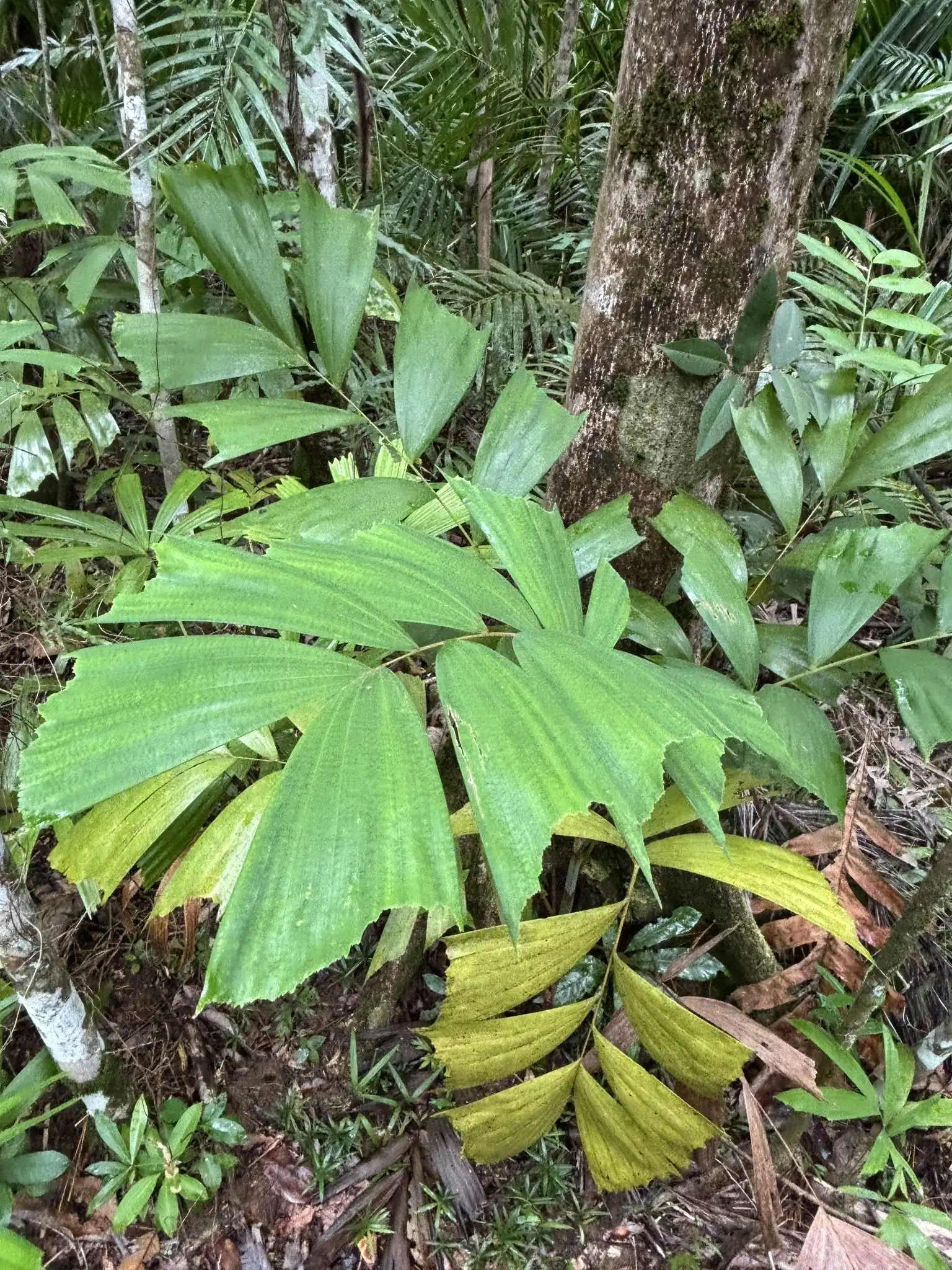
The pinnate fronds feature whorled, crowded leaflets with silvery-grey undersides and abruptly truncated, fishtail-like tips. Young seedlings produce sparse, scrawny foliage and require years of growth to develop the dense, plumose crown characteristic of mature specimens.
Uses & Benefits:
Essentials
At a Glance
Plant Type
Tropical
Height
1180"
Width
157"
Light
Full Sun, Partial Sun, Shade
Zones
9, 10
Water
High
Humidity
High
Lifespan
Multi-decade
Native To
Australia
Toxicity
Non-toxic
Bloom period
Summer – Late summer
In flower about 3 months of the year
Planting
How to Grow
- Select a planting site with deep, friable, nutrient-rich soil that has a slightly acidic pH.
- Provide filtered light or partial shade for young specimens, ensuring protection from intense afternoon sun.
- Dig a hole twice as wide as the root ball and plant at the same depth as the nursery container.
- Water deeply and regularly to maintain constant soil moisture, as this species does not tolerate drying out.
Pro Tip
Plant seedlings in deep shade or filtered light to mimic their natural rainforest understory habitat; exposing young palms to full sun causes severe foliage scorch and stunts development before they can transition to full sun as mature adults.
Keep It Thriving
Care Guide
Do
- Keep the soil consistently moist but well-drained.
- Apply a balanced, slow-release palm fertilizer containing magnesium and manganese during the warm growing season.
- Protect young plants from frost and cold drafts.
Don't
- Never prune into green fronds or old leafless wood, as this reduces palm vigor.
- Avoid planting young seedlings in full, direct sun.
- Do not allow the soil to dry out completely between waterings.
Seasonal Care Calendar
| Task | Jan | Feb | Mar | Apr | May | Jun | Jul | Aug | Sep | Oct | Nov | Dec |
|---|---|---|---|---|---|---|---|---|---|---|---|---|
| Fertilize | ||||||||||||
| Mulch | ||||||||||||
| Pest Check | ||||||||||||
| Prune |
Watch Out For
Pests & Diseases
Common Pests
Common Diseases
In the Garden
Landscape Uses & Companions
Landscape Uses
Companion Plants
Multiply
Propagation Methods
Good to Know
Common Questions
Black Palm questions
What zones can Black Palm grow in?
Black Palm is hardy in USDA Zones 9–10. Inside that range it survives winter in the ground; outside it, grow it as an annual or a container plant you protect.
When does Black Palm bloom?
Black Palm typically blooms in summer through late summer. Exact timing shifts a week or two with your zone — Sow's bloom calendar maps it to your garden.
Does Black Palm need full sun?
Black Palm does best in full sun to part shade. In hot climates, afternoon shade keeps blooms fresher longer.
Keep exploring
Explore the genus
Hardy in your zone?
Grow Black Palm with confidence
See it in a design of your actual yard, get zone-matched care reminders, and track it season by season in your garden journal.