The Story
Plant Bio
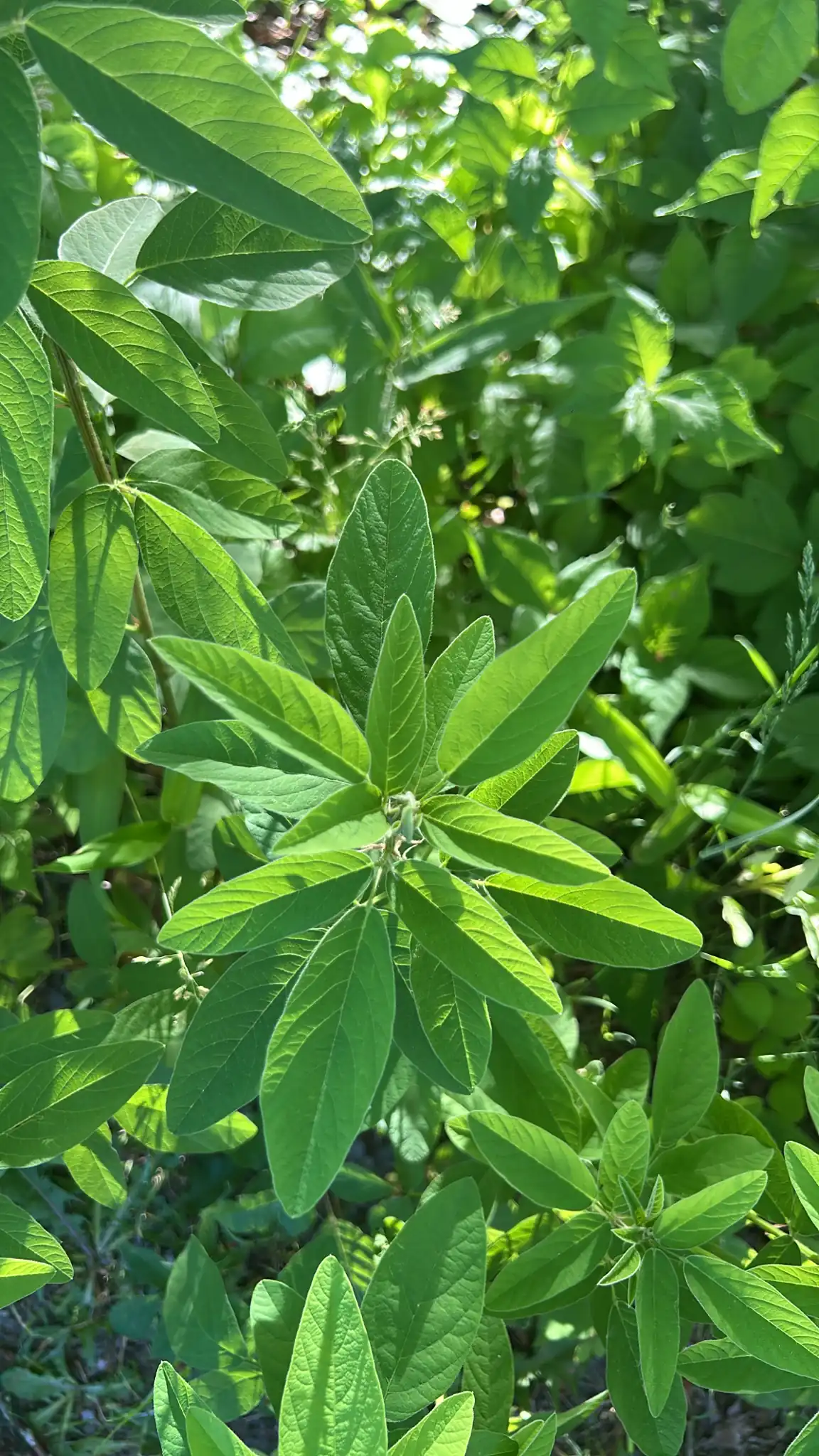
Desmodium canadense, commonly known as showy tick-trefoil, is an erect, bushy herbaceous perennial native to North America that reaches two to five feet in height. Its hairy central stems bear alternate trifoliate leaves and terminal racemes of purplish-pink, pea-like flowers from midsummer into early fall.
The flowers are followed by segmented seed pods covered in hooked bristles that attach readily to animal fur and clothing. Root nodules host symbiotic bacteria that fix atmospheric nitrogen, enabling the plant to thrive in low-fertility soils without added feeding.
Uses & Benefits:
Essentials
At a Glance
Plant Type
Perennial
Height
59"
Width
39"
Light
Full Sun, Partial Sun
Zones
4, 5, 6, 7, 8
Water
Moist, Well-Drained
Humidity
High
Lifespan
Perennial
Native To
North America
Toxicity
Non-toxic
Bloom period
Summer – Fall
In flower about 6 months of the year
Planting
How to Grow
- Select a planting site in full sun to partial shade with moist, reasonable drainage.
- Space plants 24 to 36 inches apart to accommodate their mature spread and bushy form.
- Water regularly during the first season to establish a deep root system.
- Cut dead stems to the ground in late winter before new shoots emerge.
Pro Tip
Plant in lean to moderately fertile soil; rich soils combined with nitrogen runoff cause stems to grow weak and flop over.
Keep It Thriving
Care Guide
Do
- Plant away from footpaths to avoid hitchhiking seed pods on clothing.
- Cut spent, dead stems back to ground level in early spring.
- Maintain evenly moist soil conditions during root establishment.
Don't
- Do not apply high-nitrogen fertilizers, which cause weak and floppy stem growth.
- Do not cut heavily into old woody basal tissue during active summer growth.
- Do not plant in overly enriched soil beds where plants will lose their erect structure.
Seasonal Care Calendar
| Task | Jan | Feb | Mar | Apr | May | Jun | Jul | Aug | Sep | Oct | Nov | Dec |
|---|---|---|---|---|---|---|---|---|---|---|---|---|
| Pest Check | ||||||||||||
| Plant | ||||||||||||
| Propagate | ||||||||||||
| Prune | ||||||||||||
| Spring Cleanup |
Watch Out For
Pests & Diseases
Common Pests
Common Diseases
In the Garden
Landscape Uses & Companions
Landscape Uses
Companion Plants
Multiply
Propagation Methods
Good to Know
Common Questions
Showy Tick-Trefoil questions
What zones can Showy Tick-Trefoil grow in?
Showy Tick-Trefoil is hardy in USDA Zones 4–8. Inside that range it survives winter in the ground; outside it, grow it as an annual or a container plant you protect.
Is Showy Tick-Trefoil deer resistant?
Not reliably. Deer may browse Showy Tick-Trefoil, especially tender spring growth — plan on repellents or fencing where pressure is high.
When does Showy Tick-Trefoil bloom?
Showy Tick-Trefoil typically blooms in summer through fall. Exact timing shifts a week or two with your zone — Sow's bloom calendar maps it to your garden.
Does Showy Tick-Trefoil need full sun?
Showy Tick-Trefoil does best in full sun to part shade. In hot climates, afternoon shade keeps blooms fresher longer.
Keep exploring
Explore the genus
Hardy in your zone?
Grow Showy Tick-Trefoil with confidence
See it in a design of your actual yard, get zone-matched care reminders, and track it season by season in your garden journal.