
The Story
Plant Bio
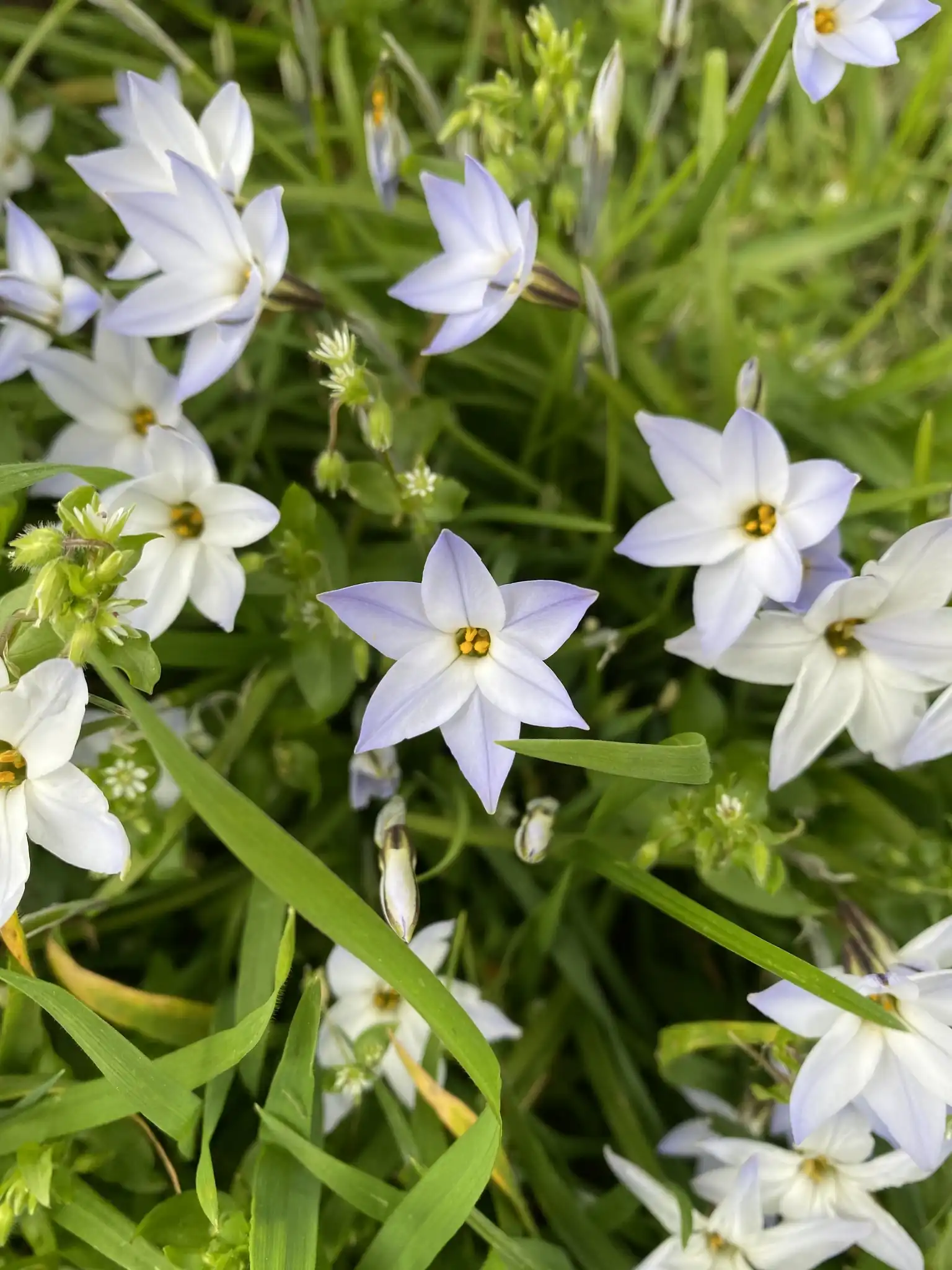
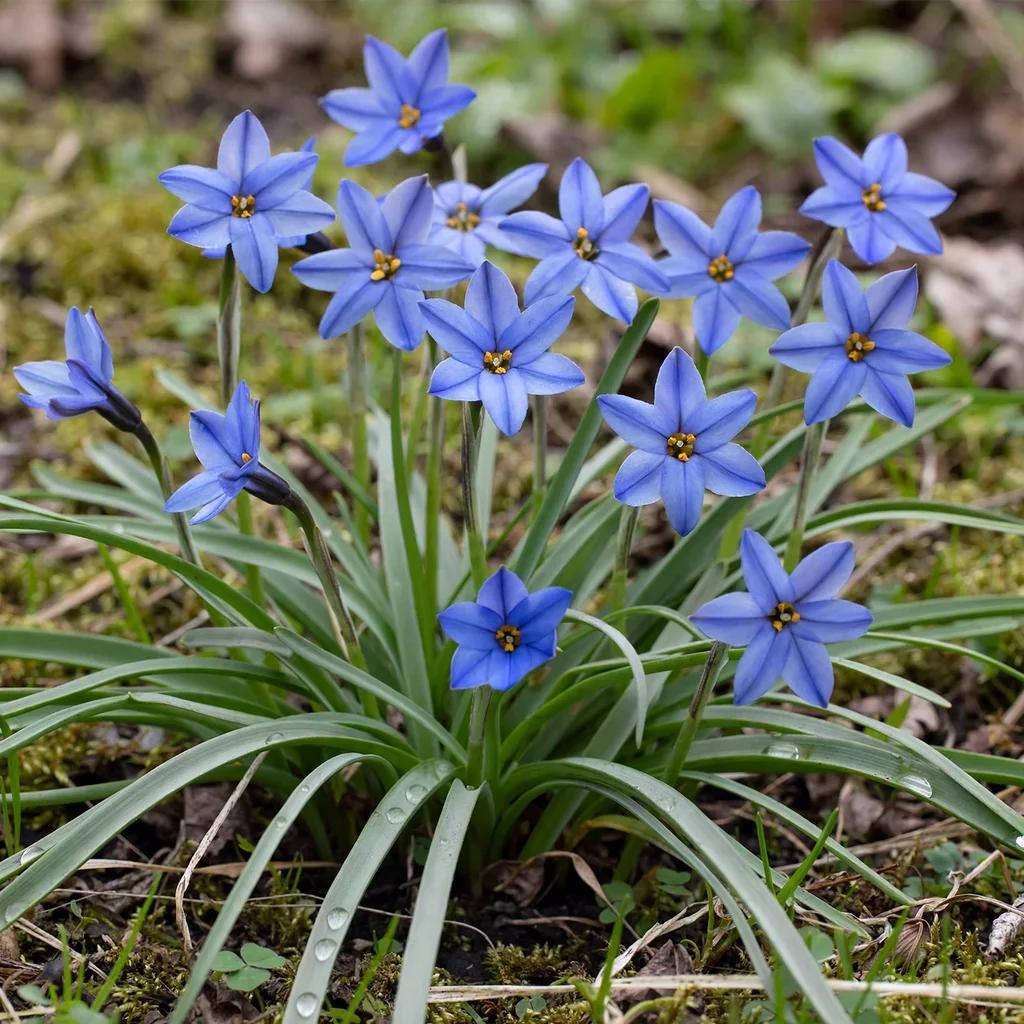
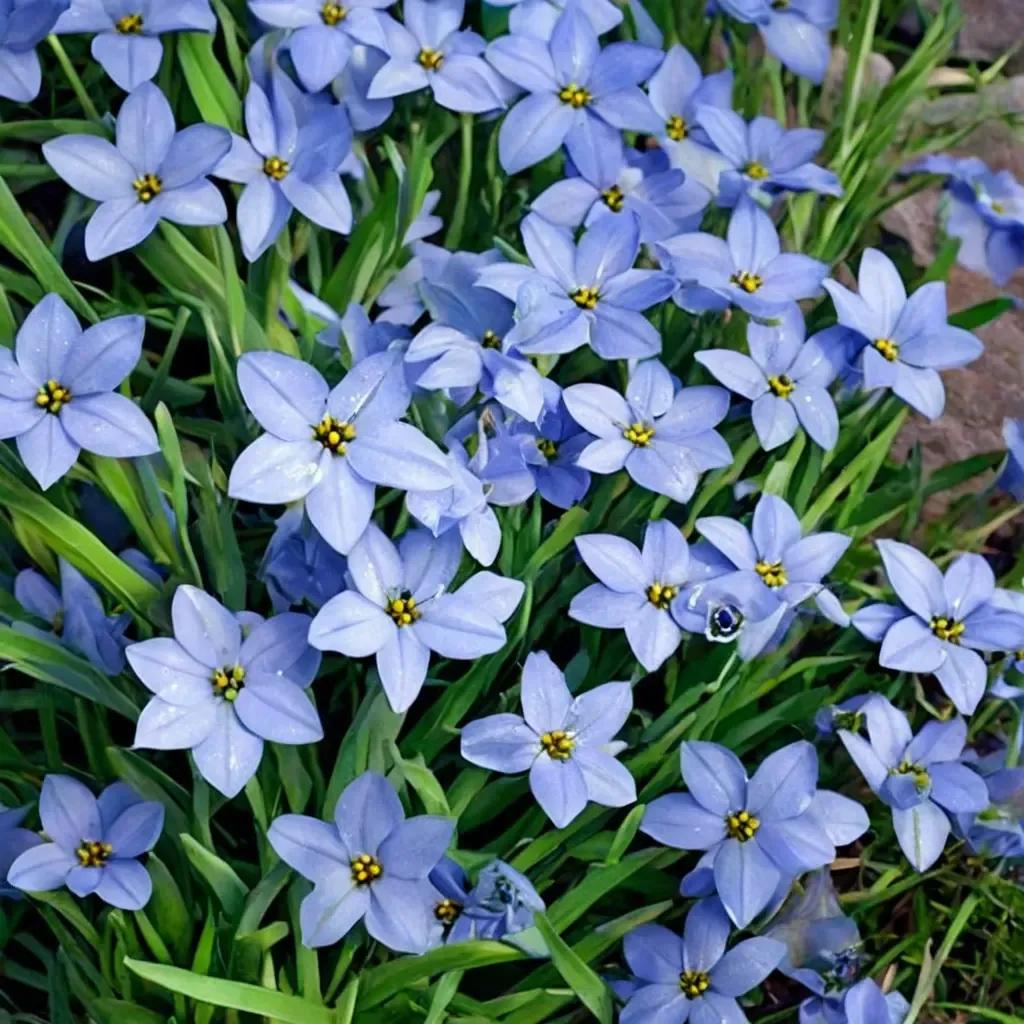
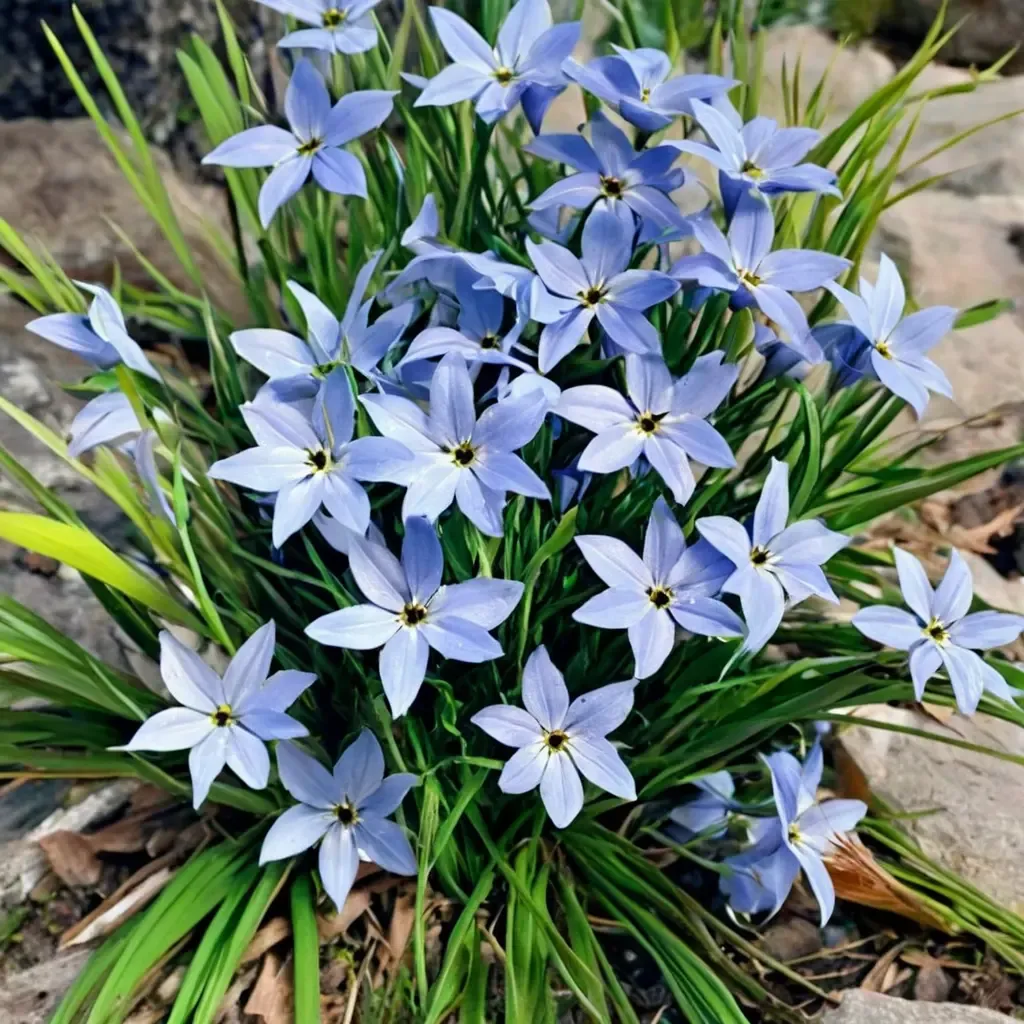
Ipheion uniflorum, spring starflower, is a small clumping bulb from Argentina and Uruguay, three to six inches high in leaf. Narrow grass-like bluish-green leaves smell of garlic when crushed, and solitary star-shaped flowers in pale blue, white or lilac open just above them in late winter and early spring, each with a faint honey scent.
The leaves smell distinctly of garlic when bruised while the flowers smell of honey, an odd combination that makes it unmistakable. It naturalises steadily in grass and under deciduous trees without becoming a nuisance, and the foliage appears in autumn, well ahead of the flowers, which is normal rather than a sign of confusion.
Uses & Benefits:
Essentials
At a Glance
Plant Type
Bulb Corm Tuber
Height
6"
Width
3"
Light
Full Sun, Partial Sun
Zones
5, 6, 7, 8, 9
Water
Low
Humidity
Low
Lifespan
Perennial
Native To
Argentina and Uruguay
Toxicity
Non-toxic
Planting
How to Grow
- Plant bulbs three inches deep in autumn.
- Choose full sun or partial shade with free drainage.
- Expect foliage to appear in autumn, before flowering.
- Leave the leaves to die back naturally after flowering.
- Let it naturalise rather than lifting it each year.
- Divide congested clumps once dormant in summer.
Pro Tip
The leaves come up in autumn and flowers follow months later — early foliage is normal and does not mean the bulb is confused.
Keep It Thriving
Care Guide
Do
- Plant bulbs in autumn 🍂
- Let it naturalise in grass 🌾
- Leave foliage to die back naturally 🍃
- Divide clumps when dormant 🔁
Don't
- Cut the leaves off green ❌
- Plant it in heavy wet soil ❌
- Worry about autumn foliage ❌
Seasonal Care Calendar
| Task | Jan | Feb | Mar | Apr | May | Jun | Jul | Aug | Sep | Oct | Nov | Dec |
|---|---|---|---|---|---|---|---|---|---|---|---|---|
| Divide | ||||||||||||
| Plant |
Watch Out For
Pests & Diseases
Common Pests
Common Diseases
In the Garden
Landscape Uses & Companions
Landscape Uses
Companion Plants
Multiply
Propagation Methods
Good to Know
Common Questions
Spring Starflower questions
What zones can Spring Starflower grow in?
Spring Starflower is hardy in USDA Zones 5–9. Inside that range it survives winter in the ground; outside it, grow it as an annual or a container plant you protect.
Is Spring Starflower deer resistant?
Yes — Spring Starflower is rated deer-resistant. Deer typically pass it over, though extreme hunger can override any plant's defenses.
When does Spring Starflower bloom?
Spring Starflower typically blooms in late winter to early spring through mid-spring. Exact timing shifts a week or two with your zone — Sow's bloom calendar maps it to your garden.
Does Spring Starflower need full sun?
Spring Starflower does best in full sun to part shade. In hot climates, afternoon shade keeps blooms fresher longer.
Is Spring Starflower drought tolerant?
Yes — once established (usually after the first full season), Spring Starflower handles dry spells with minimal watering. Water deeply its first year to build the root system that makes that possible.
More Ipheion to compare
Keep exploring
Explore the genus
Hardy in your zone?
Grow Spring Starflower with confidence
See it in a design of your actual yard, get zone-matched care reminders, and track it season by season in your garden journal.