
The Story
Plant Bio
Mandevilla splendens is an evergreen, woody-stemmed twining vine native to Brazil that climbs by wrapping its vigorous stems around supportive structures. The foliage consists of large, glossy, dark green leaves up to eight inches long with prominent, deeply impressed veins.
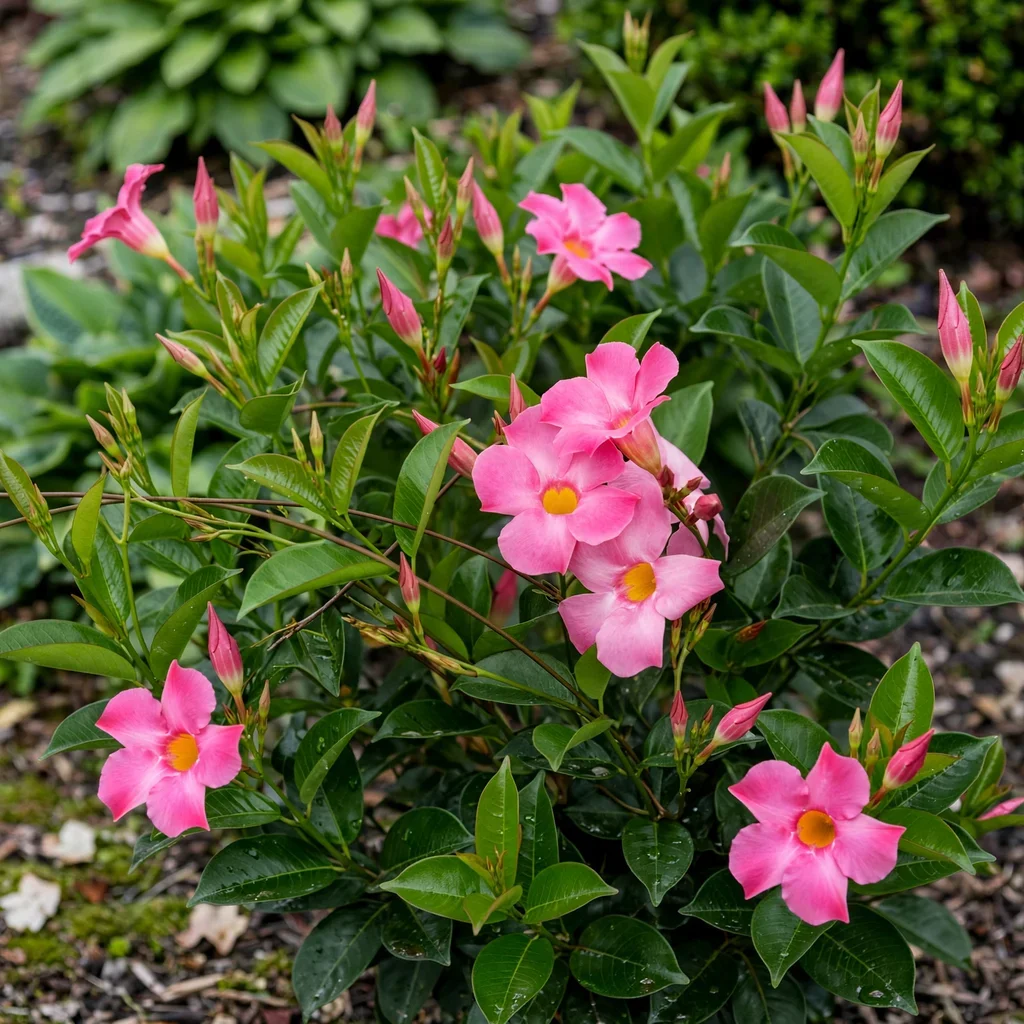
This species is distinguished by its large, trumpet-shaped flowers that open pale rose-pink with a yellow throat and reach up to four inches across. The blooms are produced in axillary clusters of three to five from late spring through early fall.
Uses & Benefits:
Essentials
At a Glance
Plant Type
Vine
Height
144"
Width
48"
Light
Full Sun, Partial Sun
Zones
10
Water
Moderate
Humidity
High
Lifespan
Perennial (tender)
Native To
Brazil
Toxicity
Mildly toxic if ingested; sap is a skin irritant
Bloom period
Late spring – Fall
In flower about 7 months of the year
Planting
How to Grow
- Plant in rich, organic-rich sandy loam with excellent drainage in a location receiving at least six hours of direct sunlight daily.
- Provide a sturdy trellis, arbor, or obelisk for the twining stems to climb.
- Water regularly during the active growing season to keep the soil consistently moist but never waterlogged.
- Feed every two to three weeks with a balanced water-soluble fertilizer during spring and summer to sustain heavy blooming.
- Move container-grown plants indoors to a warm, bright room before the first autumn frost, reducing water significantly during winter dormancy.
Pro Tip
Avoid pruning hard into old, leafless, woody stems, as the plant lacks the latent buds to regenerate from mature wood.
Keep It Thriving
Care Guide
Do
- Wear gloves when pruning to protect skin from the irritating milky white latex sap.
- Provide afternoon shade in regions with extremely hot summer climates to prevent leaf scorch.
- Ensure the planting container has ample drainage holes to prevent root rot.
Don't
- Do not allow the roots to sit in standing water or waterlogged soil.
- Do not fertilize during the fall and winter dormancy period.
- Do not cut back the main structural framework into old, bare wood.
Seasonal Care Calendar
| Task | Jan | Feb | Mar | Apr | May | Jun | Jul | Aug | Sep | Oct | Nov | Dec |
|---|---|---|---|---|---|---|---|---|---|---|---|---|
| Fertilize | ||||||||||||
| Pest Check | ||||||||||||
| Prune | ||||||||||||
| Winter Prep |
Watch Out For
Pests & Diseases
Common Pests
Common Diseases
In the Garden
Landscape Uses & Companions
Landscape Uses
Companion Plants
Multiply
Propagation Methods
Good to Know
Common Questions
Shining Mandevilla questions
What zones can Shining Mandevilla grow in?
Shining Mandevilla is hardy in USDA Zone 10. Inside that range it survives winter in the ground; outside it, grow it as an annual or a container plant you protect.
When does Shining Mandevilla bloom?
Shining Mandevilla typically blooms in late spring through fall. Exact timing shifts a week or two with your zone — Sow's bloom calendar maps it to your garden.
Does Shining Mandevilla need full sun?
Shining Mandevilla does best in full sun to part shade. In hot climates, afternoon shade keeps blooms fresher longer.
Is Shining Mandevilla drought tolerant?
Yes — once established (usually after the first full season), Shining Mandevilla handles dry spells with minimal watering. Water deeply its first year to build the root system that makes that possible.
More Mandevilla to compare
Keep exploring
Explore the genus
Hardy in your zone?
Grow Shining Mandevilla with confidence
See it in a design of your actual yard, get zone-matched care reminders, and track it season by season in your garden journal.