The Story
Plant Bio
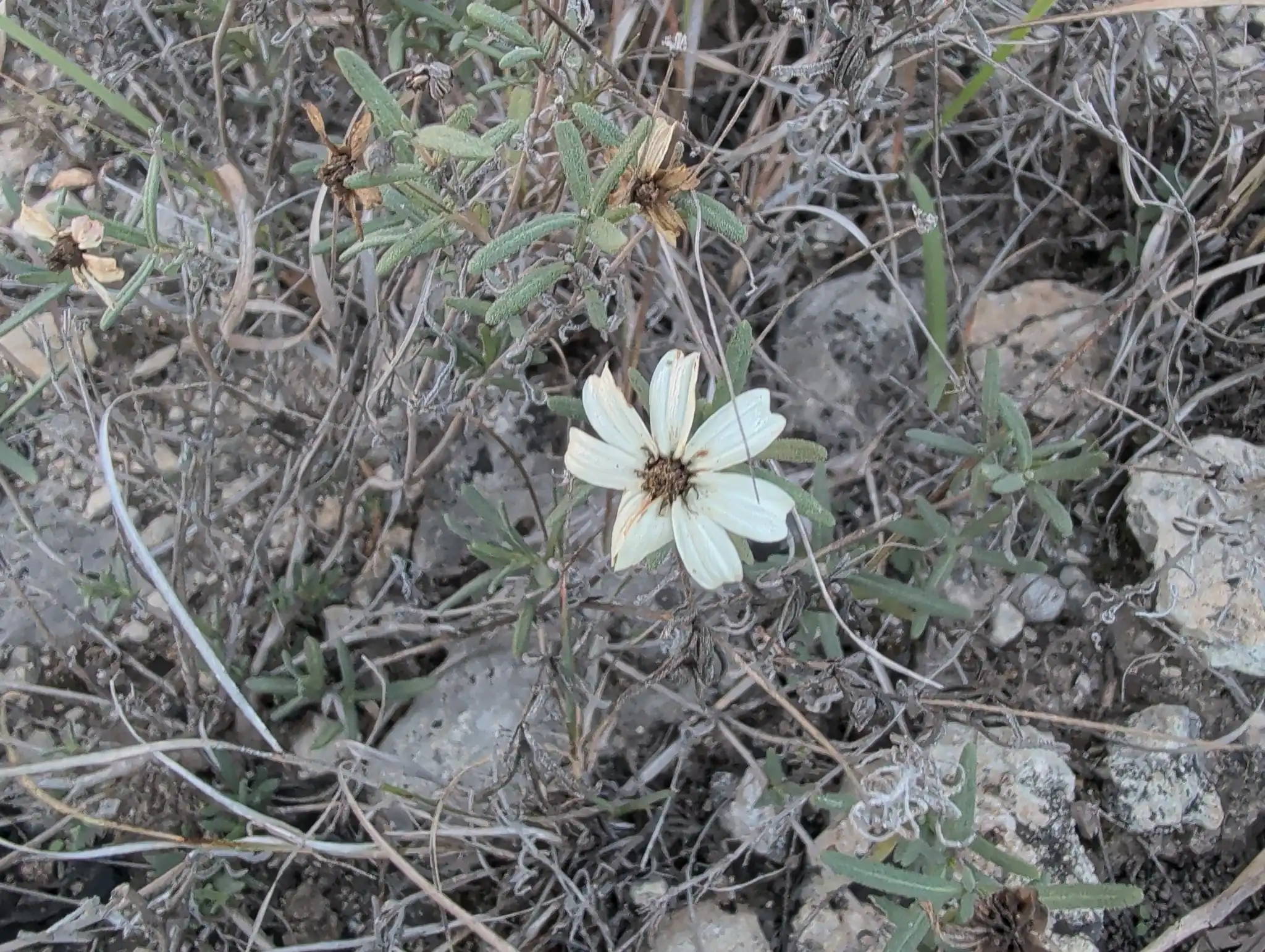
Melampodium leucanthum, known as blackfoot daisy, is a low-growing, mounding perennial herb native to the dry limestone slopes and high plains of North America. It forms a neat, cushion-like mound of narrow, gray-green leaves covered in rough hairs, staying evergreen in milder climates.
The solitary, daisy-like flower heads feature white ray florets surrounding yellow central disks that emit a distinct honey scent. Each flower head is subtended by a characteristic dark, foot-shaped bract at the base.
Uses & Benefits:
Essentials
At a Glance
Plant Type
Perennial
Height
12"
Width
16"
Light
Full Sun
Zones
4, 5, 6, 7, 8, 9
Water
Low
Humidity
Low to Moderate
Lifespan
Short-lived perennial
Native To
North America
Toxicity
Non-toxic
Bloom period
Spring – Fall
In flower about 9 months of the year
Planting
How to Grow
- Select a site in full sun with gravelly, sandy, or rocky soil that drains rapidly.
- Dig a hole twice the width of the root ball but no deeper, ensuring the crown sits slightly above the surrounding soil level.
- Backfill with native soil without adding compost, manure, or other organic amendments.
- Water sparingly to establish, then withhold supplemental irrigation except during extreme, prolonged droughts.
Pro Tip
Plant in lean, gravelly, highly alkaline soil with sharp, uncompromising drainage; excessive organic matter or summer irrigation triggers sudden root collapse.
Keep It Thriving
Care Guide
Do
- Grow in lean, nutrient-poor soils to maintain a compact, tight growth habit.
- Ensure exceptional drainage, particularly during the wet winter months.
- Shear the plant back by one-third to one-half in late winter to shape the mound.
Don't
- Do not add organic compost or heavy fertilizers to the planting hole.
- Do not overwater, as damp soils quickly induce fatal root and stem rot.
- Do not plant in heavy clay or low-lying areas where water collects.
Seasonal Care Calendar
| Task | Jan | Feb | Mar | Apr | May | Jun | Jul | Aug | Sep | Oct | Nov | Dec |
|---|---|---|---|---|---|---|---|---|---|---|---|---|
| Pest Check | ||||||||||||
| Propagate | ||||||||||||
| Prune | ||||||||||||
| Spring Cleanup |
Watch Out For
Pests & Diseases
Common Pests
Common Diseases
In the Garden
Landscape Uses & Companions
Landscape Uses
Companion Plants
Multiply
Propagation Methods
Good to Know
Common Questions
Blackfoot Daisy questions
What zones can Blackfoot Daisy grow in?
Blackfoot Daisy is hardy in USDA Zones 4–9. Inside that range it survives winter in the ground; outside it, grow it as an annual or a container plant you protect.
Is Blackfoot Daisy deer resistant?
Yes — Blackfoot Daisy is rated deer-resistant. Deer typically pass it over, though extreme hunger can override any plant's defenses.
When does Blackfoot Daisy bloom?
Blackfoot Daisy typically blooms in spring through fall. Exact timing shifts a week or two with your zone — Sow's bloom calendar maps it to your garden.
Does Blackfoot Daisy need full sun?
Blackfoot Daisy does best in full sun (6+ hours).
Is Blackfoot Daisy drought tolerant?
Yes — once established (usually after the first full season), Blackfoot Daisy handles dry spells with minimal watering. Water deeply its first year to build the root system that makes that possible.
More Melampodium to compare
Keep exploring
Explore the genus
Grow Blackfoot Daisy with confidence
See it in a design of your actual yard, get zone-matched care reminders, and track it season by season in your garden journal.