The Story
Plant Bio
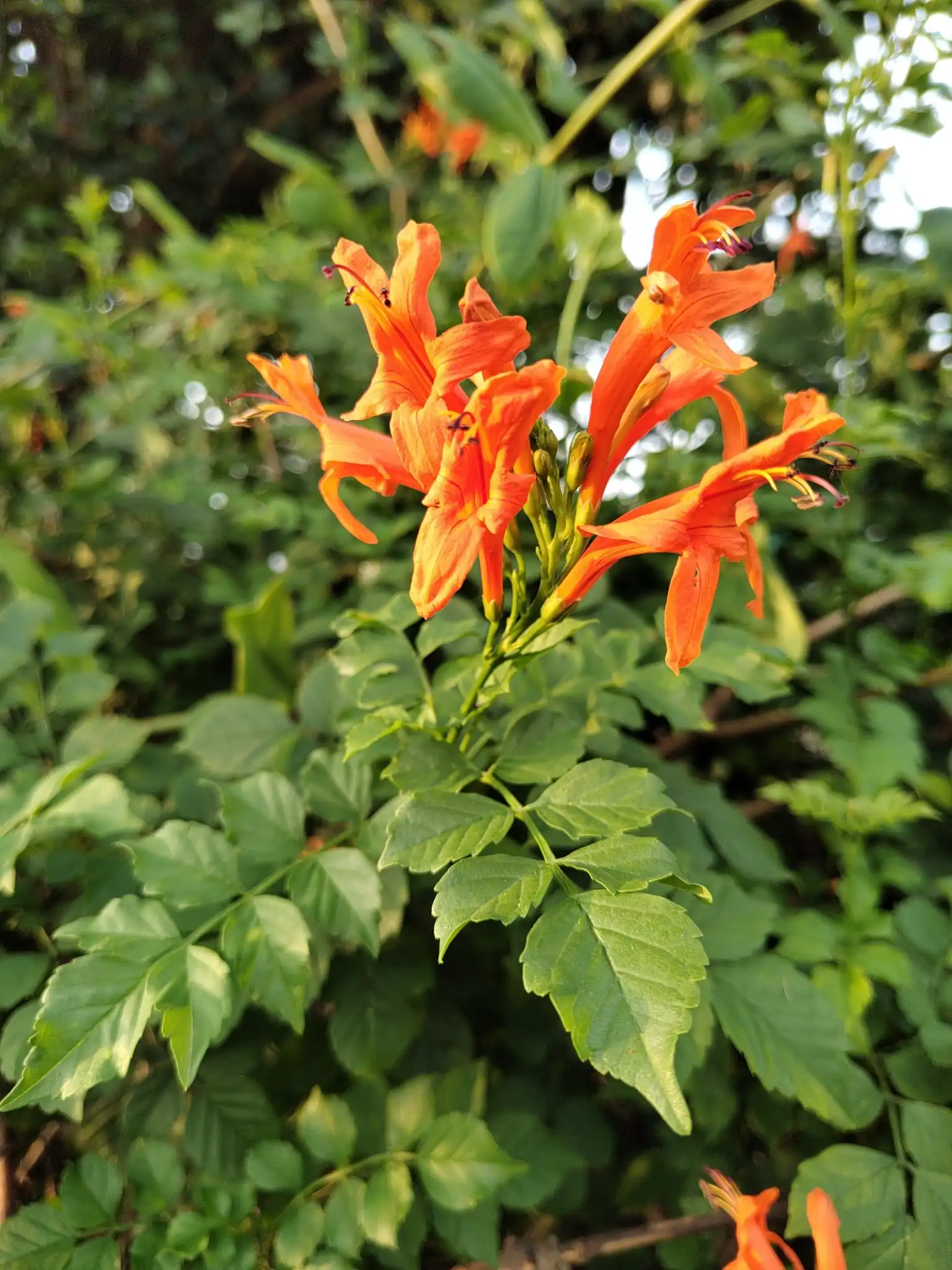
Tecoma capensis, the Cape honeysuckle, is a vigorous, scrambling evergreen shrub native to southern Africa that produces terminal clusters of tubular, two-lipped flowers from fall through spring. The arching, multi-stemmed branches carry glossy, dark green compound leaves with sharply toothed leaflets that emerge bright green.
While it naturally forms a dense, sprawling mound up to ten feet tall and wide, its flexible stems can climb or scramble up to twenty feet if given physical support. The nectar-rich blossoms range in color from bright red and orange to salmon or yellow, depending on the selection.
Uses & Benefits:
Essentials
At a Glance
Plant Type
Shrub
Height
118"
Width
118"
Light
Full Sun, Partial Sun
Zones
9, 10
Water
Low to Moderate
Humidity
High
Lifespan
Perennial
Native To
Africa (South Africa, Eswatini, southern Mozambique)
Toxicity
Non-toxic
Bloom period
Autumn – Spring
In flower about 9 months of the year
Marketplace
Where to Buy
Shipping costs Year-round shipping Free shipping
Planting
How to Grow
- Select a planting site in full sun to partial shade with excellent drainage, as the roots will rot in waterlogged soil.
- Dig a hole twice as wide as the root ball and backfill with native soil, ensuring the plant sits at the same depth as it did in the container.
- Water deeply to settle the soil, then establish a regular watering schedule until the root system is fully established.
- Provide a sturdy trellis, fence, or wall if training the plant to climb, tying the scrambling stems securely as they grow.
Pro Tip
Prune the stems back hard annually immediately after the spring flowering ends; cutting back to active buds maintains a dense, bushy form and prevents the plant from becoming a tangled, bare-bottomed thicket.
Keep It Thriving
Care Guide
Do
- Prune back hard every spring after flowering to maintain a compact, bushy shape.
- Apply a light application of balanced, slow-release fertilizer in early spring.
- Ensure the soil drains rapidly to prevent root rot.
Don't
- Do not overwater or plant in low-lying areas where water pools.
- Avoid heavy applications of high-nitrogen fertilizers, which stimulate foliage at the expense of flowers.
- Do not shear the outer foliage repeatedly, which removes the terminal flower buds.
Seasonal Care Calendar
| Task | Jan | Feb | Mar | Apr | May | Jun | Jul | Aug | Sep | Oct | Nov | Dec |
|---|---|---|---|---|---|---|---|---|---|---|---|---|
| Fertilize | ||||||||||||
| Pest Check | ||||||||||||
| Propagate | ||||||||||||
| Prune |
Watch Out For
Pests & Diseases
Common Pests
Common Diseases
In the Garden
Landscape Uses & Companions
Landscape Uses
Companion Plants
Multiply
Propagation Methods
Good to Know
Common Questions
Cape Honeysuckle questions
What zones can Cape Honeysuckle grow in?
Cape Honeysuckle is hardy in USDA Zones 9–10. Inside that range it survives winter in the ground; outside it, grow it as an annual or a container plant you protect.
When does Cape Honeysuckle bloom?
Cape Honeysuckle typically blooms in autumn through spring. Exact timing shifts a week or two with your zone — Sow's bloom calendar maps it to your garden.
Does Cape Honeysuckle need full sun?
Cape Honeysuckle does best in full sun to part shade. In hot climates, afternoon shade keeps blooms fresher longer.
Is Cape Honeysuckle drought tolerant?
Yes — once established (usually after the first full season), Cape Honeysuckle handles dry spells with minimal watering. Water deeply its first year to build the root system that makes that possible.
More Tecoma to compare
Keep exploring
Explore the genus
Hardy in your zone?
Grow Cape Honeysuckle with confidence
See it in a design of your actual yard, get zone-matched care reminders, and track it season by season in your garden journal.