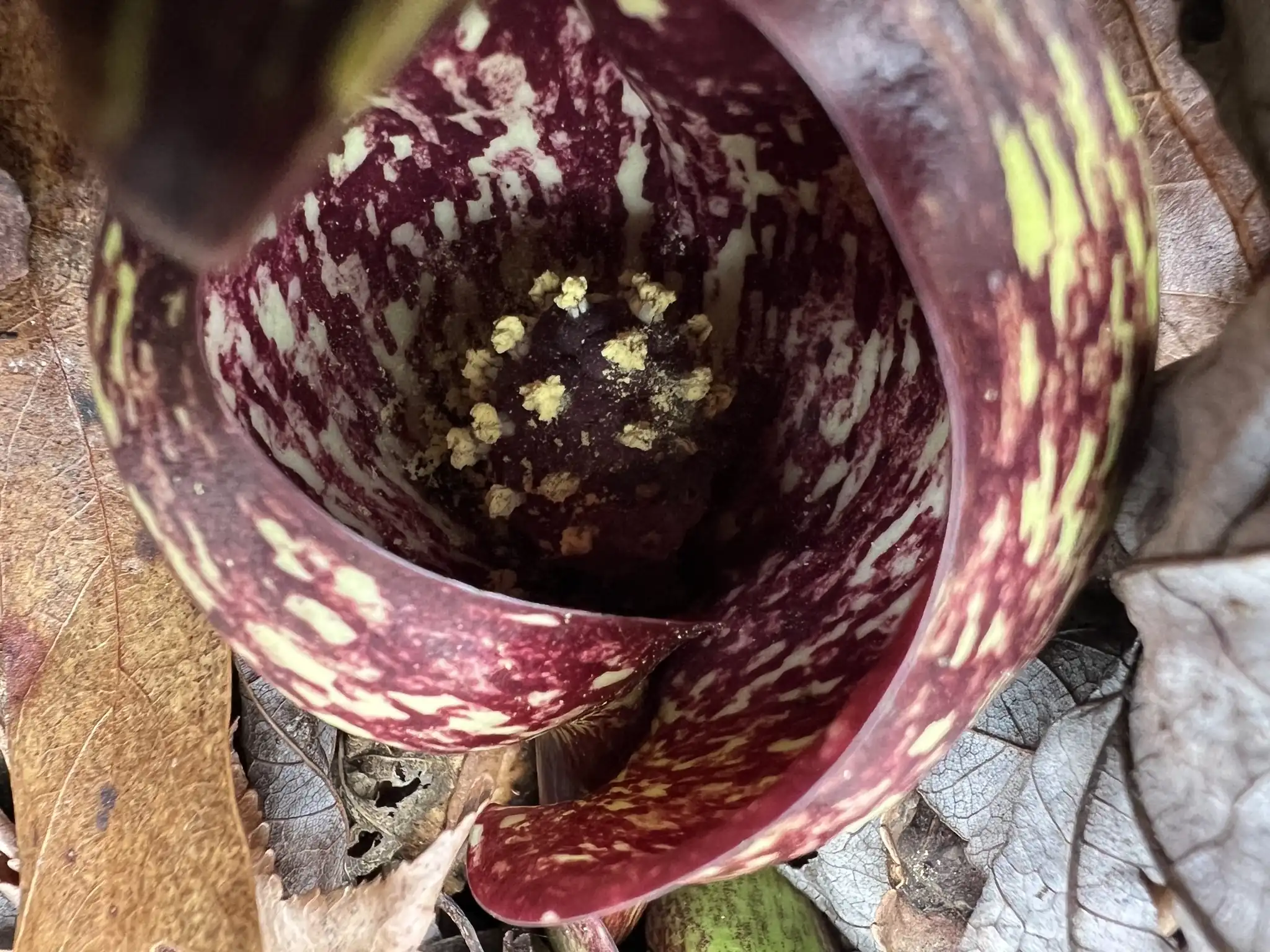
The Story
Plant Bio
Symplocarpus foetidus is a clump-forming herbaceous perennial native to wet woodlands, swamps, and mucky seeps of eastern North America and northeastern Asia. The plant grows from a thick, vertical underground rhizome anchored by contractile roots that pull the crown deeper into the mud each year.
This species is notable for its thermogenic late-winter blooms, which generate metabolic heat to melt surrounding snow and ice. The emerging foliage consists of bright green, tightly furled spires that expand into massive, heavily veined, heart-shaped leaves before dying back completely by late summer.
Uses & Benefits:
Essentials
At a Glance
Plant Type
Perennial
Height
35"
Width
35"
Light
Partial Sun, Shade
Zones
4, 5, 6, 7, 8
Water
High
Humidity
High
Lifespan
Perennial
Native To
North America, Asia
Toxicity
Toxic if ingested, skin irritant
Bloom period
Late winter – Early spring
In flower about 2 months of the year
Planting
How to Grow
- Select a site in full to partial shade with consistently wet, organic, muck-like soil.
- Plant container-grown specimens or bare-root rhizomes in fall or early spring, burying the crown just below the soil surface.
- Maintain constant moisture, ensuring the soil never dries out even during summer dormancy.
- Allow the large leaves to wither and decay naturally in late summer to return nutrients to the rhizome.
Pro Tip
Avoid attempting to divide established clumps; the deep, thick contractile rhizomes are anchored firmly in heavy muck and release a highly offensive odor when severed.
Keep It Thriving
Care Guide
Do
- Plant in waterlogged, swampy, or poorly drained soils.
- Wear gloves when handling bruised tissues to prevent skin irritation from calcium oxalate crystals.
- Sow fresh seeds immediately upon harvest in autumn in damp, peaty soil.
Don't
- Do not plant in dry, well-drained, or drought-prone garden beds.
- Do not cut back green leaves prematurely before they naturally wither in late summer.
- Do not attempt to divide mature plants due to the deep, fragile, and foul-smelling root system.
Seasonal Care Calendar
| Task | Jan | Feb | Mar | Apr | May | Jun | Jul | Aug | Sep | Oct | Nov | Dec |
|---|---|---|---|---|---|---|---|---|---|---|---|---|
| Pest Check | ||||||||||||
| Plant | ||||||||||||
| Propagate | ||||||||||||
| Spring Cleanup | ||||||||||||
| Winter Prep |
Watch Out For
Pests & Diseases
Common Pests
Common Diseases
In the Garden
Landscape Uses & Companions
Landscape Uses
Multiply
Propagation Methods
Good to Know
Common Questions
Eastern Skunk Cabbage questions
What zones can Eastern Skunk Cabbage grow in?
Eastern Skunk Cabbage is hardy in USDA Zones 4–8. Inside that range it survives winter in the ground; outside it, grow it as an annual or a container plant you protect.
Is Eastern Skunk Cabbage deer resistant?
Yes — Eastern Skunk Cabbage is rated deer-resistant. Deer typically pass it over, though extreme hunger can override any plant's defenses.
When does Eastern Skunk Cabbage bloom?
Eastern Skunk Cabbage typically blooms in late winter through early spring. Exact timing shifts a week or two with your zone — Sow's bloom calendar maps it to your garden.
Does Eastern Skunk Cabbage need full sun?
Eastern Skunk Cabbage does best in part shade.
Keep exploring
Explore the genus
Hardy in your zone?
Grow Eastern Skunk Cabbage with confidence
See it in a design of your actual yard, get zone-matched care reminders, and track it season by season in your garden journal.