The Story
Plant Bio
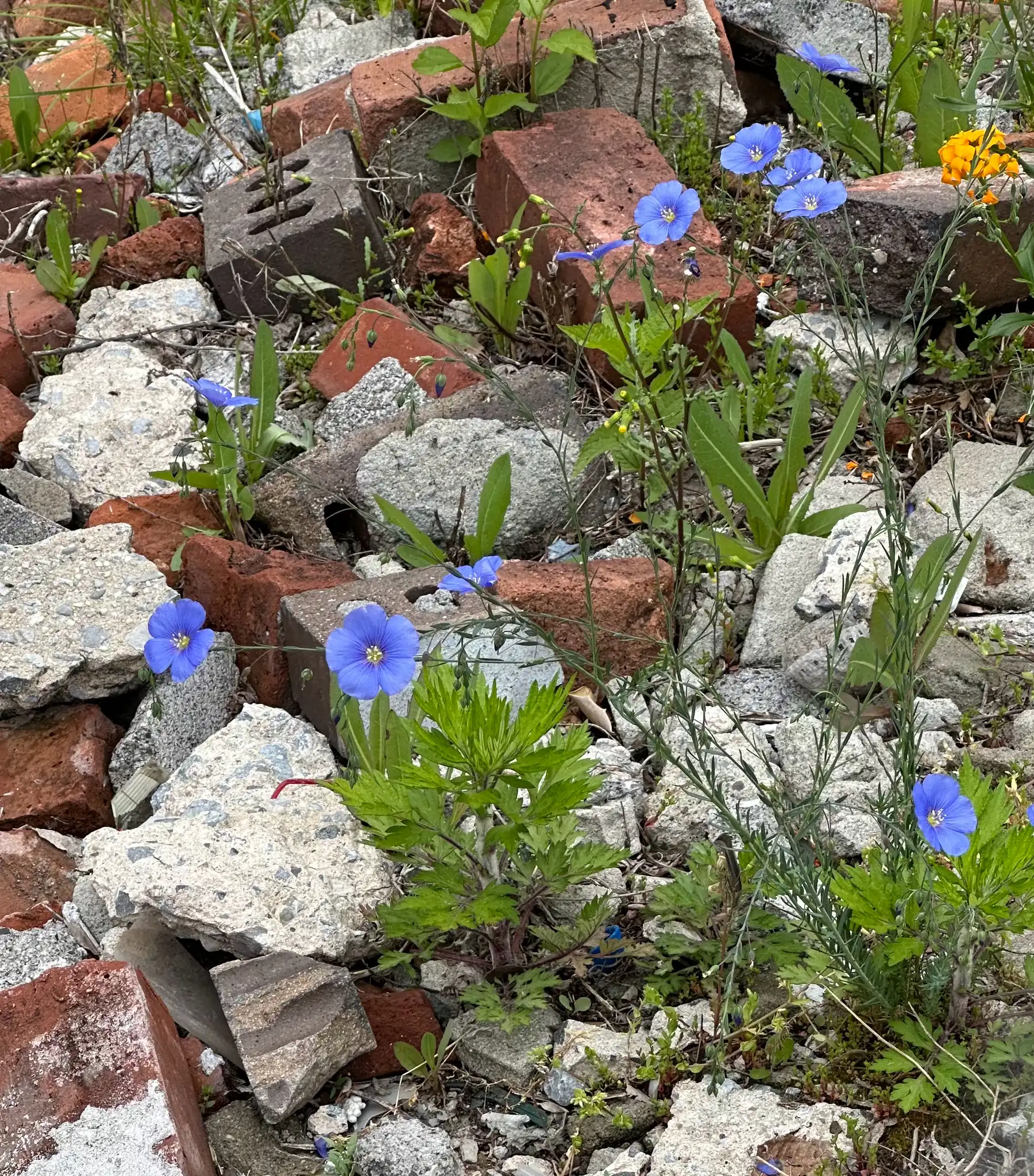
Linum perenne, the perennial flax, is a short-lived herbaceous perennial forming a delicate, upright-to-sprawling mound of thin, wiry stems and narrow, blue-green foliage. In late spring and summer, it produces loose clusters of saucer-shaped, sky-blue flowers that open for a single day, typically dropping their petals by afternoon.
This Eurasian species is highly drought-tolerant once established and thrives in lean, sharply drained soils where other perennials struggle. It is distinguished from similar species by its nodding buds and delicate, tufted growth habit that freely self-seeds to perpetuate its presence in the garden.
Uses & Benefits:
Essentials
At a Glance
Plant Type
Perennial
Height
24"
Width
12"
Light
Full Sun, Partial Sun
Zones
5, 6, 7, 8
Water
Low
Humidity
Moderate
Lifespan
Short-lived perennial
Native To
Eurasia
Toxicity
Toxic to pets and livestock
Bloom period
Late spring – Summer
In flower about 4 months of the year
Planting
How to Grow
- Select a planting site in full sun to partial shade with light, sandy, or rocky soil.
- Ensure the soil has excellent drainage, as heavy clay or waterlogged conditions cause root rot.
- Sow seeds directly into the garden in spring or fall, pressing them lightly into the soil surface.
- Water moderately until seedlings establish, then reduce watering to rely on natural rainfall.
Pro Tip
Avoid dividing established clumps, as the sparse, sensitive taproot system rarely survives the disturbance; instead, allow some seed heads to mature and drop naturally to maintain the planting.
Keep It Thriving
Care Guide
Do
- Cut stems back by half after the main bloom period to encourage a secondary flush of flowers.
- Allow some spent flowers to go to seed to help the short-lived plants self-perpetuate.
- Grow in lean, unfertilized soil to maintain strong, upright stems.
Don't
- Do not apply heavy fertilizers, which cause weak, floppy growth and shorten the plant's lifespan.
- Do not plant in heavy clay or poorly drained areas where winter wet will rot the roots.
- Do not attempt to divide mature clumps, as root damage is usually fatal.
Seasonal Care Calendar
| Task | Jan | Feb | Mar | Apr | May | Jun | Jul | Aug | Sep | Oct | Nov | Dec |
|---|---|---|---|---|---|---|---|---|---|---|---|---|
| Pest Check | ||||||||||||
| Plant | ||||||||||||
| Propagate | ||||||||||||
| Prune |
Watch Out For
Pests & Diseases
Common Pests
Common Diseases
In the Garden
Landscape Uses & Companions
Landscape Uses
Multiply
Propagation Methods
Good to Know
Common Questions
Perennial Flax questions
What zones can Perennial Flax grow in?
Perennial Flax is hardy in USDA Zones 5–8. Inside that range it survives winter in the ground; outside it, grow it as an annual or a container plant you protect.
When does Perennial Flax bloom?
Perennial Flax typically blooms in late spring through summer. Exact timing shifts a week or two with your zone — Sow's bloom calendar maps it to your garden.
Does Perennial Flax need full sun?
Perennial Flax does best in full sun to part shade. In hot climates, afternoon shade keeps blooms fresher longer.
Is Perennial Flax drought tolerant?
Yes — once established (usually after the first full season), Perennial Flax handles dry spells with minimal watering. Water deeply its first year to build the root system that makes that possible.
More Linum to compare
Keep exploring
Explore the genus
Hardy in your zone?
Grow Perennial Flax with confidence
See it in a design of your actual yard, get zone-matched care reminders, and track it season by season in your garden journal.