The Story
Plant Bio
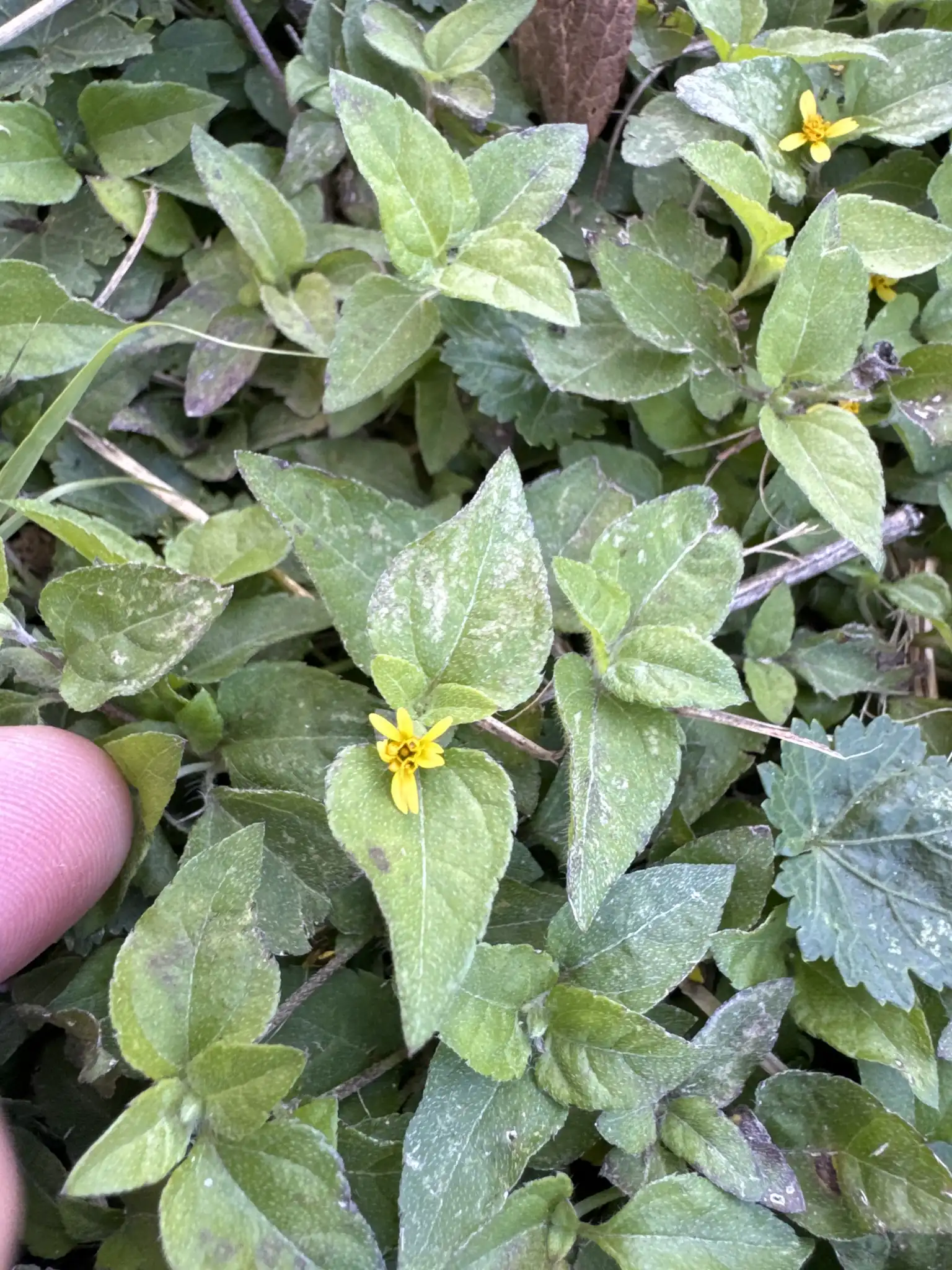
Calyptocarpus vialis, commonly known as horseherb, is a low-growing herbaceous perennial native to the southern United States and Mexico, forming a dense, spreading mat via prostrate stems that root at the nodes. The bright green, triangular-ovate leaves have serrated margins and a fine coating of rough hairs, bearing tiny, yellow, daisy-like flowers from spring through fall.
This species excels as a highly shade-tolerant, drought-resistant turf alternative that thrives in compacted soils where traditional grasses fail. Its trailing stems withstand moderate foot traffic and recover rapidly from occasional mowing or hard freezes by resprouting from the crown.
Uses & Benefits:
Essentials
At a Glance
Plant Type
Groundcover
Height
12"
Width
24"
Light
Full Sun, Partial Sun, Shade
Zones
7, 8, 9, 10
Water
Low
Humidity
High
Lifespan
Perennial
Native To
North America
Toxicity
Non-toxic
Bloom period
Spring – Fall
In flower about 9 months of the year
Planting
How to Grow
- Select a planting site in full sun to deep shade, prioritizing areas with compacted or dry soil where turfgrass struggles.
- Clear the area of aggressive perennial weeds and space plugs or container starts twelve inches apart.
- Water regularly for the first few weeks to encourage the trailing stems to root at their nodes and lock into the soil.
- Mow occasionally on a high setting to maintain a uniform height and encourage a denser, more compact green mat.
Pro Tip
Mow on a high setting to maintain a tidy, dense carpet; scalping the crown too low disrupts the rooting nodes and slows recovery.
Keep It Thriving
Care Guide
Do
- Mow on a high setting to keep the groundcover dense and tidy.
- Plant in dry, shady areas under mature trees where turfgrass fails.
- Allow the stems to creep and root naturally at the nodes to fill empty spaces.
Don't
- Do not over-fertilize, which stimulates leggy, weak growth and invites competing weeds.
- Do not scalp the plants with a low mower setting, as this damages the rooting crown.
- Do not overwater or plant in permanently waterlogged soils where root rot can develop.
Seasonal Care Calendar
| Task | Jan | Feb | Mar | Apr | May | Jun | Jul | Aug | Sep | Oct | Nov | Dec |
|---|---|---|---|---|---|---|---|---|---|---|---|---|
| Plant | ||||||||||||
| Propagate | ||||||||||||
| Prune | ||||||||||||
| Spring Cleanup |
Watch Out For
Pests & Diseases
Common Pests
Common Diseases
In the Garden
Landscape Uses & Companions
Landscape Uses
Companion Plants
Multiply
Propagation Methods
Good to Know
Common Questions
Horseherb questions
What zones can Horseherb grow in?
Horseherb is hardy in USDA Zones 7–10. Inside that range it survives winter in the ground; outside it, grow it as an annual or a container plant you protect.
Is Horseherb deer resistant?
Not reliably. Deer may browse Horseherb, especially tender spring growth — plan on repellents or fencing where pressure is high.
When does Horseherb bloom?
Horseherb typically blooms in spring through fall. Exact timing shifts a week or two with your zone — Sow's bloom calendar maps it to your garden.
Does Horseherb need full sun?
Horseherb does best in full sun to part shade. In hot climates, afternoon shade keeps blooms fresher longer.
Is Horseherb drought tolerant?
Yes — once established (usually after the first full season), Horseherb handles dry spells with minimal watering. Water deeply its first year to build the root system that makes that possible.
Keep exploring
Explore the genus
Hardy in your zone?
Grow Horseherb with confidence
See it in a design of your actual yard, get zone-matched care reminders, and track it season by season in your garden journal.