The Story
Plant Bio
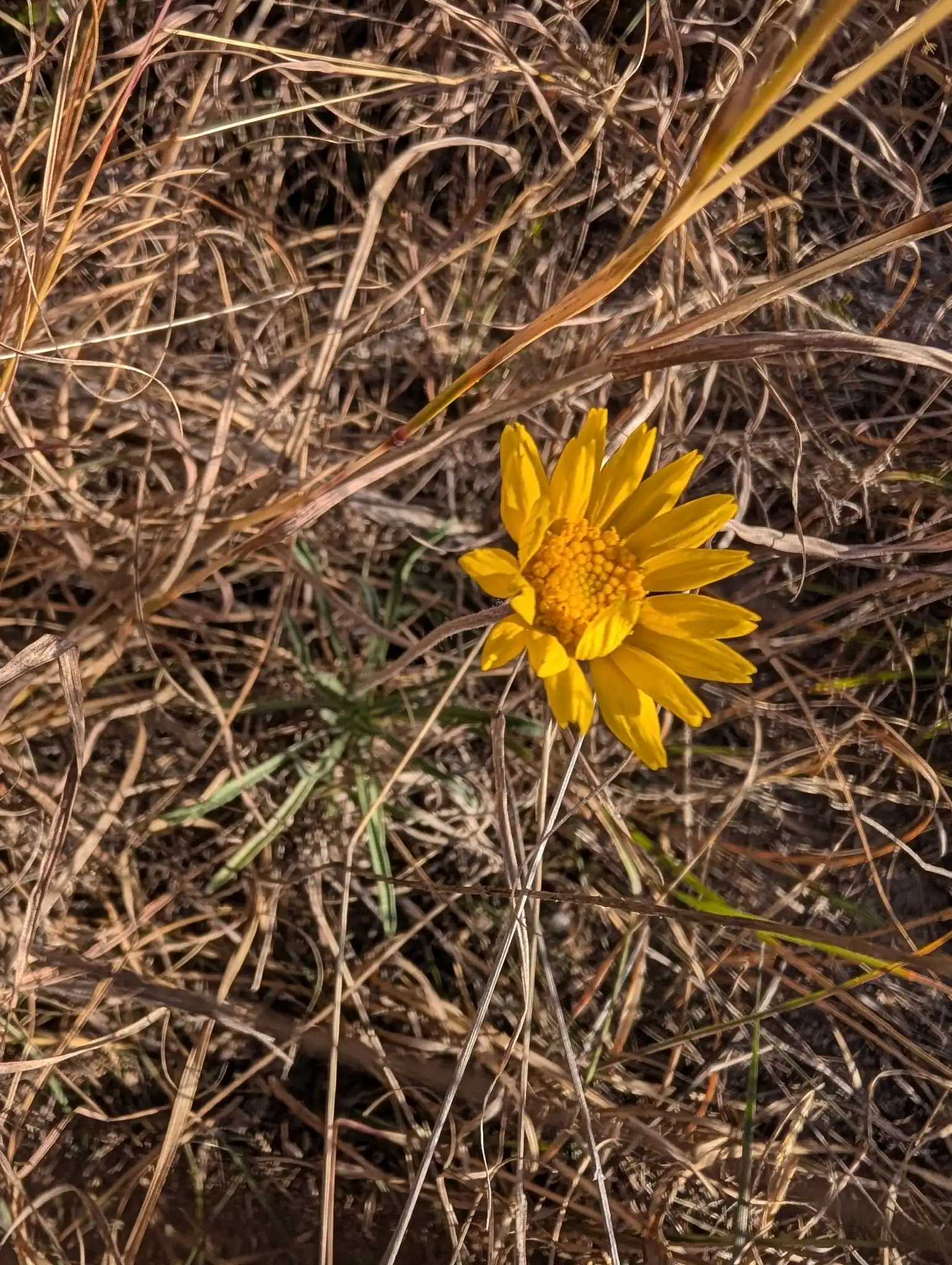
Tetraneuris scaposa is a low-growing, mounding perennial native to the southwestern and south-central United States, where it inhabits rocky limestone soils and prairies. It forms a compact basal rosette of narrow, silvery-gray leaves from which slender, leafless stems arise to bear solitary yellow daisy-like flowers.
The fine pubescence on the foliage provides a distinct silvery cast that helps the plant reflect intense sunlight and conserve moisture. The bright yellow ray florets feature prominent, dark-veined tips and persist from spring through fall, often continuing to bloom during mild winter spells.
Uses & Benefits:
Essentials
At a Glance
Plant Type
Perennial
Height
18"
Width
12"
Light
Full Sun
Zones
4, 5, 6, 7, 8, 9, 10
Water
Low
Humidity
Low to Moderate
Lifespan
Perennial
Native To
North America
Toxicity
Toxic to livestock
Bloom period
Spring – Winter
In flower about 12 months of the year
Planting
How to Grow
- Select a planting site in full sun with highly permeable, rocky, sandy, or limestone-based soil.
- Dig a hole twice the width of the root ball but equal in depth to ensure the crown sits slightly above the surrounding soil level.
- Backfill with native soil without adding organic compost or heavy fertilizers, which cause weak, leggy growth.
- Water sparingly during the first few weeks to establish roots, then transition to a minimal irrigation schedule.
Pro Tip
Avoid planting in rich, heavily amended soils or applying organic mulch directly against the crown, as excess moisture retention triggers rapid root and crown rot.
Keep It Thriving
Care Guide
Do
- Plant in raised beds or rock gardens to guarantee sharp drainage.
- Deadhead spent flower heads regularly to encourage continuous blooming and maintain a tidy habit.
- Use gravel or crushed stone mulch around the base of the plant instead of wood chips.
Don't
- Do not overwater or allow the soil to remain waterlogged, which causes fatal root rot.
- Do not prune back into the old, hard, leafless wood at the base of the plant.
- Do not apply high-nitrogen fertilizers, as this reduces flowering and compromises the compact form.
Seasonal Care Calendar
| Task | Jan | Feb | Mar | Apr | May | Jun | Jul | Aug | Sep | Oct | Nov | Dec |
|---|---|---|---|---|---|---|---|---|---|---|---|---|
| Deadhead | ||||||||||||
| Divide | ||||||||||||
| Pest Check | ||||||||||||
| Spring Cleanup |
Watch Out For
Pests & Diseases
Common Pests
Common Diseases
In the Garden
Landscape Uses & Companions
Landscape Uses
Companion Plants
Multiply
Propagation Methods
Good to Know
Common Questions
Four-Nerve Daisy questions
What zones can Four-Nerve Daisy grow in?
Four-Nerve Daisy is hardy in USDA Zones 4–10. Inside that range it survives winter in the ground; outside it, grow it as an annual or a container plant you protect.
Is Four-Nerve Daisy deer resistant?
Yes — Four-Nerve Daisy is rated deer-resistant. Deer typically pass it over, though extreme hunger can override any plant's defenses.
When does Four-Nerve Daisy bloom?
Four-Nerve Daisy typically blooms in spring through winter. Exact timing shifts a week or two with your zone — Sow's bloom calendar maps it to your garden.
Does Four-Nerve Daisy need full sun?
Four-Nerve Daisy does best in full sun (6+ hours).
Is Four-Nerve Daisy drought tolerant?
Yes — once established (usually after the first full season), Four-Nerve Daisy handles dry spells with minimal watering. Water deeply its first year to build the root system that makes that possible.
Keep exploring
Explore the genus
Grow Four-Nerve Daisy with confidence
See it in a design of your actual yard, get zone-matched care reminders, and track it season by season in your garden journal.