The Story
Plant Bio
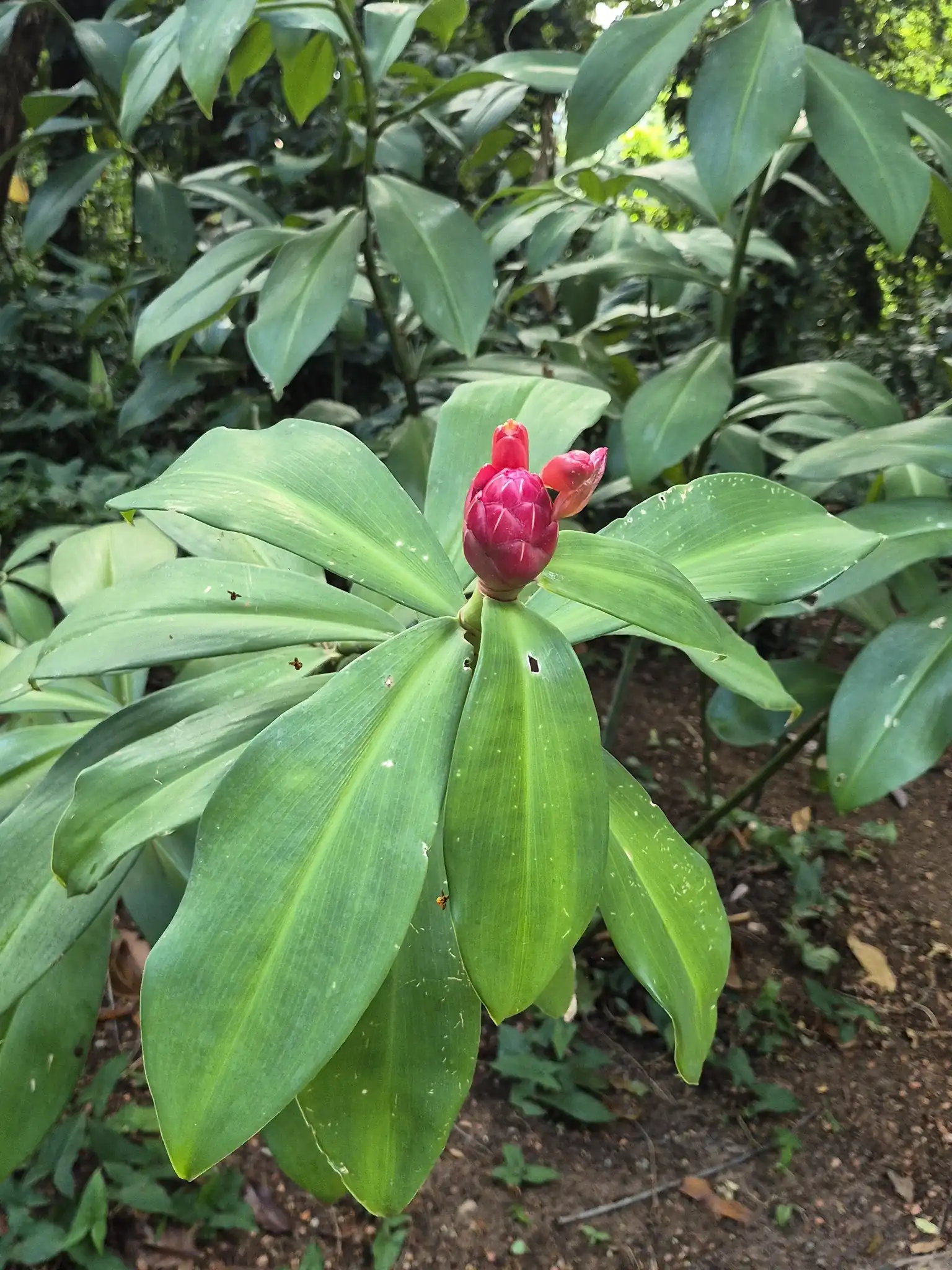
Costus spiralis, commonly known as spiral ginger, is a clumping perennial herb native to the wet tropical biomes of South and Central America. The upright stems twist distinctively as they grow, bearing narrow, bright green leaves arranged in a tight spiral pattern.
The plant produces dense, cone-shaped terminal bracts from which bright red, pink, or orange tubular flowers emerge during summer and fall. These nectar-rich inflorescences are highly attractive to hummingbirds, providing a reliable food source throughout the warmer months.
Uses & Benefits:
Essentials
At a Glance
Plant Type
Perennial
Height
94"
Width
48"
Light
Partial Sun, Shade
Zones
9, 10
Water
High
Humidity
High
Lifespan
Perennial
Native To
Central and South America
Toxicity
Non-toxic
Bloom period
Summer – Fall
In flower about 6 months of the year
Planting
How to Grow
- Select a planting site with rich, organic, well-draining soil that receives bright indirect light or partial shade.
- Amend the soil with organic matter to ensure high drainage, as waterlogged conditions rapidly cause fatal rhizome rot.
- Water consistently to maintain even soil moisture, especially during the active summer growing season.
- In zones colder than USDA Zone 9, plant in containers to allow easy lifting and indoor overwintering before the first frost.
Pro Tip
Prune old, spent flowering stems completely to the ground in early spring to stimulate fresh, vigorous shoots from the underground rhizome; avoid cutting into old woody tissue unnecessarily.
Keep It Thriving
Care Guide
Do
- Provide high humidity to prevent leaf tip browning and overall decline.
- Apply a balanced, water-soluble fertilizer every two to three weeks during spring and summer.
- Protect the foliage from harsh, direct midday sunlight to avoid leaf scorch.
Don't
- Do not allow the soil to dry out completely, as this species has low drought tolerance.
- Do not let the plant sit in standing water or poorly drained soil.
- Do not fertilize during the winter dormancy period.
Seasonal Care Calendar
| Task | Jan | Feb | Mar | Apr | May | Jun | Jul | Aug | Sep | Oct | Nov | Dec |
|---|---|---|---|---|---|---|---|---|---|---|---|---|
| Divide | ||||||||||||
| Fertilize | ||||||||||||
| Pest Check | ||||||||||||
| Prune | ||||||||||||
| Winter Prep |
Watch Out For
Pests & Diseases
Common Pests
Common Diseases
In the Garden
Landscape Uses & Companions
Landscape Uses
Multiply
Propagation Methods
Good to Know
Common Questions
Spiral ginger questions
What zones can Spiral ginger grow in?
Spiral ginger is hardy in USDA Zones 9–10. Inside that range it survives winter in the ground; outside it, grow it as an annual or a container plant you protect.
When does Spiral ginger bloom?
Spiral ginger typically blooms in summer through fall. Exact timing shifts a week or two with your zone — Sow's bloom calendar maps it to your garden.
Does Spiral ginger need full sun?
Spiral ginger does best in part shade.
Keep exploring
Explore the genus
Hardy in your zone?
Grow Spiral ginger with confidence
See it in a design of your actual yard, get zone-matched care reminders, and track it season by season in your garden journal.