



The Story
Plant Bio
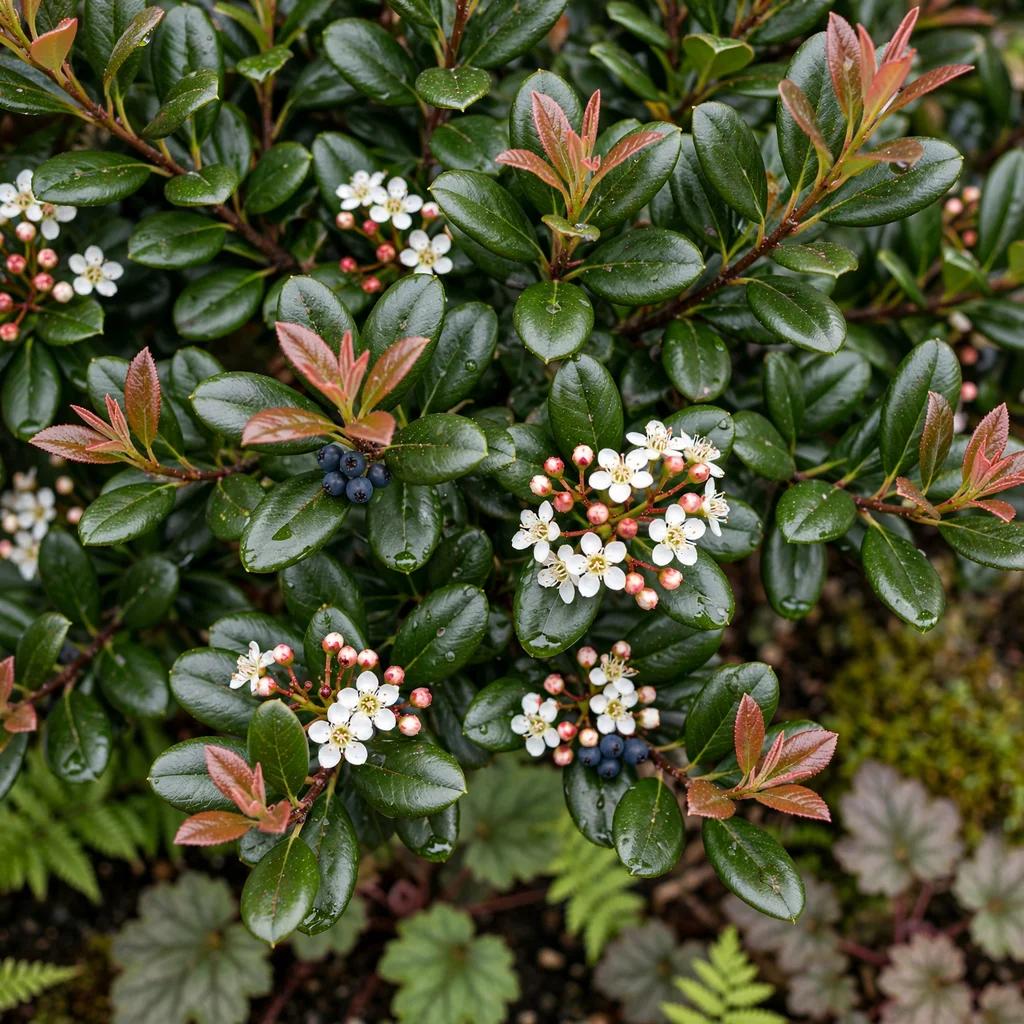
Rhaphiolepis indica is a tough, adaptable evergreen shrub valued for its dense, rounded form, leathery leaves, and profuse spring flowers. It is highly tolerant of heat, drought, and salt spray.
'Snow White' is a compact, spreading cultivar that is covered in masses of pure white flowers in early spring. Its low, mounding habit makes it an excellent choice for groundcover, low borders, and mass plantings.
Uses & Benefits:
Essentials
At a Glance
Plant Type
Shrub
Height
36"
Width
48"
Light
Full Sun, Partial Sun
Zones
8, 9, 10
Water
Low
Humidity
Tolerates low to high
Lifespan
Long-lived shrub
Native To
Southern China
Toxicity
Non-toxic
Bloom period
Early spring – Mid-spring
In flower about 2 months of the year
Marketplace
Where to Buy
Shipping costs Year-round shipping Free shipping
Planting
How to Grow
- Select a location with full sun for best flowering and disease resistance.
- Ensure the soil is very well-drained; amend with sand or grit if necessary.
- Dig a hole that is twice as wide as the root ball.
- Set the plant in the hole with the crown slightly above soil level.
- Backfill with native soil and water to settle.
- Water regularly for the first year, then only during extended drought.
Pro Tip
Ensure excellent air circulation and avoid overhead watering to minimize the risk of Entomosporium leaf spot, a common issue for this species.
Keep It Thriving
Care Guide
Do
- Provide full sun and excellent drainage.
- Water deeply but infrequently once established.
- Prune lightly after blooming to encourage bushiness.
- Rake up and dispose of any fallen leaves to reduce disease spread.
- Choose disease-resistant cultivars when possible.
Don't
- Do not plant in poorly drained or heavy clay soils.
- Avoid overhead irrigation, which promotes fungal diseases.
- Don't over-fertilize, as this can lead to lush growth susceptible to disease.
- Avoid shearing into tight shapes; allow its natural form.
Seasonal Care Calendar
| Task | Jan | Feb | Mar | Apr | May | Jun | Jul | Aug | Sep | Oct | Nov | Dec |
|---|---|---|---|---|---|---|---|---|---|---|---|---|
| Fertilize | ||||||||||||
| Pest Check | ||||||||||||
| Plant | ||||||||||||
| Prune |
Watch Out For
Pests & Diseases
Common Pests
Common Diseases
In the Garden
Landscape Uses & Companions
Landscape Uses
Multiply
Propagation Methods
Good to Know
Common Questions
Snow White Indian Hawthorn questions
What zones can Snow White Indian Hawthorn grow in?
Snow White Indian Hawthorn is hardy in USDA Zones 8–10. Inside that range it survives winter in the ground; outside it, grow it as an annual or a container plant you protect.
Is Snow White Indian Hawthorn deer resistant?
Yes — Snow White Indian Hawthorn is rated deer-resistant. Deer typically pass it over, though extreme hunger can override any plant's defenses.
When does Snow White Indian Hawthorn bloom?
Snow White Indian Hawthorn typically blooms in early spring through mid-spring. Exact timing shifts a week or two with your zone — Sow's bloom calendar maps it to your garden.
Does Snow White Indian Hawthorn need full sun?
Snow White Indian Hawthorn does best in full sun to part shade. In hot climates, afternoon shade keeps blooms fresher longer.
Is Snow White Indian Hawthorn drought tolerant?
Yes — once established (usually after the first full season), Snow White Indian Hawthorn handles dry spells with minimal watering. Water deeply its first year to build the root system that makes that possible.
More Rhaphiolepis to compare
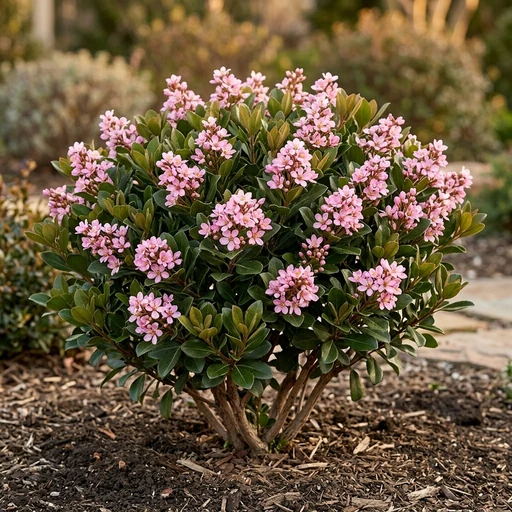
Pink Lady Indian Hawthorn
Rhaphiolepis indica 'Pink Lady'
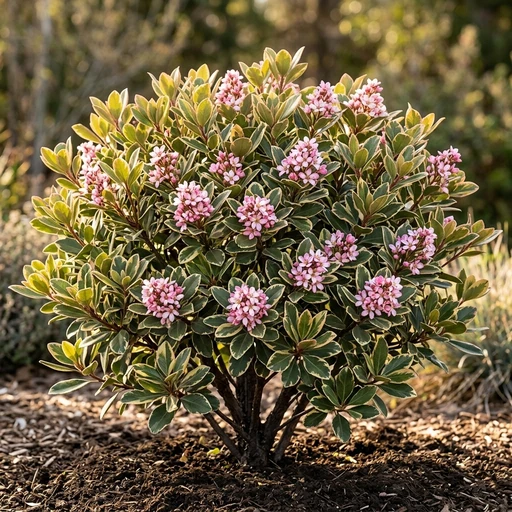
Pinkie Indian Hawthorn
Rhaphiolepis indica 'Pinkie'
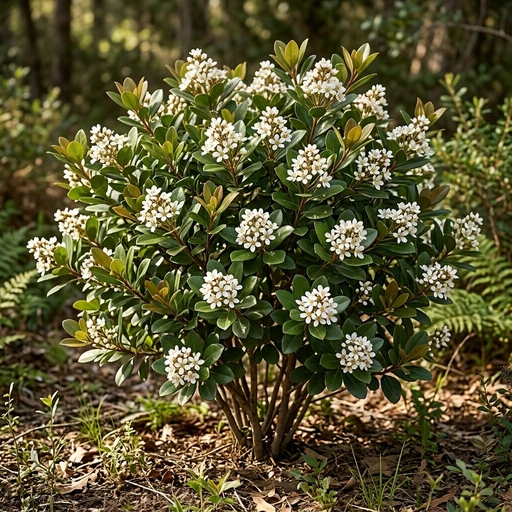
Indian Hawthorn
Rhaphiolepis indica
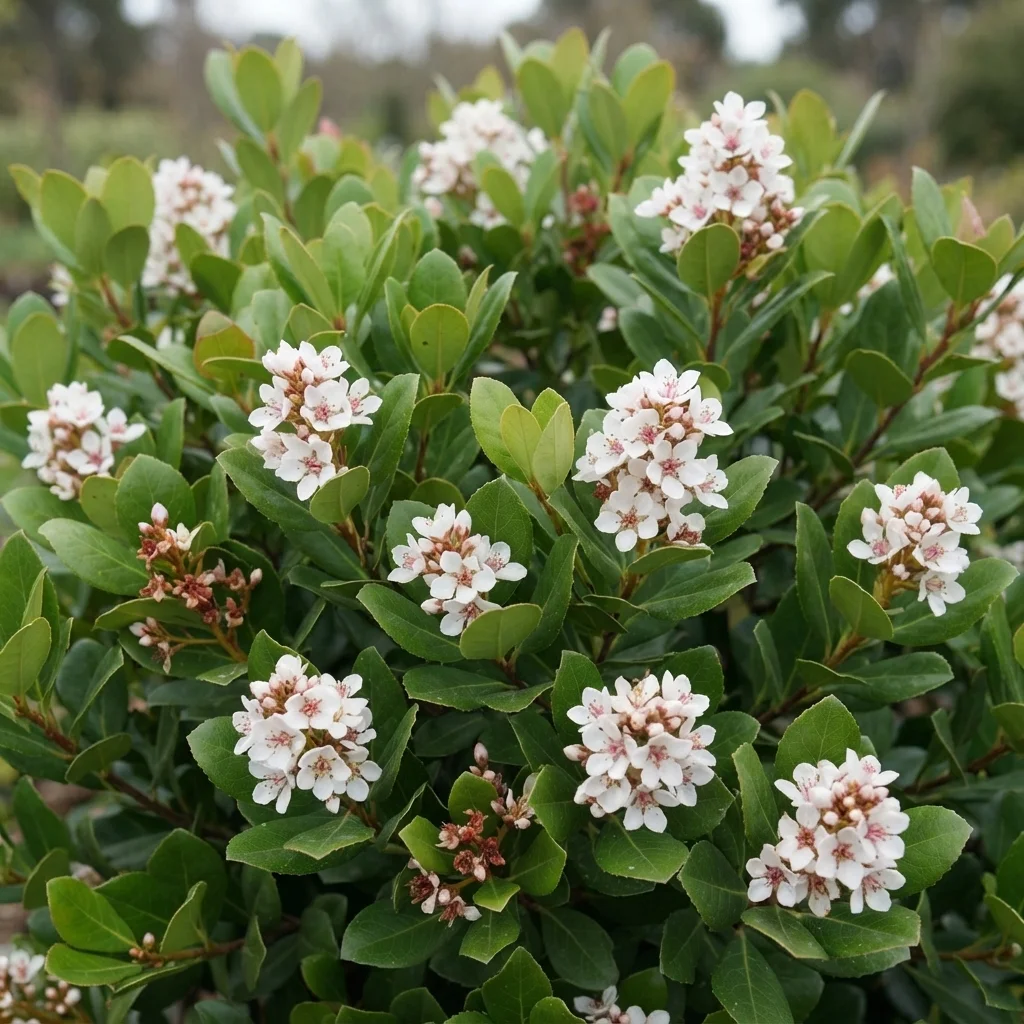
India Hawthorn
Rhaphiolepis indica 'Oriental Pearl'
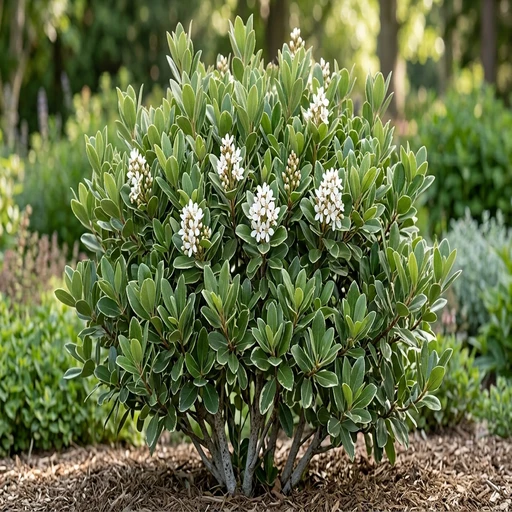
Clara Indian Hawthorn
Rhaphiolepis indica 'Clara'
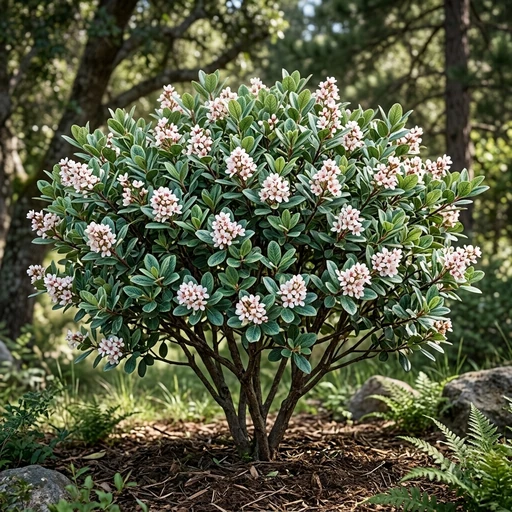
Eleanor Taber Indian Hawthorne
Rhaphiolepis indica 'Conor'
Keep exploring
Explore the genus
Hardy in your zone?
Grow Snow White Indian Hawthorn with confidence
See it in a design of your actual yard, get zone-matched care reminders, and track it season by season in your garden journal.