The Story
Plant Bio
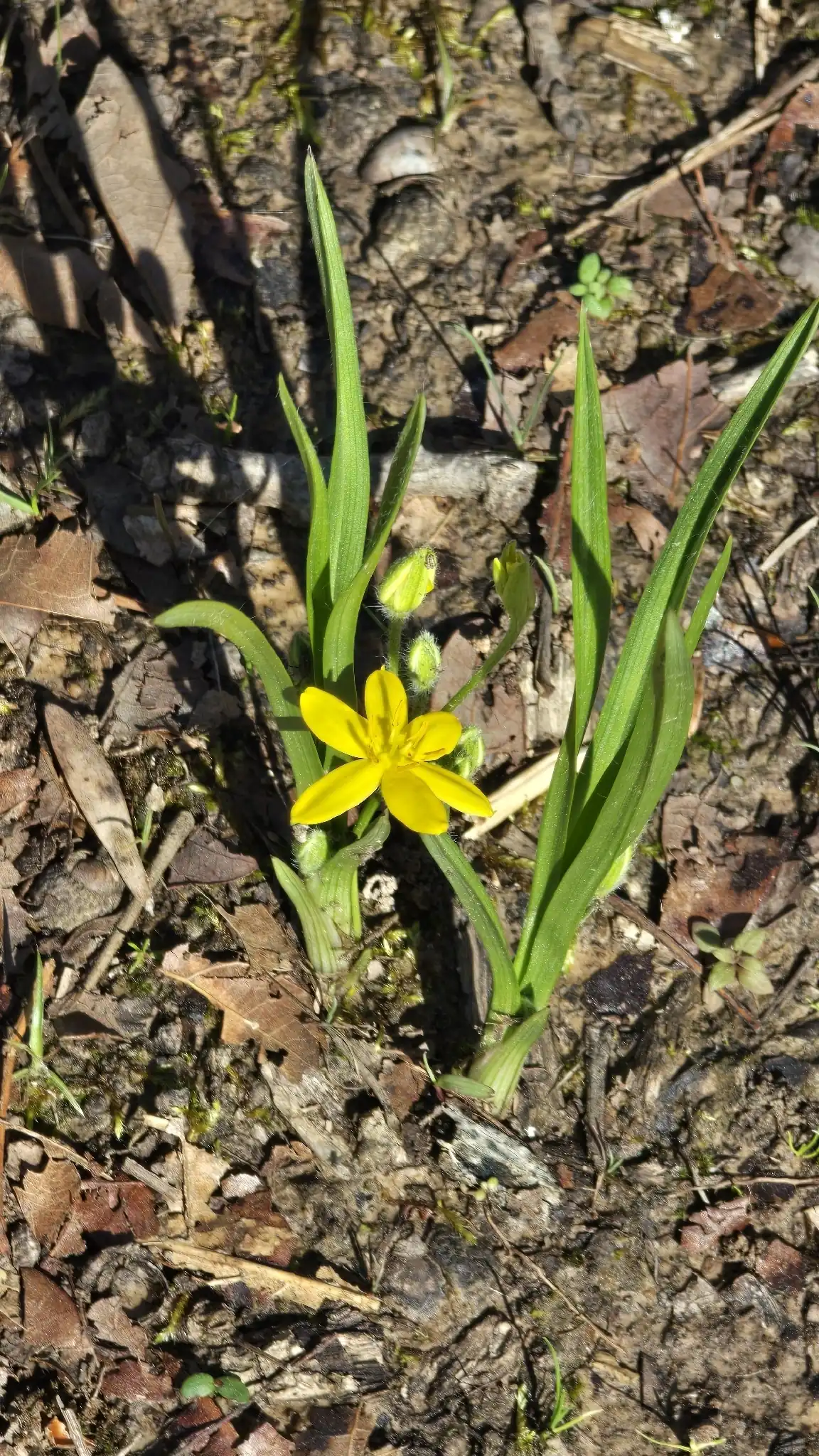
Hypoxis hirsuta is a small, tufted perennial native across eastern and central North America, forming low clumps of narrow, grass-like leaves covered in fine pubescence. Bright yellow, six-petaled star-shaped flowers open on slender scapes in full sunlight from spring into early summer.
The species relies on a subterranean corm that stores energy and enables survival through dry spells and periodic fires. Fine hairs coat the narrow leaf blades and flower stalks, setting its texture apart from true ornamental grasses.
Uses & Benefits:
Essentials
At a Glance
Plant Type
Perennial
Height
10"
Width
16"
Light
Full Sun, Partial Sun
Zones
4, 5, 6, 7, 8, 9
Water
Low to Medium
Humidity
Moderate
Lifespan
Perennial
Native To
North America
Toxicity
Non-toxic
Bloom period
Spring – Early summer
In flower about 4 months of the year
Planting
How to Grow
- Select a site receiving at least three to six hours of direct sunlight in lean, acidic to neutral, gritty soil.
- Plant subterranean corms 1 to 2 inches deep, spacing plants 8 to 12 inches apart.
- Water lightly after planting to settle the soil around the corms without oversaturating.
- Allow the top layer of soil to dry out between waterings while young roots establish.
Pro Tip
Plant in lean, gritty, well-draining soil and avoid root disturbance once established; placing this species in heavy loam or moisture-retentive beds leads rapidly to corm rot.
Keep It Thriving
Care Guide
Do
- Ensure excellent soil drainage by amending heavy areas with coarse sand or fine gravel.
- Position in full sun for maximal flower expansion.
- Remove dead foliage in late winter before new growth emerges.
Don't
- Do not plant in heavy, wet clay soils that retain winter moisture.
- Avoid high-nitrogen fertilizers, which cause weak leaf growth at the expense of flowers.
- Do not excessively disturb established corm clumps.
Seasonal Care Calendar
| Task | Jan | Feb | Mar | Apr | May | Jun | Jul | Aug | Sep | Oct | Nov | Dec |
|---|---|---|---|---|---|---|---|---|---|---|---|---|
| Divide | ||||||||||||
| Pest Check | ||||||||||||
| Prune | ||||||||||||
| Spring Cleanup |
Watch Out For
Pests & Diseases
Common Pests
Common Diseases
In the Garden
Landscape Uses & Companions
Landscape Uses
Multiply
Propagation Methods
Good to Know
Common Questions
Yellow Star-Grass questions
What zones can Yellow Star-Grass grow in?
Yellow Star-Grass is hardy in USDA Zones 4–9. Inside that range it survives winter in the ground; outside it, grow it as an annual or a container plant you protect.
Is Yellow Star-Grass deer resistant?
Not reliably. Deer may browse Yellow Star-Grass, especially tender spring growth — plan on repellents or fencing where pressure is high.
When does Yellow Star-Grass bloom?
Yellow Star-Grass typically blooms in spring through early summer. Exact timing shifts a week or two with your zone — Sow's bloom calendar maps it to your garden.
Does Yellow Star-Grass need full sun?
Yellow Star-Grass does best in full sun to part shade. In hot climates, afternoon shade keeps blooms fresher longer.
Is Yellow Star-Grass drought tolerant?
Yes — once established (usually after the first full season), Yellow Star-Grass handles dry spells with minimal watering. Water deeply its first year to build the root system that makes that possible.
More Hypoxis to compare
Keep exploring
Explore the genus
Grow Yellow Star-Grass with confidence
See it in a design of your actual yard, get zone-matched care reminders, and track it season by season in your garden journal.