The Story
Plant Bio
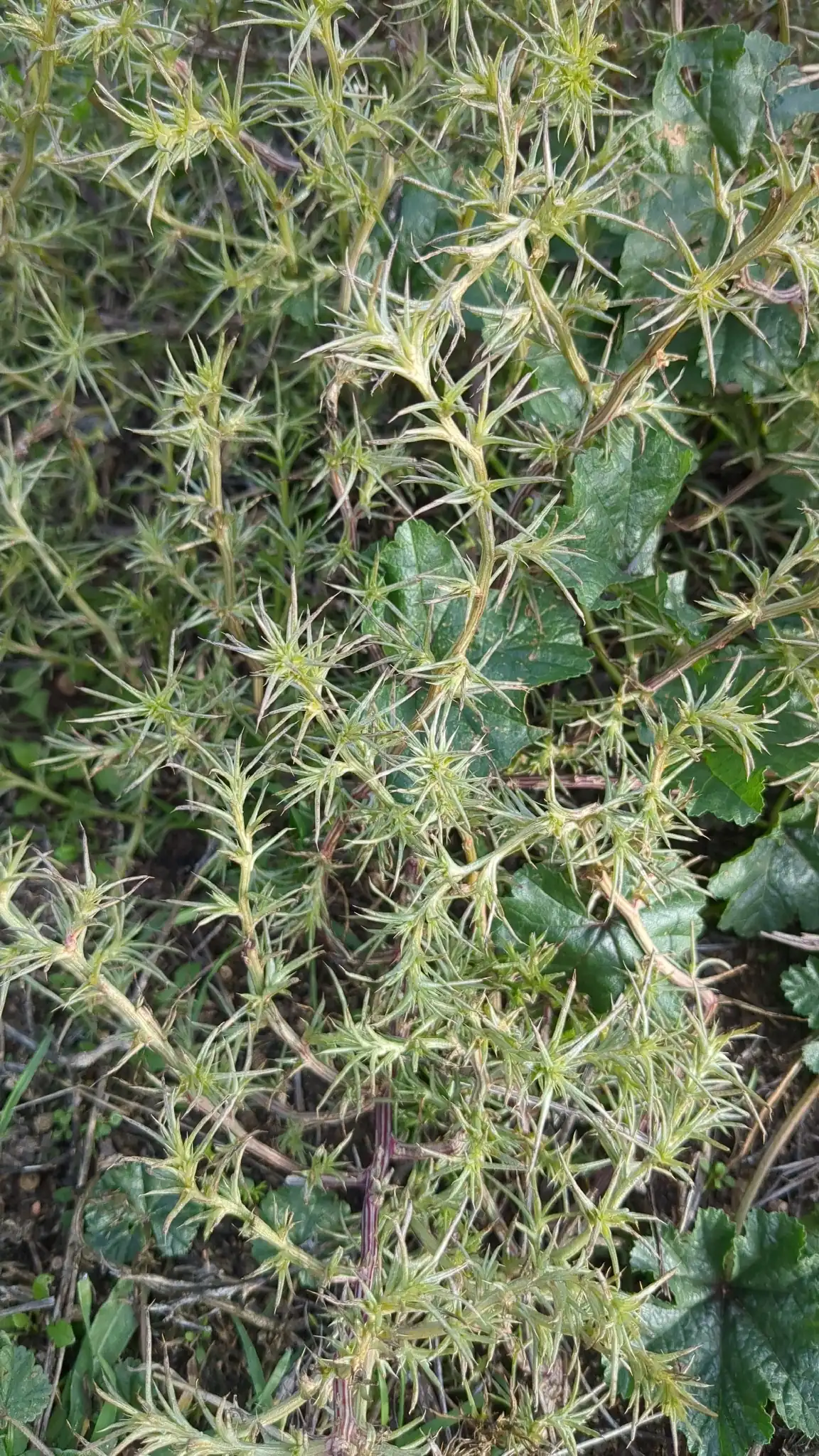
Salsola kali is a heavily branched, annual herb native to Eurasia that matures into a dense, rounded, sphere-like form. The stiff stems are striped with red or purple lines and become woody and brittle at maturity, eventually breaking at the base to tumble and disperse seeds.
This species features alternate, needle-like leaves that are succulent when young but quickly harden into rigid, sharp spines. Inconspicuous, petal-less flowers emerge in the leaf axils during summer, surrounded by winged, scale-like bracts.
Uses & Benefits:
Essentials
At a Glance
Plant Type
Annual
Height
36"
Width
48"
Light
Full Sun
Zones
4, 5, 6, 7, 8, 9, 10
Water
Low
Humidity
Low to Moderate
Lifespan
Annual
Native To
Eurasia
Toxicity
Toxic to Livestock
Bloom period
Summer – Fall
In flower about 6 months of the year
Planting
How to Grow
- Select a site with full sun and dry, sandy, or gravelly soil where containment is manageable.
- Sow seeds directly onto the soil surface after the last frost, as they germinate rapidly following moisture events.
- Avoid applying any fertilizer or organic soil amendments, which encourage unwanted lush growth.
- Monitor the area continuously to prevent the plant from maturing, drying out, and tumbling across neighboring properties.
Pro Tip
Mowing mature plants without capturing the seed heads accelerates seed dispersal via the rolling habit, so manual pulling before the fall seed set is the most effective control method.
Keep It Thriving
Care Guide
Do
- Pull young plants by hand while the foliage is still soft and succulent.
- Wear thick leather gloves when handling mature specimens to avoid skin punctures from the rigid spines.
- Dispose of cleared plants securely before they dry out and release their seeds.
Don't
- Never fertilize or water established plants, as they thrive in highly depleted, arid soils.
- Do not leave mature, uprooted plants on the ground where wind can roll them and spread seeds.
- Never prune or attempt to shape this annual species, as its lifecycle completes within a single season.
Seasonal Care Calendar
| Task | Jan | Feb | Mar | Apr | May | Jun | Jul | Aug | Sep | Oct | Nov | Dec |
|---|---|---|---|---|---|---|---|---|---|---|---|---|
| Harvest | ||||||||||||
| Pest Check | ||||||||||||
| Prune | ||||||||||||
| Winter Prep |
Watch Out For
Pests & Diseases
Common Pests
Common Diseases
In the Garden
Landscape Uses & Companions
Landscape Uses
Companion Plants
Multiply
Propagation Methods
Good to Know
Common Questions
Russian Thistle questions
What zones can Russian Thistle grow in?
Russian Thistle is hardy in USDA Zones 4–10. Inside that range it survives winter in the ground; outside it, grow it as an annual or a container plant you protect.
Is Russian Thistle deer resistant?
Yes — Russian Thistle is rated deer-resistant. Deer typically pass it over, though extreme hunger can override any plant's defenses.
When does Russian Thistle bloom?
Russian Thistle typically blooms in summer through fall. Exact timing shifts a week or two with your zone — Sow's bloom calendar maps it to your garden.
Does Russian Thistle need full sun?
Russian Thistle does best in full sun (6+ hours).
Is Russian Thistle drought tolerant?
Yes — once established (usually after the first full season), Russian Thistle handles dry spells with minimal watering. Water deeply its first year to build the root system that makes that possible.
Keep exploring
Explore the genus
Grow Russian Thistle with confidence
See it in a design of your actual yard, get zone-matched care reminders, and track it season by season in your garden journal.