The Story
Plant Bio
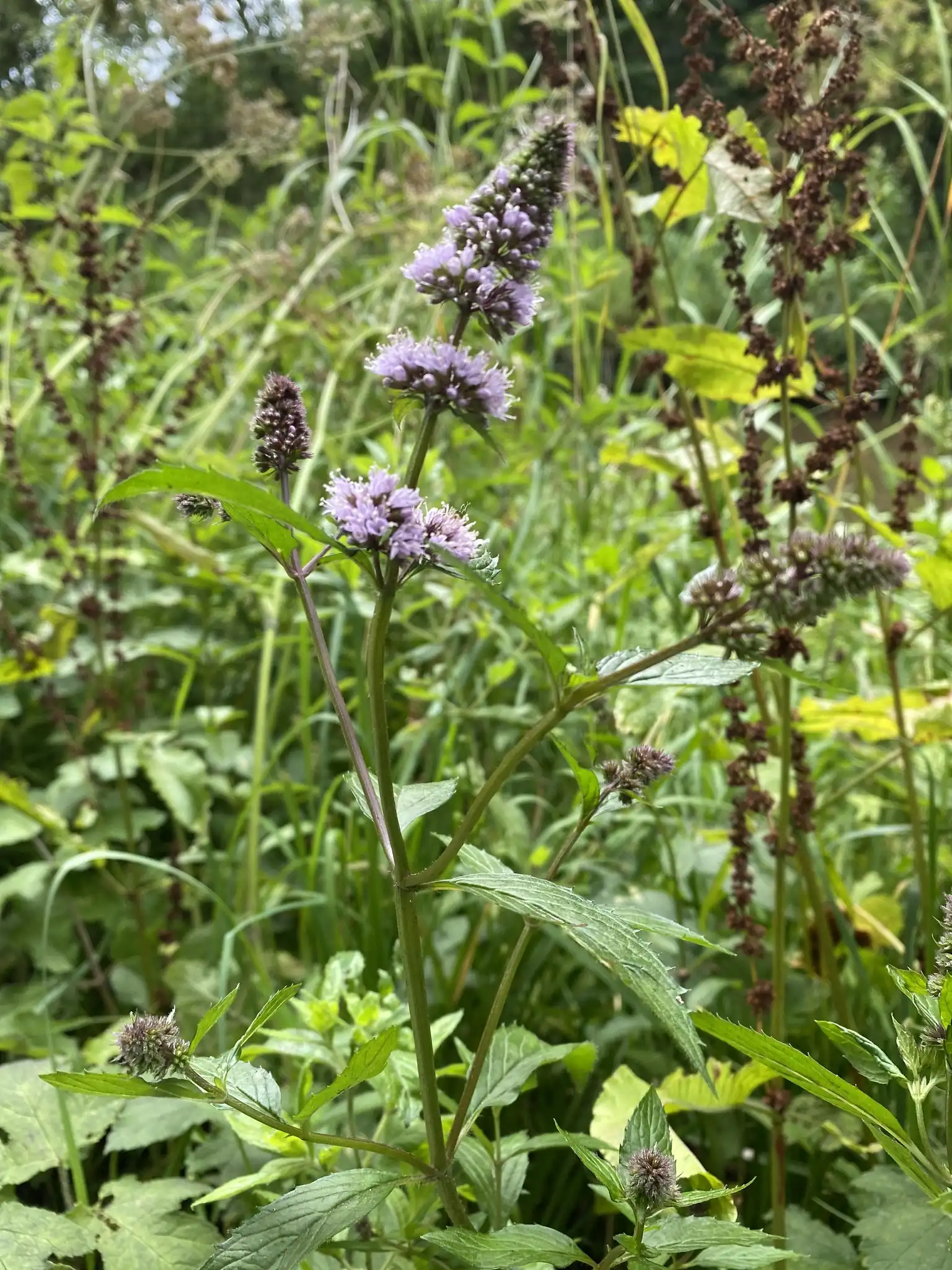
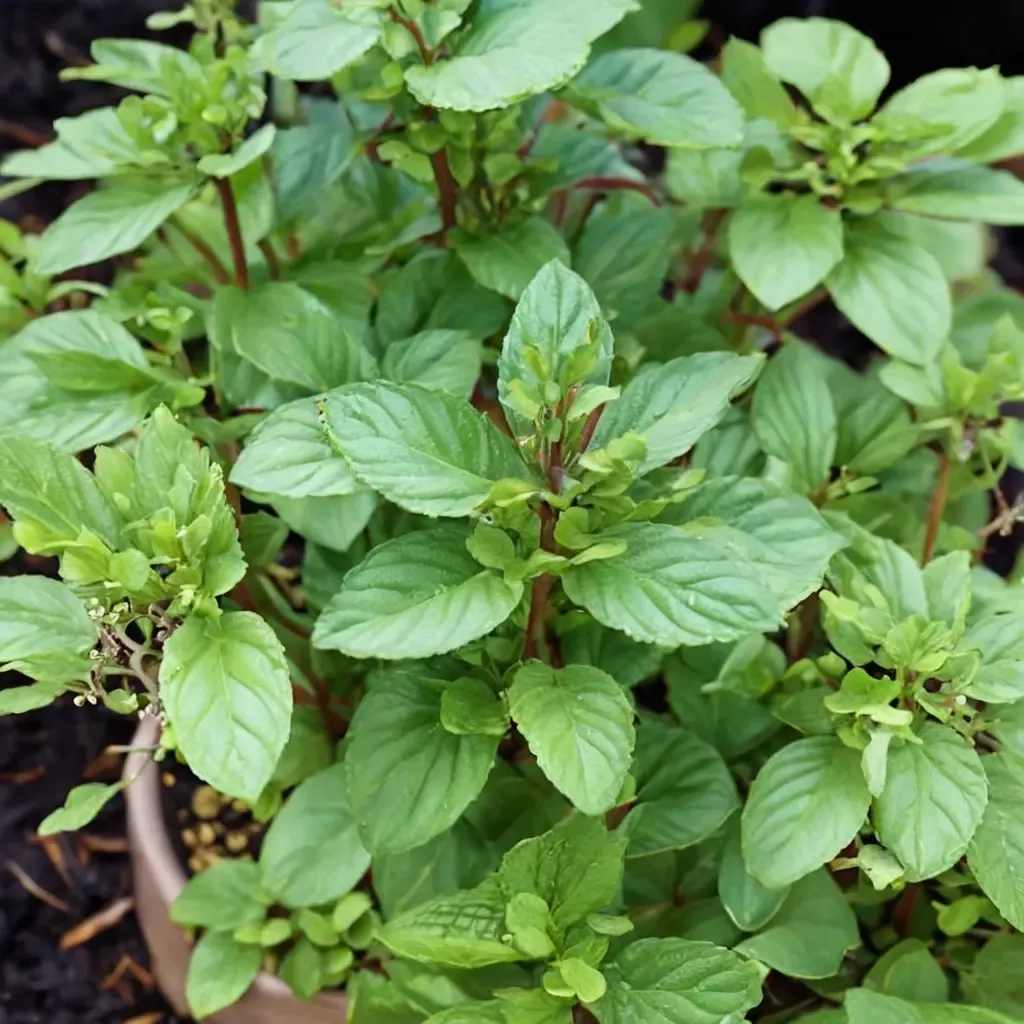
Mentha x piperita, peppermint, is a fast spreading herbaceous perennial of European and Middle Eastern origin, one to three feet high and one to two feet across before it runs. Lance-shaped toothed leaves one to two inches long are carried on square reddish-green stems, and small pink to lavender tubular flowers open in summer.
It is a sterile hybrid of watermint and spearmint, so it sets no viable seed and spreads entirely by runners — which is exactly why it takes over a bed. Menthol content is far higher than in spearmint, giving the cooling bite. NCSU rates it resistant to deer, rabbits, wet soil, disease, insect pests and foot traffic, an unusually complete list.
Uses & Benefits:
Essentials
At a Glance
Plant Type
Perennial
Height
24"
Width
18"
Light
Full Sun, Partial Sun, Shade
Zones
4, 5, 6, 7, 8, 9, 10
Water
Moderate to high
Humidity
Moderate
Lifespan
Perennial
Native To
Hybrid of European species
Toxicity
Non-toxic; culinary
Planting
How to Grow
- Plant in a sunken pot or a container to contain the runners.
- Give it full sun or partial shade and moist soil.
- Water freely; it takes wet soil better than dry.
- Pinch tips regularly to keep it leafy.
- Remove flower spikes for the best leaf flavour.
- Divide and refresh the plant every two or three years.
Pro Tip
Plant it in a sunken container, not open ground — the runners cross a bed in a single season and are near impossible to dig out afterwards.
Keep It Thriving
Care Guide
Do
- Contain it in a pot 🪴
- Keep the soil moist 💧
- Pinch tips for bushier growth ✂️
- Divide every few years 🔁
Don't
- Plant it loose in a border ❌
- Let it flower if you want leaf flavour ❌
- Let it dry out ❌
Seasonal Care Calendar
| Task | Jan | Feb | Mar | Apr | May | Jun | Jul | Aug | Sep | Oct | Nov | Dec |
|---|---|---|---|---|---|---|---|---|---|---|---|---|
| Divide | ||||||||||||
| Harvest |
Watch Out For
Pests & Diseases
Common Pests
Common Diseases
In the Garden
Landscape Uses & Companions
Landscape Uses
Multiply
Propagation Methods
Good to Know
Common Questions
Peppermint questions
What zones can Peppermint grow in?
Peppermint is hardy in USDA Zones 4–10. Inside that range it survives winter in the ground; outside it, grow it as an annual or a container plant you protect.
Is Peppermint deer resistant?
Yes — Peppermint is rated deer-resistant. Deer typically pass it over, though extreme hunger can override any plant's defenses.
When does Peppermint bloom?
Peppermint typically blooms in summer through early fall. Exact timing shifts a week or two with your zone — Sow's bloom calendar maps it to your garden.
Does Peppermint need full sun?
Peppermint does best in full sun to part shade. In hot climates, afternoon shade keeps blooms fresher longer.
More Mentha to compare
Keep exploring
Explore the genus
Grow Peppermint with confidence
See it in a design of your actual yard, get zone-matched care reminders, and track it season by season in your garden journal.