The Story
Plant Bio
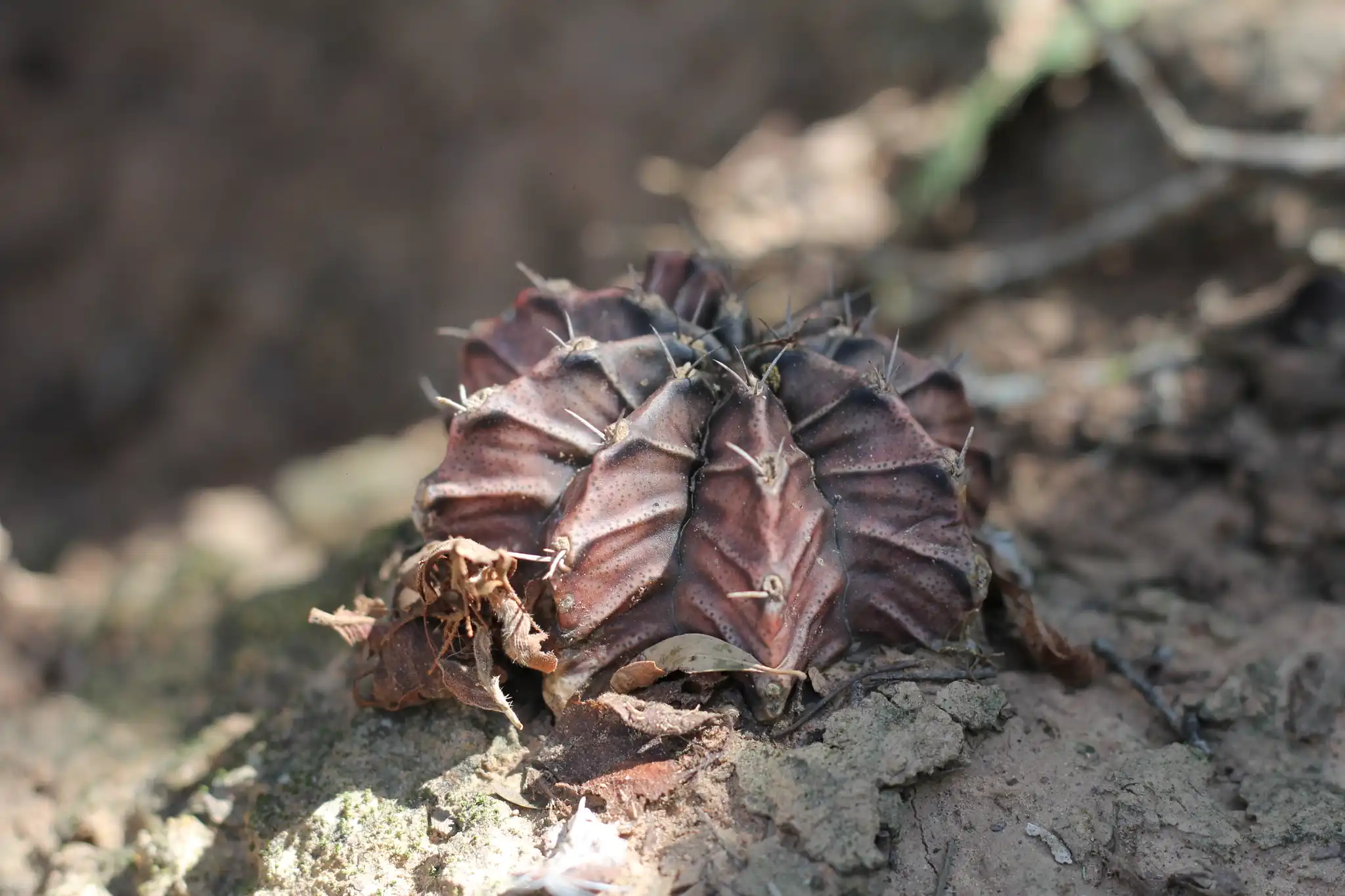
Gymnocalycium mihanovichii is a small, slow-growing globular cactus native to South American rocky lowlands, where it naturally grows sheltered under shrubs or grasses. The wild-type stem is gray-green to brownish-green with about eight narrow-edged, slightly notched ribs and produces pale green, brownish-yellow, or pink funnel-shaped flowers at the apex in late spring and summer.
This species is highly variable, but is most famous for its chlorophyll-deficient mutant cultivars like 'Hibotan' which display brilliant red, orange, or pink pigmentation. Because these colorful forms cannot photosynthesize on their own, they are obligately grafted onto a green rootstock, typically a Hylocereus species, to survive.
Uses & Benefits:
Essentials
At a Glance
Plant Type
Cactus Succulent
Height
2"
Width
2"
Light
Partial Sun, Shade
Zones
9, 10
Water
Low
Humidity
Low
Lifespan
Short to moderate (grafted forms depend on rootstock longevity)
Native To
Paraguay, northeastern Argentina, and eastern Bolivia
Toxicity
Non-toxic
Bloom period
Late spring – Summer
In flower about 4 months of the year
Planting
How to Grow
- Select a container with ample drainage holes and fill it with a gritty, lean, highly porous cactus and succulent soil mix.
- Position the plant in a location that receives bright, indirect light or filtered sunlight, avoiding harsh direct afternoon sun.
- Water thoroughly only when the soil has dried out completely, using the soak-and-dry method during the active spring and summer growing seasons.
- Reduce watering to near-zero during the winter dormancy period and protect the plant from freezing temperatures.
Pro Tip
When growing the colorful grafted forms, protect the plant from harsh direct afternoon sun to prevent scorching, and keep the graft union completely dry to avoid rot.
Keep It Thriving
Care Guide
Do
- Use a highly porous, gritty soil mix to ensure rapid, unimpeded drainage.
- Provide bright, filtered sunlight or indirect light to protect the tissues from scorching.
- Allow the potting medium to dry out completely between waterings.
- Keep the plant in a warm, frost-free environment above freezing temperatures.
Don't
- Do not overwater or allow the container to sit in standing water, which triggers fatal root rot.
- Do not expose the plant to freezing temperatures or frost.
- Do not prune healthy stems or cut into old wood unless removing rotted tissue.
- Do not fertilize during the winter dormancy period.
Seasonal Care Calendar
| Task | Jan | Feb | Mar | Apr | May | Jun | Jul | Aug | Sep | Oct | Nov | Dec |
|---|---|---|---|---|---|---|---|---|---|---|---|---|
| Fertilize | ||||||||||||
| Pest Check | ||||||||||||
| Propagate | ||||||||||||
| Spring Cleanup | ||||||||||||
| Winter Prep |
Watch Out For
Pests & Diseases
Common Pests
Common Diseases
In the Garden
Landscape Uses & Companions
Landscape Uses
Companion Plants
Multiply
Propagation Methods
Good to Know
Common Questions
Chin Cactus questions
What zones can Chin Cactus grow in?
Chin Cactus is hardy in USDA Zones 9–10. Inside that range it survives winter in the ground; outside it, grow it as an annual or a container plant you protect.
When does Chin Cactus bloom?
Chin Cactus typically blooms in late spring through summer. Exact timing shifts a week or two with your zone — Sow's bloom calendar maps it to your garden.
Does Chin Cactus need full sun?
Chin Cactus does best in part shade.
Is Chin Cactus drought tolerant?
Yes — once established (usually after the first full season), Chin Cactus handles dry spells with minimal watering. Water deeply its first year to build the root system that makes that possible.
Keep exploring
Explore the genus
Hardy in your zone?
Grow Chin Cactus with confidence
See it in a design of your actual yard, get zone-matched care reminders, and track it season by season in your garden journal.