The Story
Plant Bio
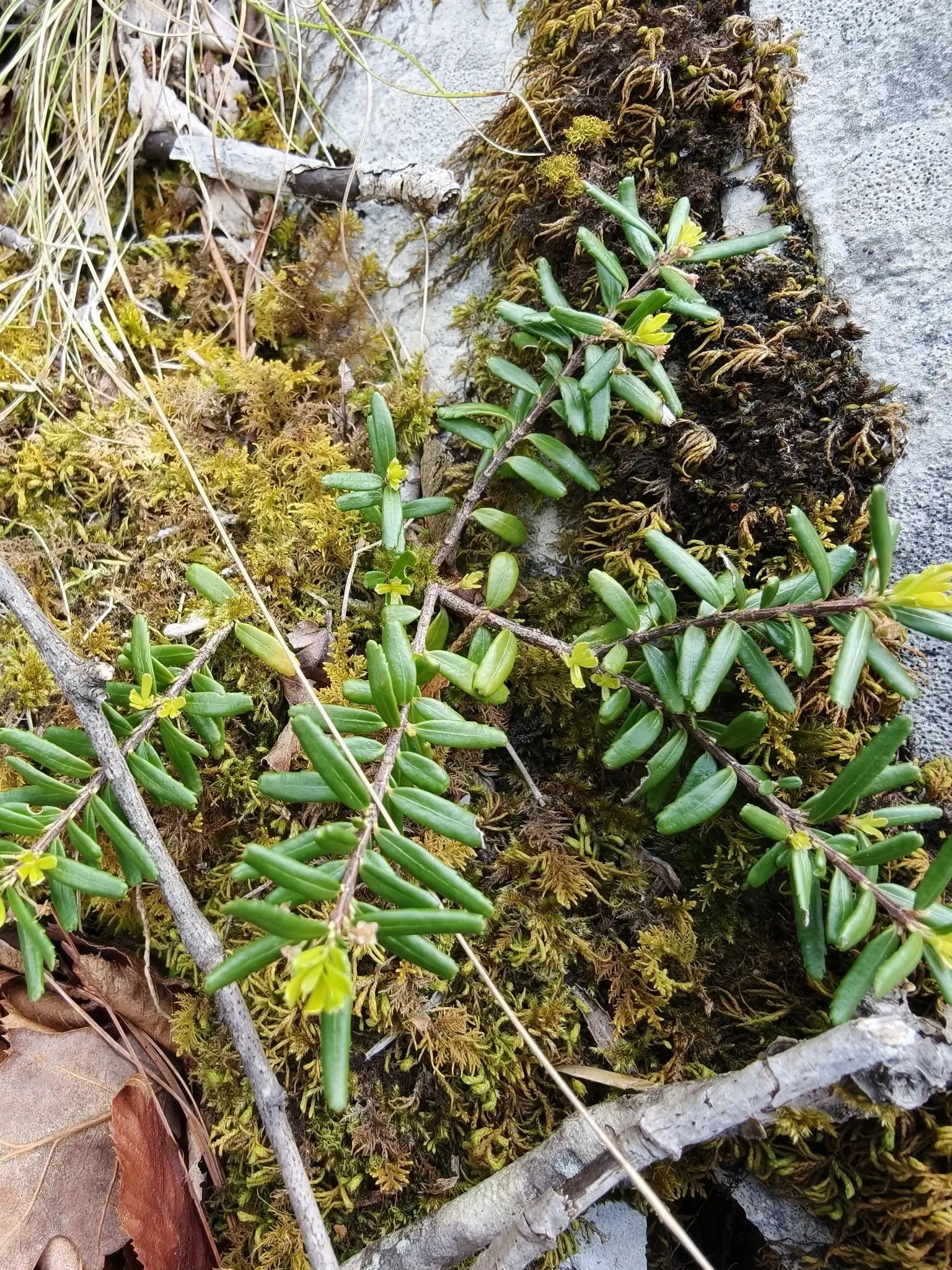
Paxistima canbyi is a low-growing, broadleaf evergreen dwarf shrub native to the rocky cliffs and wooded slopes of the central Appalachian Mountains. The species spreads slowly via decumbent branches that root upon contact with the soil, eventually forming dense, flat-topped mats.
This species is distinguished by its fine-textured, leathery, linear-oblong leaves that remain lustrous dark green throughout the summer before developing a rich bronze-purple tint in winter. In spring, it produces tiny, inconspicuous greenish flowers in the leaf axils, followed by small, two-valved leathery capsules.
Uses & Benefits:
Essentials
At a Glance
Plant Type
Shrub
Height
16"
Width
60"
Light
Partial Sun, Shade
Zones
4, 5, 6, 7, 8
Water
Medium
Humidity
Moderate to high
Lifespan
Perennial
Native To
North America
Toxicity
Non-toxic
Bloom period
Spring
In flower about 3 months of the year
Planting
How to Grow
- Select a planting site in partial to full shade with moist, organic-rich, and well-drained soil.
- Dig a hole twice as wide as the root ball but equal in depth to ensure the crown sits level with the soil surface.
- Backfill with native soil, gently firming it around the roots, and water thoroughly to settle the soil.
- Apply a thin layer of organic mulch around the base to retain moisture and keep root runs cool, keeping it clear of the main stems.
Pro Tip
Plant in partial to full shade with cool root runs, ensuring the soil is organic-rich and exceptionally well-drained to prevent root rot. Avoid harsh, unshaded southern exposures and heavy clay soils, which cause rapid foliage scorch and dieback.
Keep It Thriving
Care Guide
Do
- Provide consistent moisture during the first growing season to establish a deep, healthy root system.
- Ensure excellent soil drainage to protect the root system from waterlogging and rot.
- Protect the plant from severe summer droughts and drying winter winds.
Don't
- Do not plant in heavy, poorly drained clay soils that hold stagnant water.
- Do not shear aggressively into old, bare wood, as the plant lacks dormant buds on old stems to regenerate.
- Do not over-fertilize, as this species has low nutrient requirements and prefers minimal feeding.
Seasonal Care Calendar
| Task | Jan | Feb | Mar | Apr | May | Jun | Jul | Aug | Sep | Oct | Nov | Dec |
|---|---|---|---|---|---|---|---|---|---|---|---|---|
| Fertilize | ||||||||||||
| Pest Check | ||||||||||||
| Propagate | ||||||||||||
| Spring Cleanup |
Watch Out For
Pests & Diseases
Common Pests
Common Diseases
In the Garden
Landscape Uses & Companions
Landscape Uses
Multiply
Propagation Methods
Good to Know
Common Questions
Canby's Mountain-Lover questions
What zones can Canby's Mountain-Lover grow in?
Canby's Mountain-Lover is hardy in USDA Zones 4–8. Inside that range it survives winter in the ground; outside it, grow it as an annual or a container plant you protect.
Is Canby's Mountain-Lover deer resistant?
Yes — Canby's Mountain-Lover is rated deer-resistant. Deer typically pass it over, though extreme hunger can override any plant's defenses.
When does Canby's Mountain-Lover bloom?
Canby's Mountain-Lover typically blooms in spring through spring. Exact timing shifts a week or two with your zone — Sow's bloom calendar maps it to your garden.
Does Canby's Mountain-Lover need full sun?
Canby's Mountain-Lover does best in part shade.
Keep exploring
Explore the genus
Hardy in your zone?
Grow Canby's Mountain-Lover with confidence
See it in a design of your actual yard, get zone-matched care reminders, and track it season by season in your garden journal.