The Story
Plant Bio
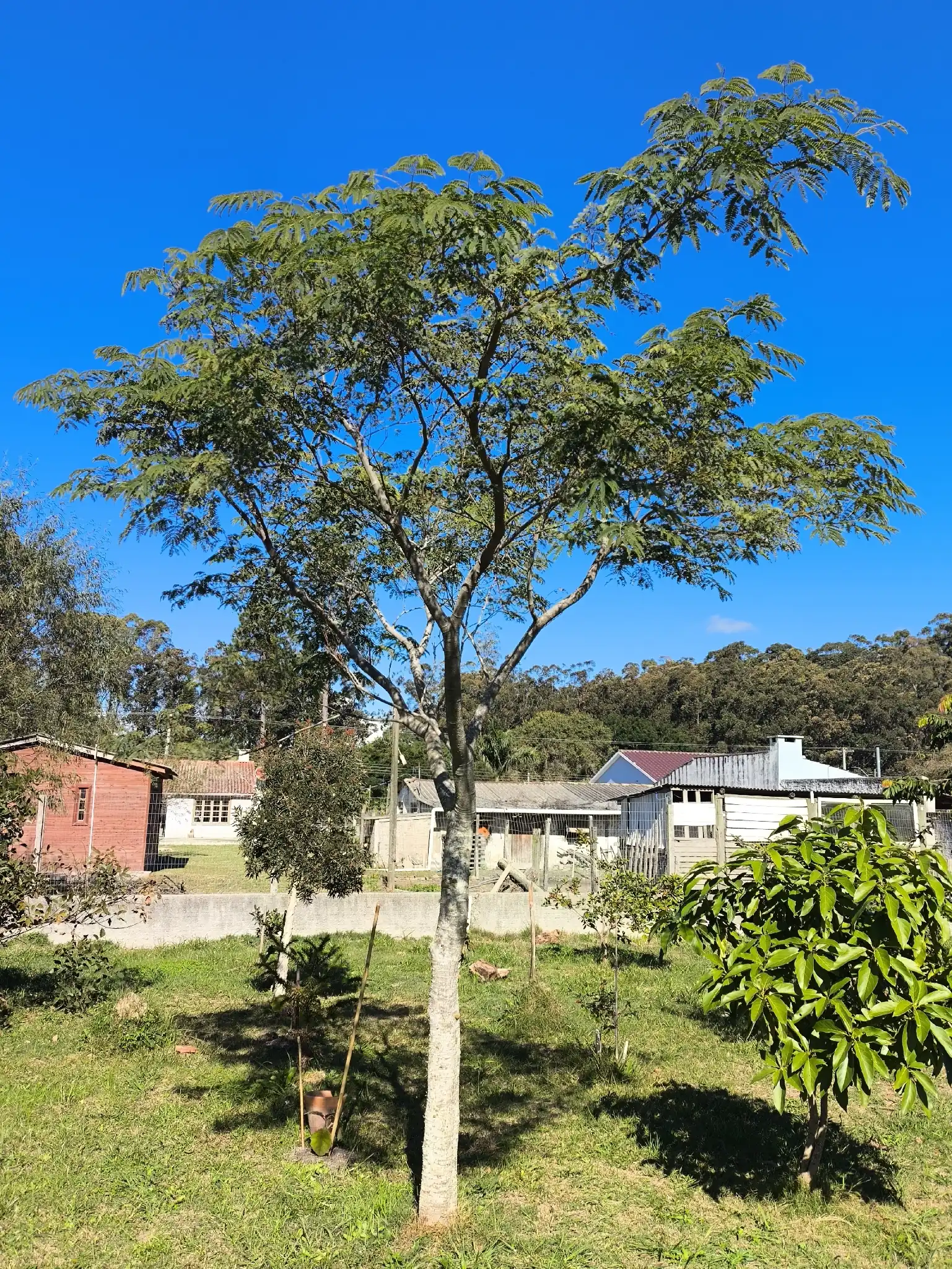
Enterolobium contortisiliquum is a massive, fast-growing deciduous tree native to South American gallery forests, capable of reaching heights and spreads of over ninety feet. It develops a thick trunk supporting a wide, umbrella-like canopy of finely bipinnate, fern-like foliage that emerges bright green or bronze before maturing.
The species is distinguished by its small, globular, pom-pom-like clusters of greenish-white flowers that bloom in spring and summer. These are followed by large, woody, spirally curved seed pods resembling ears that turn dark brown or black at maturity.
Uses & Benefits:
Essentials
At a Glance
Plant Type
Tree
Height
1180"
Width
1180"
Light
Full Sun
Zones
9, 10
Water
Moderate
Humidity
High
Lifespan
Long-lived
Native To
South America
Toxicity
Toxic if Ingested
Bloom period
Spring – Summer
In flower about 6 months of the year
Planting
How to Grow
- Select a planting site in full sun with well-draining loam, sand, or clay soil, ensuring ample clearance from structures.
- Dig a hole twice as wide as the root ball and of equal depth, then backfill without adding soil amendments.
- Water deeply to settle the soil, and maintain regular moisture during the first growing season without waterlogging.
- Apply a thin layer of organic mulch around the base, keeping it clear of the trunk to prevent rot.
Pro Tip
Plant this tree at least fifty feet away from structures, pavement, and utility lines to accommodate its immense lateral root system and canopy spread, and prepare for significant seasonal cleanup of the heavy, woody seed pods.
Keep It Thriving
Care Guide
Do
- Plant in a spacious area far from structures and underground pipes.
- Ensure the soil drains rapidly to prevent root rot.
- Rake up fallen seed pods regularly to maintain safety.
Don't
- Do not prune heavily into old, bare wood.
- Do not over-water or over-fertilize young trees.
Seasonal Care Calendar
| Task | Jan | Feb | Mar | Apr | May | Jun | Jul | Aug | Sep | Oct | Nov | Dec |
|---|---|---|---|---|---|---|---|---|---|---|---|---|
| Fertilize | ||||||||||||
| Pest Check | ||||||||||||
| Prune | ||||||||||||
| Spring Cleanup |
Watch Out For
Pests & Diseases
Common Pests
Common Diseases
In the Garden
Landscape Uses & Companions
Landscape Uses
Companion Plants
Multiply
Propagation Methods
Good to Know
Common Questions
Pacara Earpod Tree questions
What zones can Pacara Earpod Tree grow in?
Pacara Earpod Tree is hardy in USDA Zones 9–10. Inside that range it survives winter in the ground; outside it, grow it as an annual or a container plant you protect.
When does Pacara Earpod Tree bloom?
Pacara Earpod Tree typically blooms in spring through summer. Exact timing shifts a week or two with your zone — Sow's bloom calendar maps it to your garden.
Does Pacara Earpod Tree need full sun?
Pacara Earpod Tree does best in full sun (6+ hours).
Is Pacara Earpod Tree drought tolerant?
Yes — once established (usually after the first full season), Pacara Earpod Tree handles dry spells with minimal watering. Water deeply its first year to build the root system that makes that possible.
Keep exploring
Explore the genus
Hardy in your zone?
Grow Pacara Earpod Tree with confidence
See it in a design of your actual yard, get zone-matched care reminders, and track it season by season in your garden journal.