The Story
Plant Bio
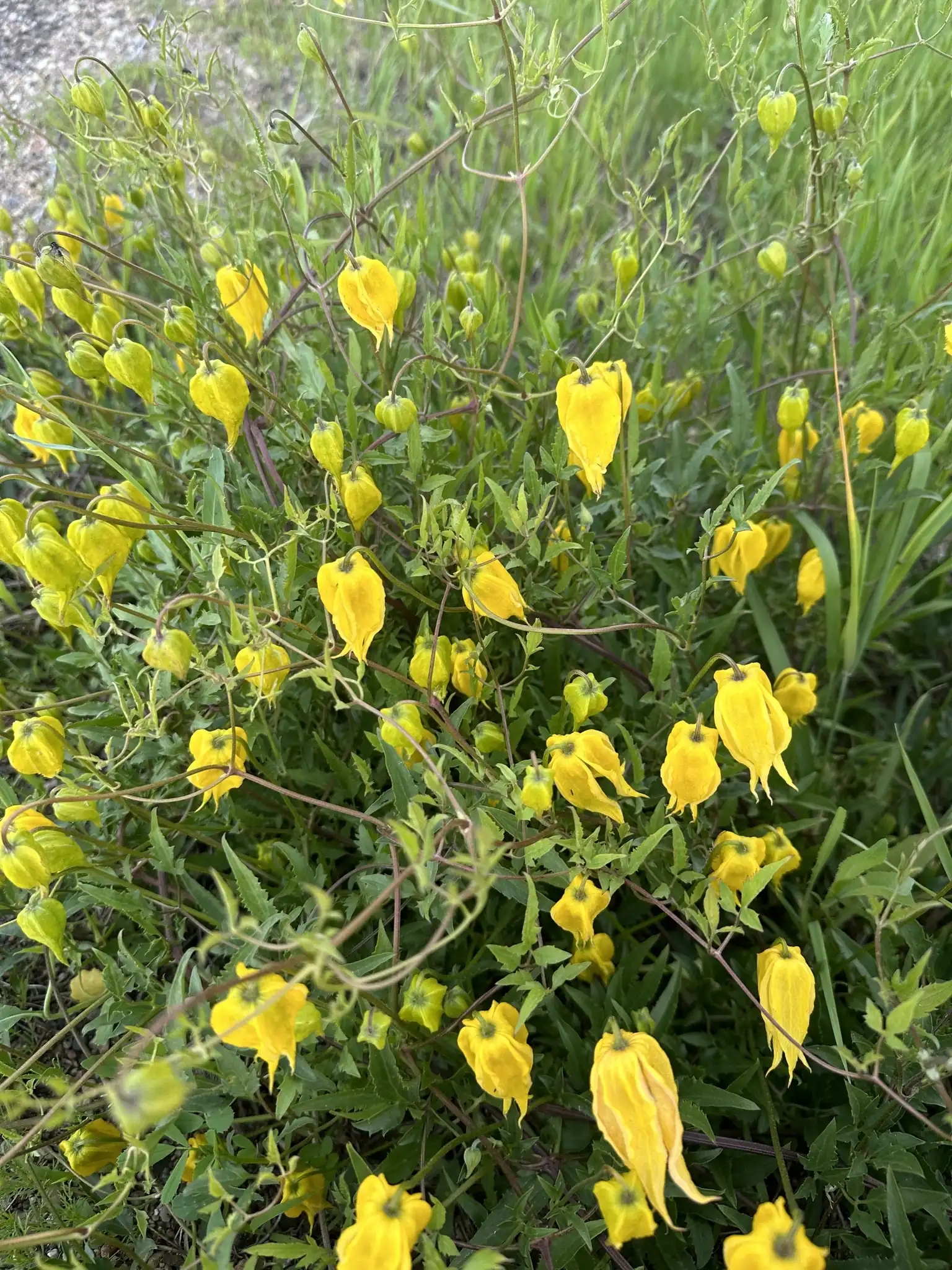
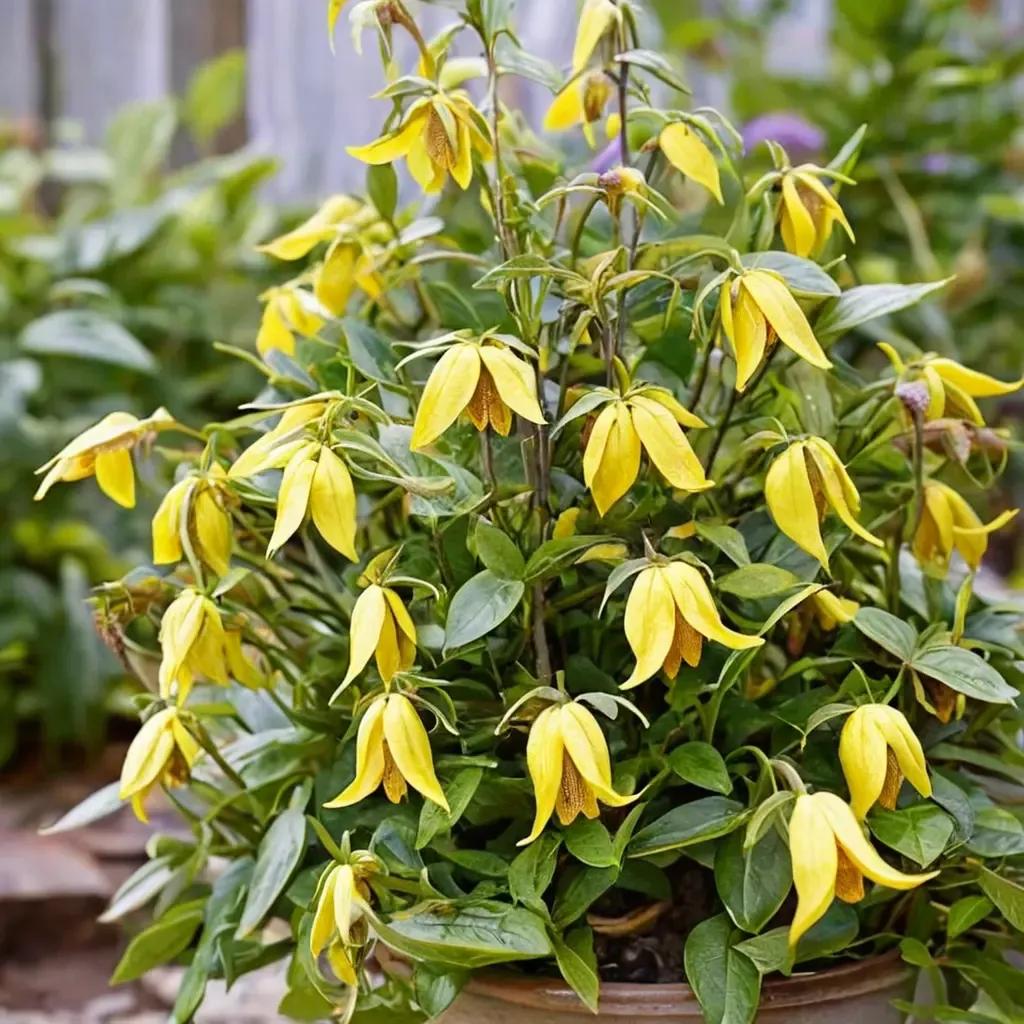
Clematis x tangutica, golden clematis, is a vigorous deciduous climber of central Asian parentage, reaching twelve to fifteen feet. Finely divided blue-green pinnate leaves cover twining stems, and nodding lantern-shaped yellow flowers with unusually thick waxy petals open from summer into autumn, followed by large silky seedheads.
The seedheads are as good as the flowers and last far longer — silvery plumed spheres that catch light through autumn and often into winter, so resist deadheading. It flowers on the current season's wood, which makes pruning simple: cut the whole thing to about a foot in late winter and it rebuilds and flowers the same year.
Uses & Benefits:
Essentials
At a Glance
Plant Type
Vine
Height
162"
Width
84"
Light
Full Sun, Partial Sun
Zones
4, 5, 6, 7, 8, 9
Water
Low to moderate
Humidity
Moderate
Lifespan
Perennial
Native To
Central Asia
Toxicity
Sap blisters skin; toxic if chewed
Planting
How to Grow
- Give it a support at least twelve feet tall.
- Plant in full sun to partial shade with cool roots.
- Mulch or shade the root area, not the top growth.
- Cut the whole plant to about a foot in late winter.
- Leave seedheads for autumn and winter interest.
- Wear gloves when pruning; the sap blisters skin.
Pro Tip
This is a group-three clematis, so simply cut everything to a foot in late winter — no judgement about old versus new wood needed.
Keep It Thriving
Care Guide
Do
- Cut it to a foot each late winter ✂️
- Keep the roots cool and mulched 🍂
- Leave the silky seedheads on 🌾
- Wear gloves when cutting it 🧤
Don't
- Deadhead the seedheads away ❌
- Prune it lightly and hope ❌
- Let the roots bake dry ❌
Seasonal Care Calendar
| Task | Jan | Feb | Mar | Apr | May | Jun | Jul | Aug | Sep | Oct | Nov | Dec |
|---|---|---|---|---|---|---|---|---|---|---|---|---|
| Enjoy | ||||||||||||
| Prune |
Watch Out For
Pests & Diseases
Common Pests
Common Diseases
In the Garden
Landscape Uses & Companions
Landscape Uses
Companion Plants
Multiply
Propagation Methods
Good to Know
Common Questions
Clematis questions
What zones can Clematis grow in?
Clematis is hardy in USDA Zones 4–9. Inside that range it survives winter in the ground; outside it, grow it as an annual or a container plant you protect.
Is Clematis deer resistant?
Yes — Clematis is rated deer-resistant. Deer typically pass it over, though extreme hunger can override any plant's defenses.
When does Clematis bloom?
Clematis typically blooms in late spring to early fall through early fall. Exact timing shifts a week or two with your zone — Sow's bloom calendar maps it to your garden.
Does Clematis need full sun?
Clematis does best in full sun to part shade. In hot climates, afternoon shade keeps blooms fresher longer.
Is Clematis drought tolerant?
Yes — once established (usually after the first full season), Clematis handles dry spells with minimal watering. Water deeply its first year to build the root system that makes that possible.
More Clematis to compare
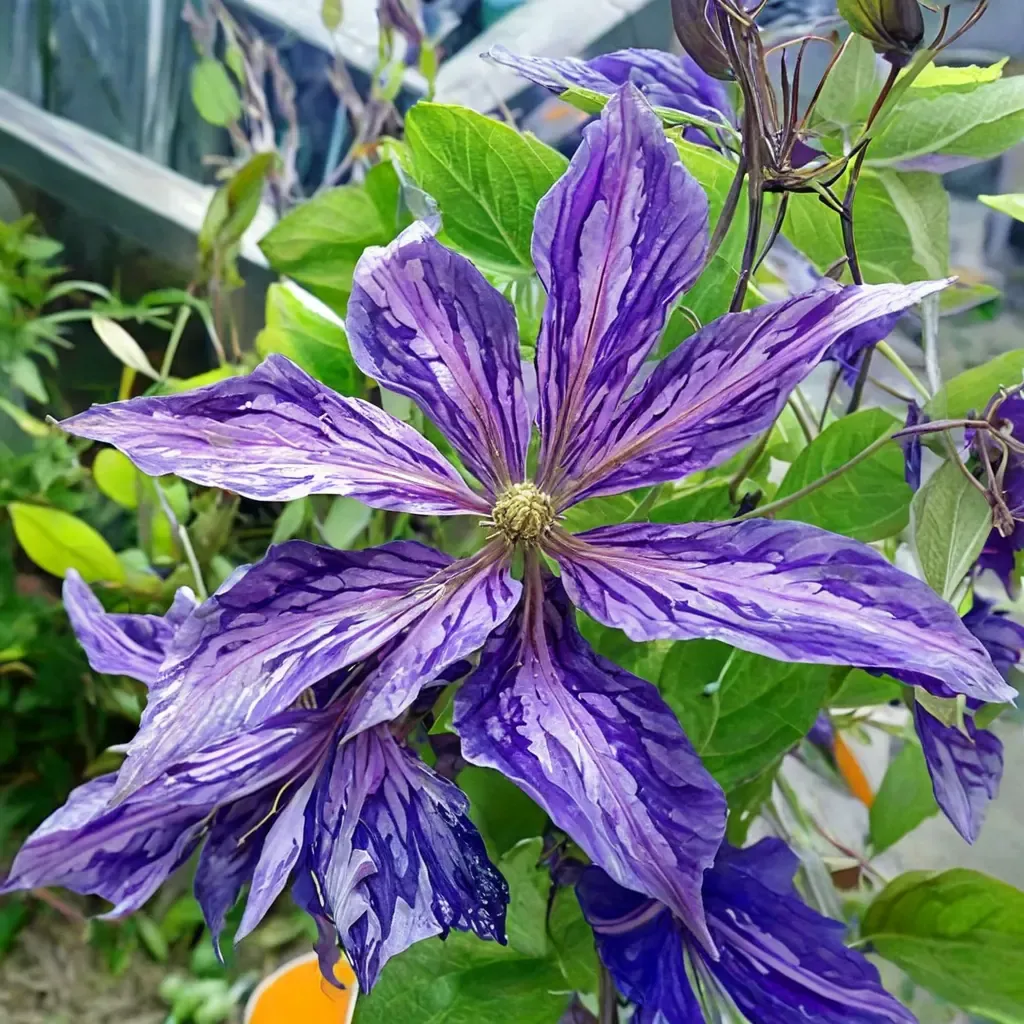
Tie Dye Clematis
Clematis viticella 'Tie Dye'
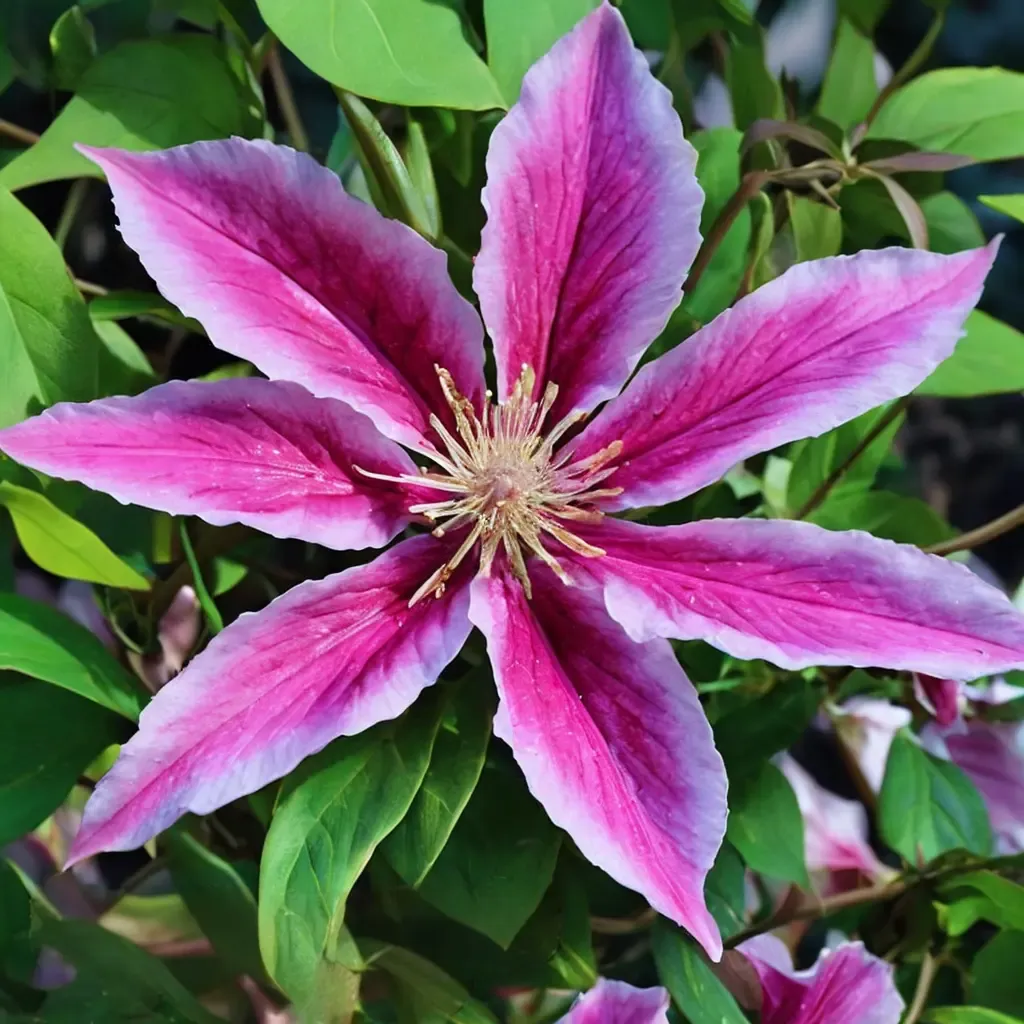
Dr. Ruppel Clematis
Clematis x jackmanii 'Dr Ruppel'
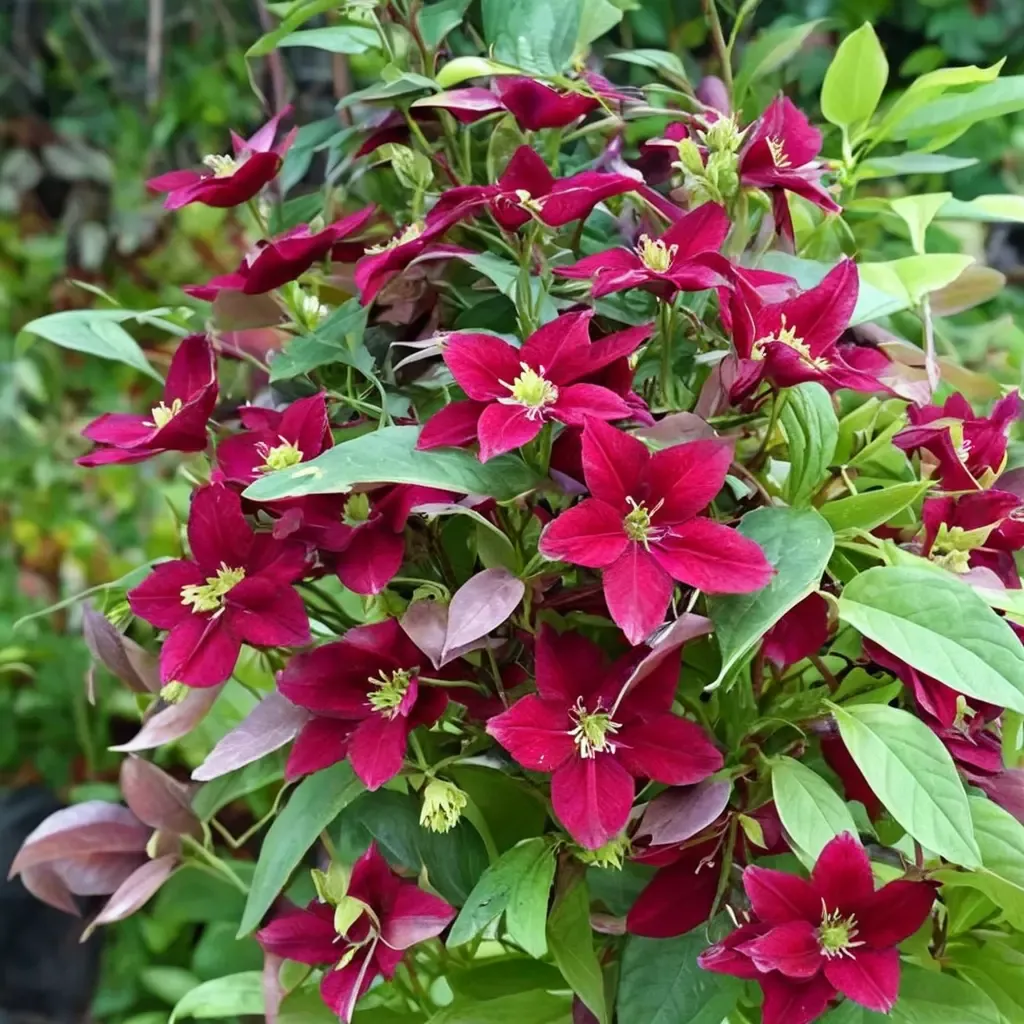
Burning Love Clematis
Clematis x cartmanii 'Burning Love'
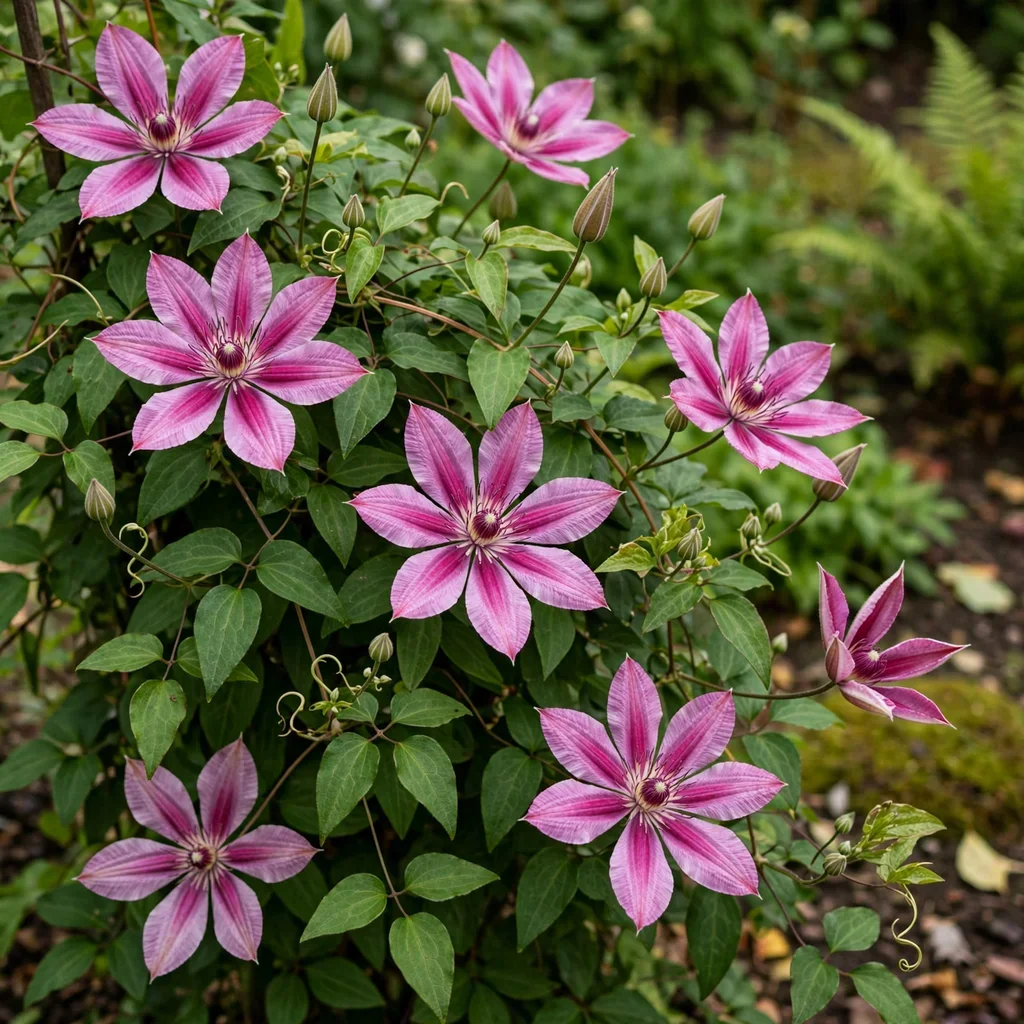
Yuan Clematis
Clematis viticella 'Yuan'
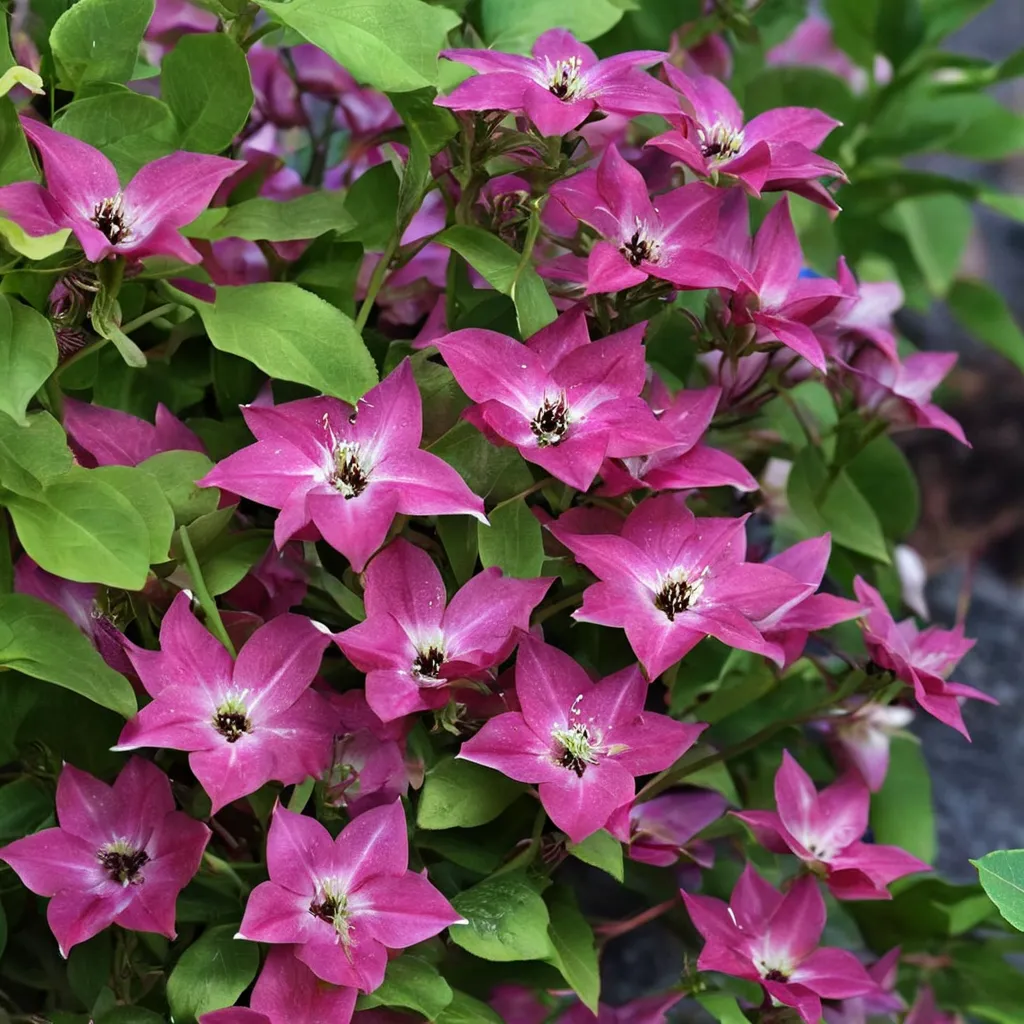
Viva Polonia Clematis
Clematis x hybrida 'Viva Polonia'
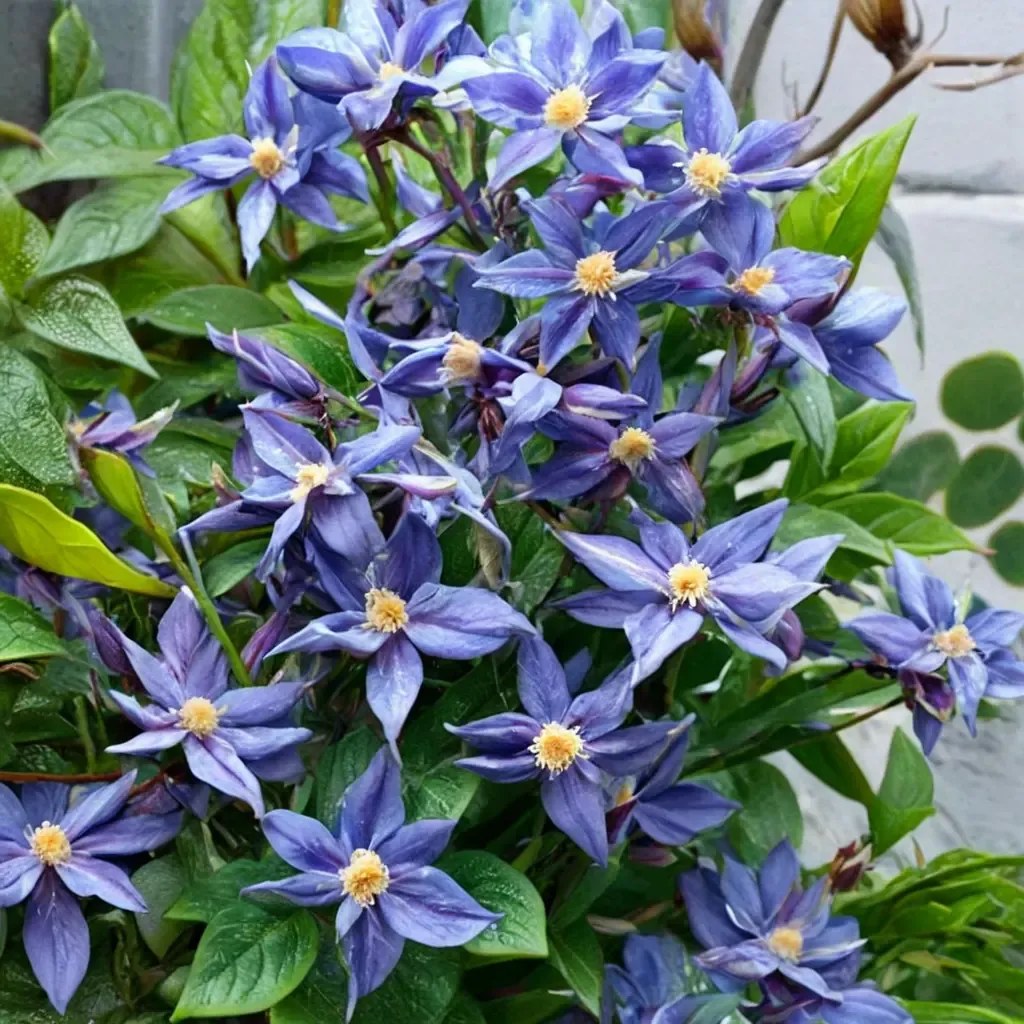
Tsukiko Clematis
Clematis x durandii 'Tsukiko'
Keep exploring
Explore the genus
Grow Clematis with confidence
See it in a design of your actual yard, get zone-matched care reminders, and track it season by season in your garden journal.