
Species
 Nyssa sylvaticaBlack Tupelo
2 other cultivars


The Story
Plant Bio
Nyssa sylvatica, the black gum, is a deciduous tree native to eastern North America that develops a deeply furrowed bark and a highly adaptable root system capable of tolerating both saturated soils and urban compaction. The species is functionally dioecious, producing inconspicuous greenish-white spring flowers followed by dark blue drupes that serve as a critical food source for migrating songbirds.
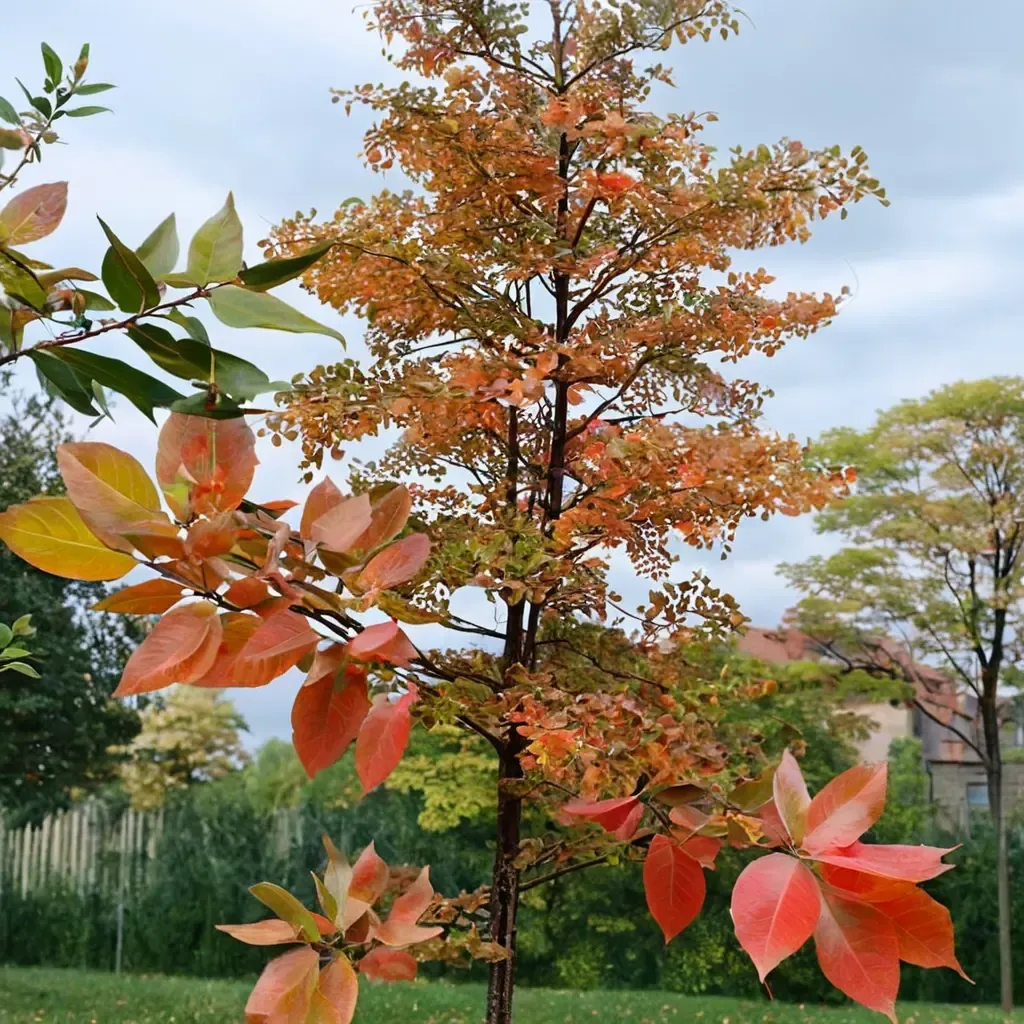
'Red Splyndor' is a cultivar distinguished by its tightly pyramidal growth habit, strong central leader, and uniform scaffolding branches. The glossy foliage emerges with a reddish-bronze tint in spring and reliably transitions to a uniform, fiery crimson-red in fall, showing greater color stability across varying soil chemistries than the straight species.
Uses & Benefits:
Essentials
At a Glance
Plant Type
Tree
Height
600"
Width
360"
Light
Full Sun, Partial Sun
Zones
4, 5, 6, 7, 8, 9
Water
Moderate to wet
Humidity
High
Lifespan
Long
Native To
North America
Toxicity
Non-toxic
Bloom period
Spring
In flower about 3 months of the year
Planting
How to Grow
- Select a planting site in full sun to partial shade with moist, acidic to neutral soil.
- Dig a hole twice as wide as the root ball but no deeper, ensuring the root flare sits slightly above the surrounding soil grade.
- Backfill with native soil without adding soil amendments, and water deeply to settle the ground around the root system.
- Apply a three-inch layer of organic mulch in a wide ring around the base, keeping the mulch several inches away from the trunk.
Pro Tip
Avoid pruning in early spring when the sap pressure is high, as the branches bleed heavily; restrict structural pruning to late winter or midsummer when the tree is fully leafed out.
Keep It Thriving
Care Guide
Do
- Water regularly during the first two growing seasons to establish the deep taproot.
- Maintain a wide mulch ring to protect the trunk from mechanical damage by lawnmowers.
- Prune during late winter or midsummer to avoid excessive sap bleeding.
Don't
- Do not prune in early spring when sap flow is highly active.
- Do not transplant established specimens, as the deep taproot makes relocation highly unsuccessful.
- Do not plant in highly alkaline soils, which can limit nutrient uptake and cause chlorosis.
Seasonal Care Calendar
| Task | Jan | Feb | Mar | Apr | May | Jun | Jul | Aug | Sep | Oct | Nov | Dec |
|---|---|---|---|---|---|---|---|---|---|---|---|---|
| Fertilize | ||||||||||||
| Mulch | ||||||||||||
| Pest Check | ||||||||||||
| Prune |
Watch Out For
Pests & Diseases
Common Pests
Common Diseases
In the Garden
Landscape Uses & Companions
Landscape Uses
Multiply
Propagation Methods
Good to Know
Common Questions
Black Gum questions
What zones can Black Gum grow in?
Black Gum is hardy in USDA Zones 4–9. Inside that range it survives winter in the ground; outside it, grow it as an annual or a container plant you protect.
When does Black Gum bloom?
Black Gum typically blooms in spring through spring. Exact timing shifts a week or two with your zone — Sow's bloom calendar maps it to your garden.
Does Black Gum need full sun?
Black Gum does best in full sun to part shade. In hot climates, afternoon shade keeps blooms fresher longer.
Is Black Gum drought tolerant?
Yes — once established (usually after the first full season), Black Gum handles dry spells with minimal watering. Water deeply its first year to build the root system that makes that possible.
More Nyssa to compare
Keep exploring
Explore the genus
Grow Black Gum with confidence
See it in a design of your actual yard, get zone-matched care reminders, and track it season by season in your garden journal.