166 saves
Catalpa
We track 4 varieties; the ones most used by real gardeners.
The 4 most-saved Catalpa varieties
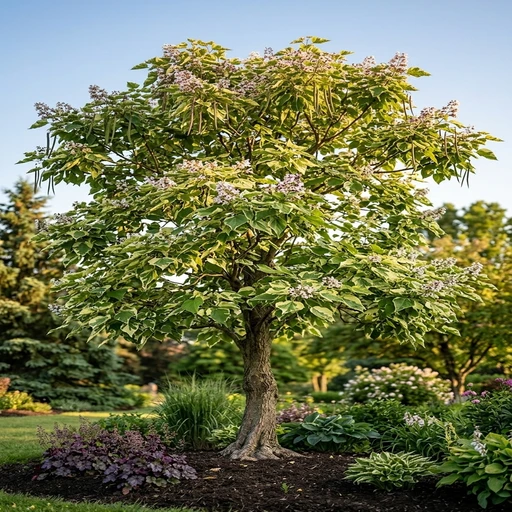
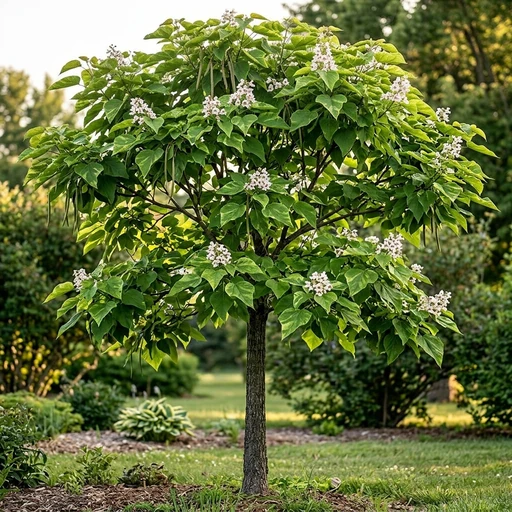
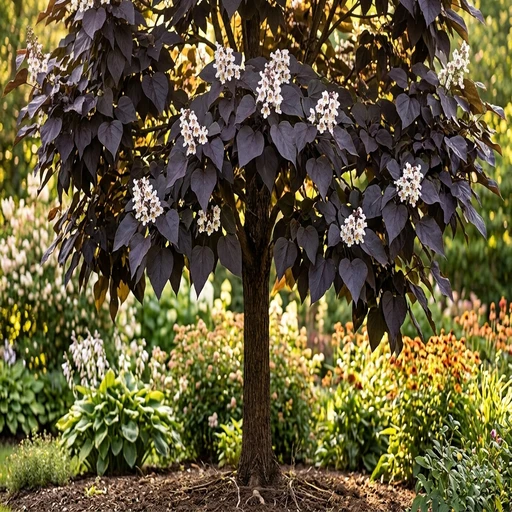
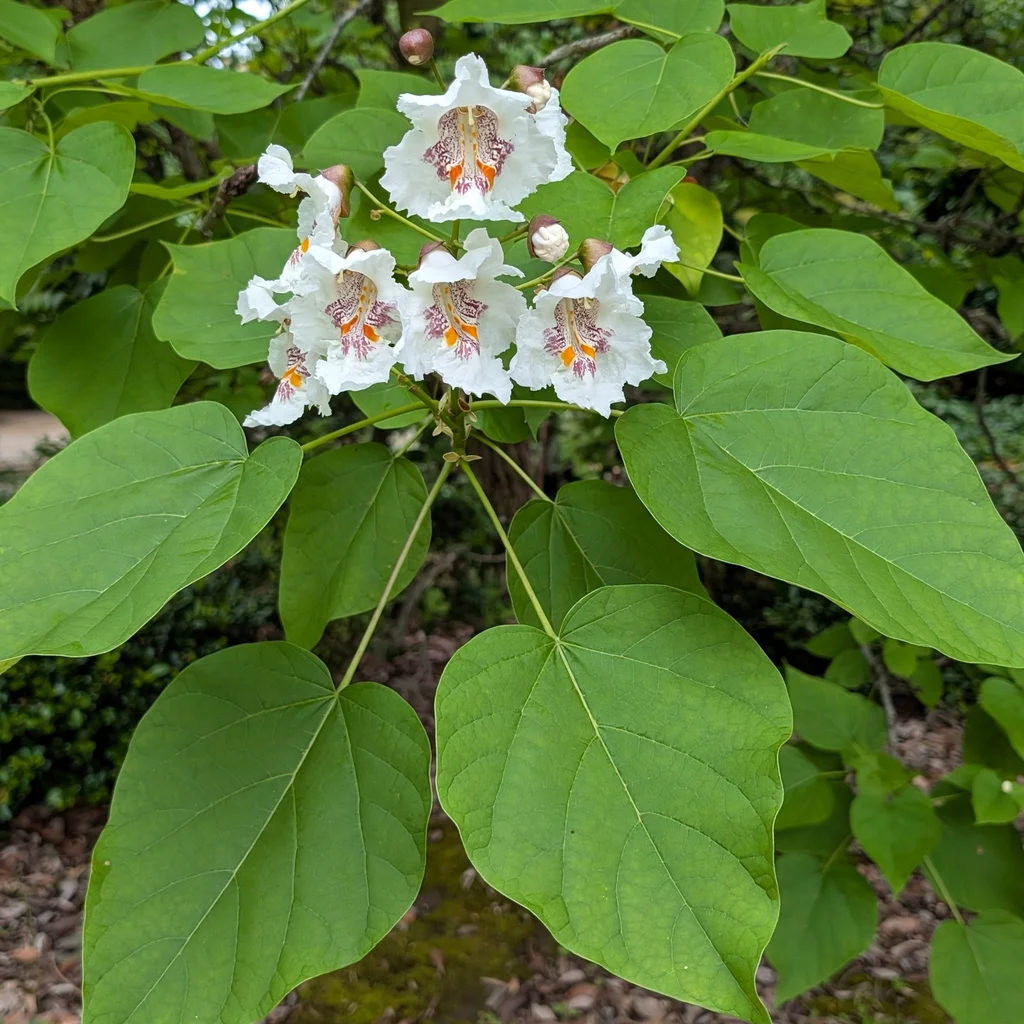
Species of Catalpa
Each one is a parent of the varieties above.
Track your Catalpa in Sow
Save the Catalpa you grow and get care reminders timed to your zone.
How to grow Catalpa
Whats common across all Catalpa varieties in our catalog — drawn from the care records of the 4 most-grown of them.
The Catalpa year
- PruneFebruary and March100% of varieties
Prune in late winter to remove deadwood and establish a strong framework.
- Check for PestsJune–August75% of varieties
Check for catalpa sphinx moth caterpillars, which can defoliate parts of the tree.


Do
- Give it plenty of room to grow to its large mature size.
- Water during extreme drought, but it is generally self-sufficient once established.
- Enjoy its unique, coarse texture and bold appearance in the landscape.
- Prune young trees to encourage a single, strong leader.
- Provide full sun for the deepest purple foliage.
Avoid
- Don't plant it in a small yard or close to buildings.
- Avoid planting over areas where you don't want flower, leaf, and pod drop.
- Don't top the tree, as this will ruin its structure and lead to weak regrowth.
- Don't worry about poor soil; it will likely thrive anyway.
What goes wrong with Catalpa
| Problem | What you'll see | What to do |
|---|---|---|
| Catalpa Sphinx Moth | Large green and black caterpillars (catalpa worms) that can completely defoliate the tree. | Often tolerated as the tree regrows leaves quickly. Hand-pick caterpillars (they are prized fish bait). Apply Bacillus thuringiensis (Bt) when caterpillars are small. |
| Catalpa sphinx moth larvae | Severe foliage defoliation by dark caterpillars | Allow natural bird predation or handpick caterpillars unless defoliation threatens young trees. |
| Aphids | Distorted new foliage growth and sticky honeydew deposits | Wash off minor infestations with a strong spray of water or apply insecticidal soap. |
| Verticillium Wilt | Sudden wilting and death of branches. | No cure. Prune out and destroy infected wood. Keep the tree healthy to help it resist the disease. |
| Powdery Mildew | White powdery coating on the large leaves in late summer. | Largely a cosmetic issue. Improve air circulation. Rake up fallen leaves. Fungicides are not practical on a large tree. |
| Verticillium wilt | Vascular discoloration and sudden branch dieback | Prune infected branches back to healthy wood and avoid planting susceptible species in affected soil. |
Making more Catalpa
Seed
- Collect seed pods in fall after they have dried.
- Extract seeds and store them in a cool, dry place.
- Sow seeds outdoors in fall or stratify for 60 days before spring sowing.
- Germination is usually high and rapid.
Root Cuttings
- In late winter, take 4-6 inch sections of pencil-thick roots.
- Lay them horizontally in a tray of moist potting mix.
- Cover lightly with more mix and keep warm.
- Shoots should appear in several weeks.
Catalpa questions
How many types of Catalpa are there?
The Sow catalog tracks 4 distinct Catalpa varieties. The most popular — ranked by 166 real gardeners — are shown first above.
What zones does Catalpa grow in?
Across its varieties, Catalpa covers USDA Zones 4–9. Individual varieties differ — each plant page lists its exact range, and Sow filters the catalog to your zone automatically.
When does Catalpa bloom?
Most Catalpa varieties bloom in late spring. Staggering early, mid, and late varieties extends the genus's season in one bed.
Which Catalpa should I choose?
Start from the most-saved varieties above — popularity across thousands of gardens is a strong signal of reliability — then filter by your zone and sun. In the Sow app you can preview any of them in a photo of your actual yard before you buy.