Also known as Venus Flytrap · 30 saves
Dionaea
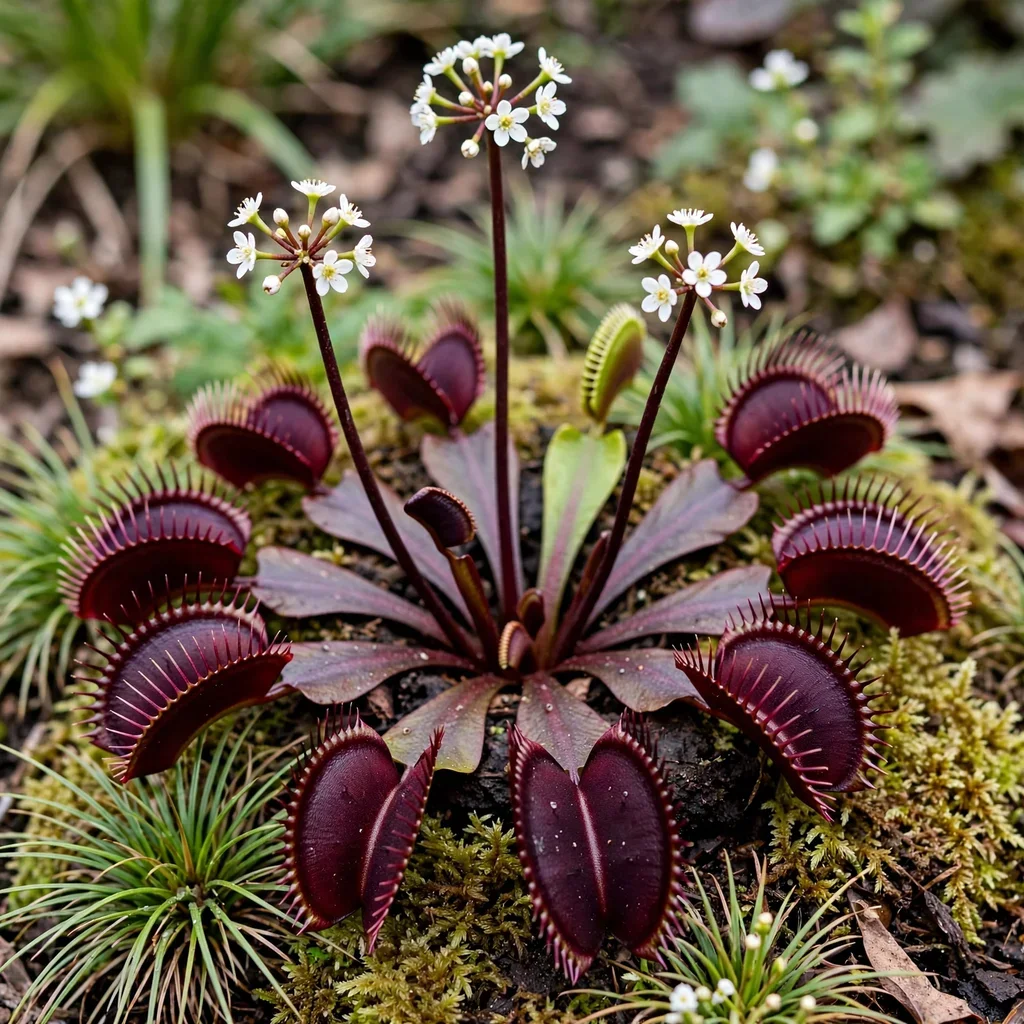
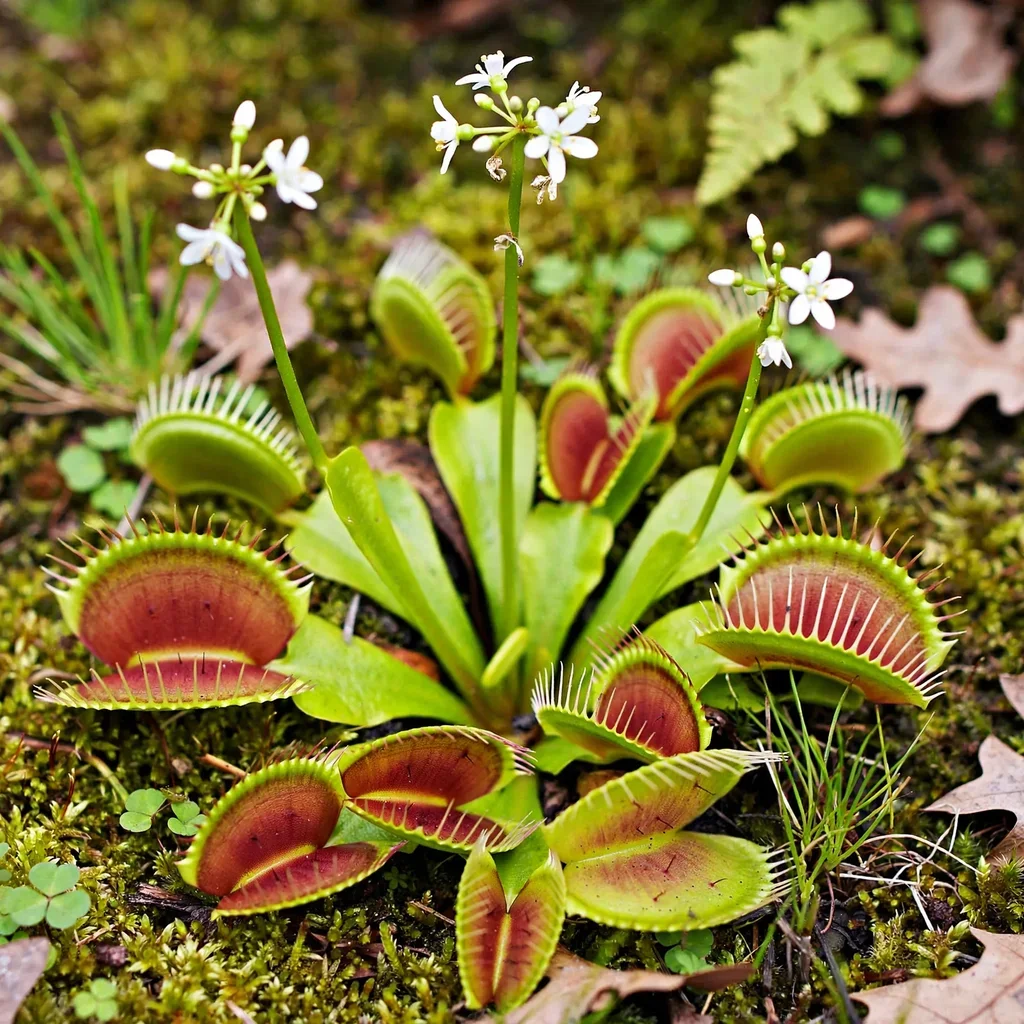
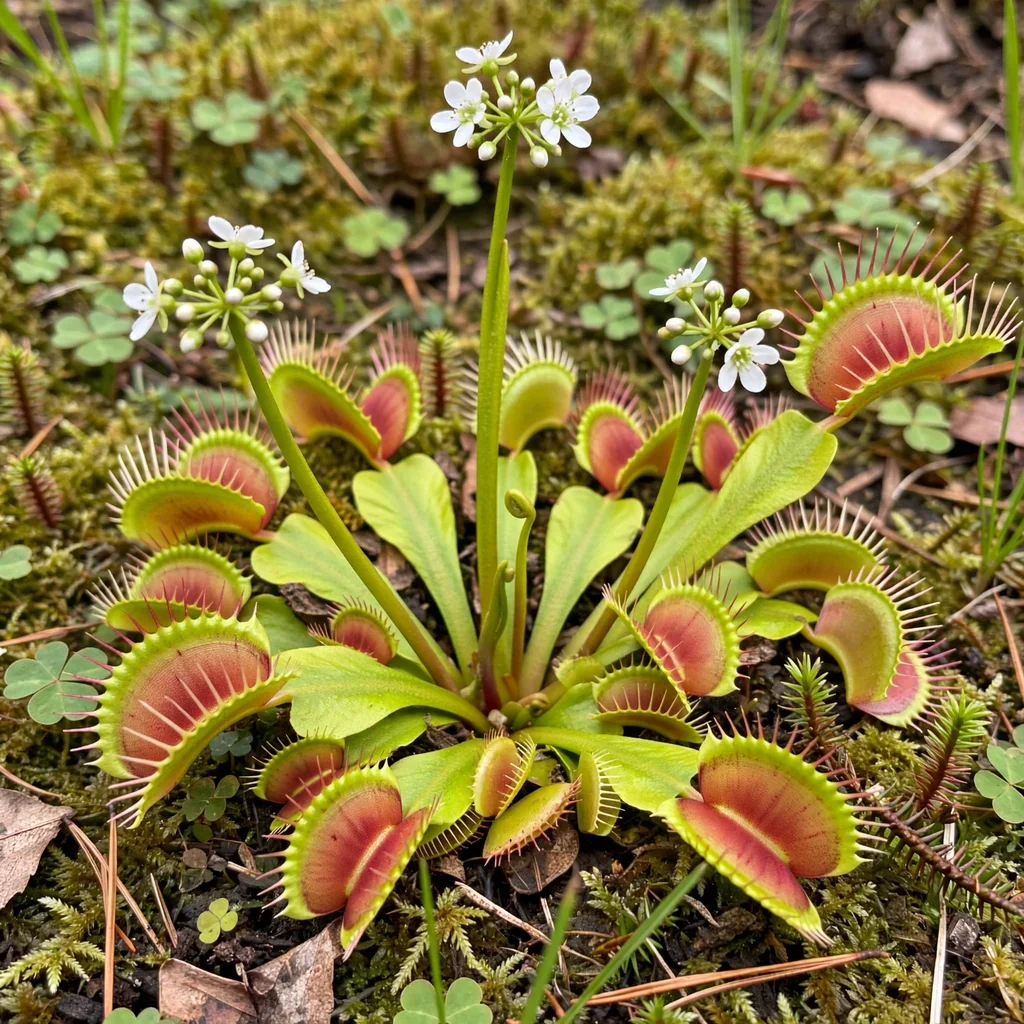
Dionaea, the genus most gardeners know as venus flytrap. We track 3 varieties; the ones most used by real gardeners.
The 3 most-saved Dionaea varieties
Track your Dionaea in Sow
Save the Dionaea you grow and get care reminders timed to your zone.
How to grow Dionaea
Whats common across all Dionaea varieties in our catalog — drawn from the care records of the 3 most-grown of them.
The Dionaea year
- PruneApril, June and July100% of varieties
Remove old, black, dead traps and foliage after winter dormancy ends.
- Winter PrepJanuary, February, November and December100% of varieties
Ensure the plant experiences a cold dormancy (35-50°F) for 3-5 months; keep soil slightly moist.
- FertilizeApril–September67% of varieties
Never fertilize the soil; the plant gets nutrients from captured insects.


Do
- Monitor for pests regularly
- Maintain high humidity around the plant 🌱
- Provide bright, direct sunlight daily ☀️
- Use pure distilled or rainwater for watering 💧
- Keep soil moist but well-drained to avoid root rot
Avoid
- Avoid using tap water with high mineral content ❌
- Do not overfeed with fertilizers or nutrients ❌
- Never expose to freezing temperatures ❌
- Avoid sudden movements or disturbance during dormancy
What goes wrong with Dionaea
| Problem | What you'll see | What to do |
|---|---|---|
| Aphids | Sticky residue on leaves, distorted growth | Spray with insecticidal soap or neem oil |
| Spider Mites | Fine webbing on plant, speckled leaves | Increase humidity and apply neem oil |
| Mealybugs | White cottony masses on leaves | Remove manually or treat with neem oil |
| Spider mites | Fine webbing and speckled leaves | Increase humidity and apply insecticidal soap |
| Fungal rot | Soft, brown, and mushy leaves | Improve air circulation and reduce watering |
| Fungal Root Rot | Wilting and browning roots | Reduce watering frequency and improve drainage |
Making more Dionaea
Division
- Gently remove the plant from soil after dormancy.
- Separate healthy traps with roots using sterilized tools.
- Plant divisions in fresh, moist sphagnum moss.
- Keep in shaded, humid environment for 4 weeks.
Seed Propagation
- Sow seeds on moist sphagnum moss in early spring.
- Cover lightly with fine sand or moss.
- Maintain high humidity and indirect light.
- Germination occurs in 2-4 weeks, with patience.
Dionaea questions
How many types of Dionaea are there?
The Sow catalog tracks 3 distinct Dionaea varieties. The most popular — ranked by 30 real gardeners — are shown first above.
What zones does Dionaea grow in?
Across its varieties, Dionaea covers USDA Zones 6–10. Individual varieties differ — each plant page lists its exact range, and Sow filters the catalog to your zone automatically.
When does Dionaea bloom?
Most Dionaea varieties bloom in early summer, late spring. Staggering early, mid, and late varieties extends the genus's season in one bed.
Which Dionaea should I choose?
Start from the most-saved varieties above — popularity across thousands of gardens is a strong signal of reliability — then filter by your zone and sun. In the Sow app you can preview any of them in a photo of your actual yard before you buy.