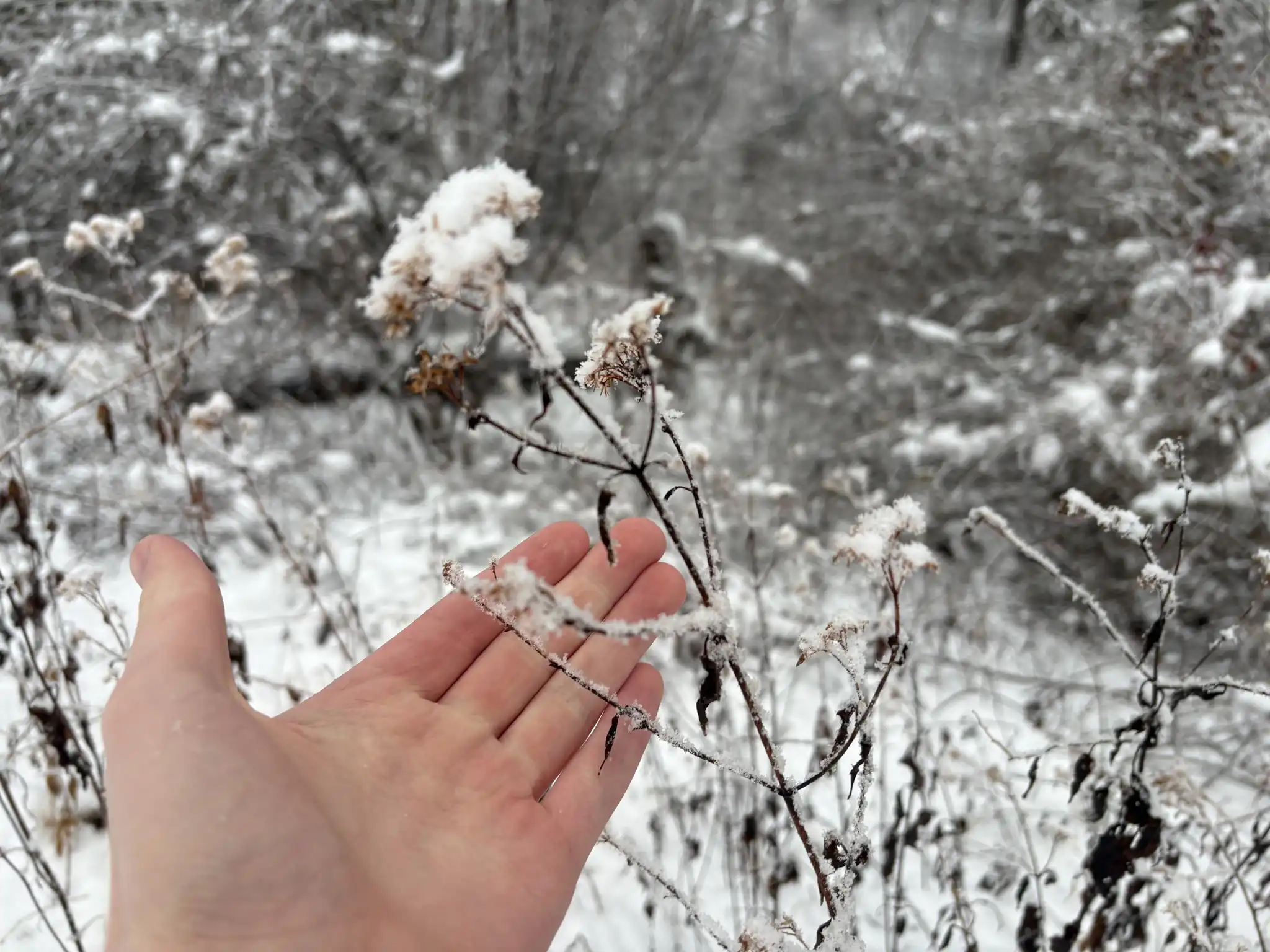
The Story
Plant Bio
Ageratina altissima is an upright, clump-forming herbaceous perennial native to eastern and central North American woodlands, characterized by opposite, heart-shaped leaves with coarsely serrated margins. In late summer and fall, the branching stems produce flat-topped, fluffy clusters of bright white, button-like flowers that serve as a vital late-season food source for native pollinators.
While the wild species features bright green foliage, popular cultivated selections such as 'Chocolate' offer striking dark bronze-purple leaves that contrast with the white blossoms. These dark-leaved forms require adequate sunlight to maintain their rich coloration, as deep shade causes the foliage to revert to a muddy green.
Uses & Benefits:
Essentials
At a Glance
Plant Type
Perennial
Height
60"
Width
48"
Light
Full Sun, Partial Sun, Shade
Zones
4, 5, 6, 7, 8, 9
Water
Moderate
Humidity
High
Lifespan
Perennial
Native To
North America
Toxicity
Highly Toxic
Bloom period
Summer – Fall
In flower about 6 months of the year
Planting
How to Grow
- Select a planting site in partial to full shade with moist, well-drained soil.
- Incorporate organic compost into the planting hole to mimic its native woodland humus.
- Water regularly after planting to establish a deep, resilient root system.
- Space multiple plants 24 to 48 inches apart to accommodate their mature spreading rhizomes.
Pro Tip
Avoid planting this species near livestock pastures or pet enclosures, as all parts of the plant contain tremetol, a highly toxic compound that causes fatal poisoning and taints milk.
Keep It Thriving
Care Guide
Do
- Pinch back stems in late spring to control height and encourage bushier growth.
- Deadhead spent flower clusters to prevent aggressive self-seeding in garden beds.
- Apply a light layer of compost around the base of the plant each spring.
Don't
- Do not plant in poorly drained, waterlogged soils where stagnant moisture causes root rot.
- Do not apply heavy fertilizers, which trigger weak, floppy vertical growth.
- Do not handle the plant without gloves if you have sensitive skin, as contact can cause irritation.
Seasonal Care Calendar
| Task | Jan | Feb | Mar | Apr | May | Jun | Jul | Aug | Sep | Oct | Nov | Dec |
|---|---|---|---|---|---|---|---|---|---|---|---|---|
| Deadhead | ||||||||||||
| Divide | ||||||||||||
| Pinch | ||||||||||||
| Spring Cleanup |
Watch Out For
Pests & Diseases
Common Pests
Common Diseases
In the Garden
Landscape Uses & Companions
Landscape Uses
Companion Plants
Multiply
Propagation Methods
Good to Know
Common Questions
White Snakeroot questions
What zones can White Snakeroot grow in?
White Snakeroot is hardy in USDA Zones 4–9. Inside that range it survives winter in the ground; outside it, grow it as an annual or a container plant you protect.
Is White Snakeroot deer resistant?
Yes — White Snakeroot is rated deer-resistant. Deer typically pass it over, though extreme hunger can override any plant's defenses.
When does White Snakeroot bloom?
White Snakeroot typically blooms in summer through fall. Exact timing shifts a week or two with your zone — Sow's bloom calendar maps it to your garden.
Does White Snakeroot need full sun?
White Snakeroot does best in full sun to part shade. In hot climates, afternoon shade keeps blooms fresher longer.
Is White Snakeroot drought tolerant?
Yes — once established (usually after the first full season), White Snakeroot handles dry spells with minimal watering. Water deeply its first year to build the root system that makes that possible.
More Ageratina to compare
Keep exploring
Explore the genus
Grow White Snakeroot with confidence
See it in a design of your actual yard, get zone-matched care reminders, and track it season by season in your garden journal.