The Story
Plant Bio
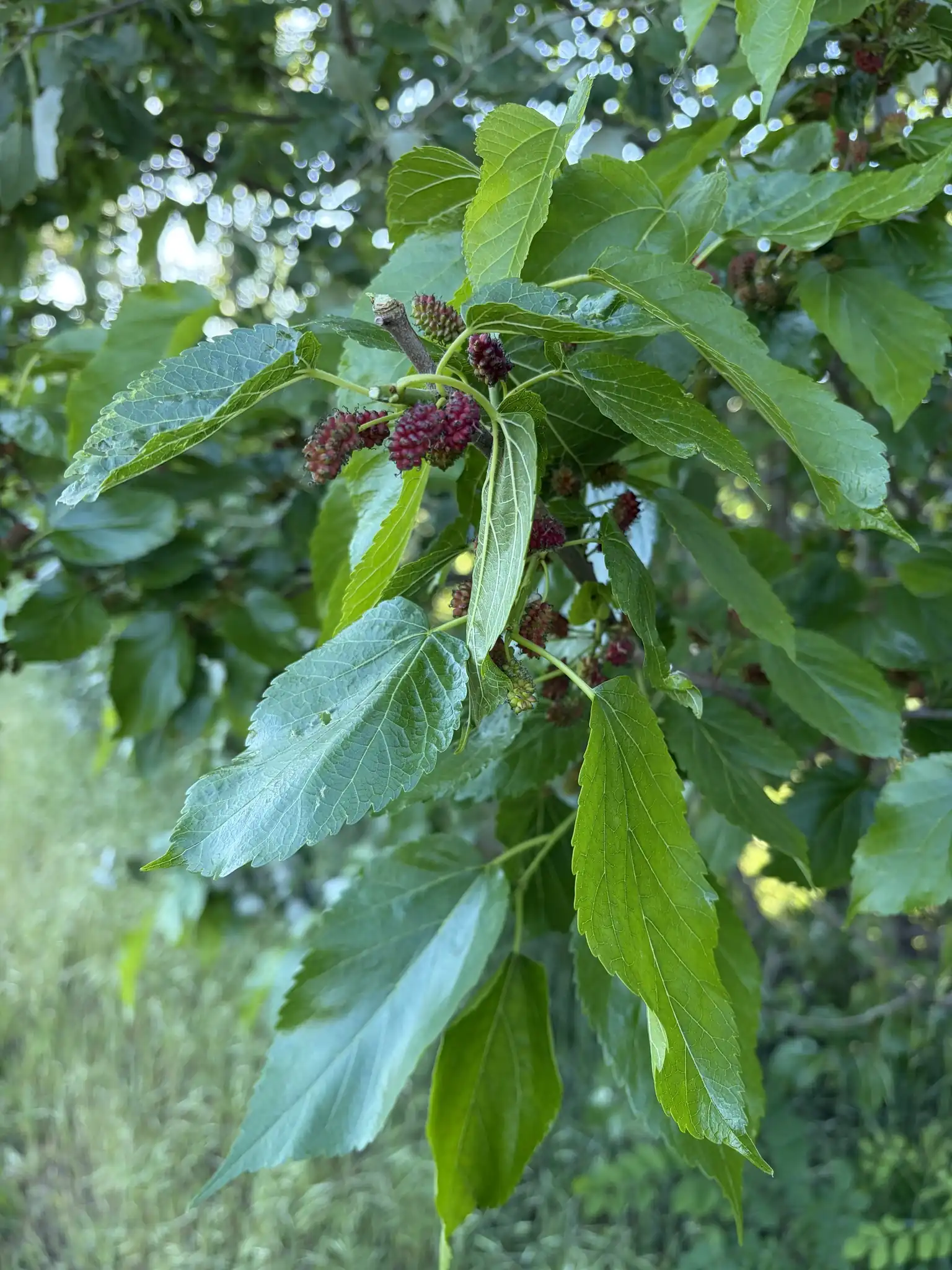
Morus nigra is a deciduous tree forming a broad, dense, dome-shaped canopy on a short, characteristically twisted trunk. The alternate, heart-shaped leaves are distinctly rough and scabrous on the upper surface and soft-hairy beneath, turning from bright green to a dull dark green by summer.
This species produces large, highly flavorful, dark purple-to-black fruits that are widely considered superior in taste to other mulberries. It remains a smaller, more compact tree than the white mulberry, making it more manageable in home orchards.
Uses & Benefits:
Essentials
At a Glance
Plant Type
Tree
Height
354"
Width
472"
Light
Full Sun
Zones
5, 6, 7, 8, 9
Water
Medium
Humidity
Moderate
Lifespan
Long-lived
Native To
Asia
Toxicity
Mildly toxic if unripe
Bloom period
Spring
In flower about 3 months of the year
Planting
How to Grow
- Select a planting site in full sun with fertile, well-drained loam, sand, or clay soil.
- Position the tree away from paved walkways, driveways, or patios to prevent dropped fruits from staining surfaces.
- Water regularly during the first two growing seasons to establish a deep, drought-tolerant root system.
- Apply a balanced organic fertilizer or compost mulch around the drip line annually in early spring.
Pro Tip
Never prune heavily into old, leafless wood, as it heals poorly and invites wood-boring pests; instead, perform light annual shaping during winter dormancy.
Keep It Thriving
Care Guide
Do
- Prune annually in late winter to remove dead or crossing branches and maintain an open canopy.
- Protect young tree trunks with physical guards to prevent deer and rabbit browsing.
- Harvest fruit only when fully ripe and dark to ensure sweetness and avoid stomach irritation from unripe berries.
Don't
- Do not plant near concrete paths, decks, or parking areas where staining fruit will cause cleanup issues.
- Do not overwater or plant in low-lying areas prone to prolonged waterlogging, which triggers root rot.
- Do not prune heavily into old, leafless wood, as these wounds heal poorly.
Seasonal Care Calendar
| Task | Jan | Feb | Mar | Apr | May | Jun | Jul | Aug | Sep | Oct | Nov | Dec |
|---|---|---|---|---|---|---|---|---|---|---|---|---|
| Fertilize | ||||||||||||
| Harvest | ||||||||||||
| Pest Check | ||||||||||||
| Prune |
Watch Out For
Pests & Diseases
Common Pests
Common Diseases
In the Garden
Landscape Uses & Companions
Landscape Uses
Companion Plants
Multiply
Propagation Methods
Good to Know
Common Questions
Black Mulberry questions
What zones can Black Mulberry grow in?
Black Mulberry is hardy in USDA Zones 5–9. Inside that range it survives winter in the ground; outside it, grow it as an annual or a container plant you protect.
Is Black Mulberry deer resistant?
Not reliably. Deer may browse Black Mulberry, especially tender spring growth — plan on repellents or fencing where pressure is high.
When does Black Mulberry bloom?
Black Mulberry typically blooms in spring through spring. Exact timing shifts a week or two with your zone — Sow's bloom calendar maps it to your garden.
Does Black Mulberry need full sun?
Black Mulberry does best in full sun (6+ hours).
Is Black Mulberry drought tolerant?
Yes — once established (usually after the first full season), Black Mulberry handles dry spells with minimal watering. Water deeply its first year to build the root system that makes that possible.
More Morus to compare
Keep exploring
Explore the genus
Hardy in your zone?
Grow Black Mulberry with confidence
See it in a design of your actual yard, get zone-matched care reminders, and track it season by season in your garden journal.