The Story
Plant Bio
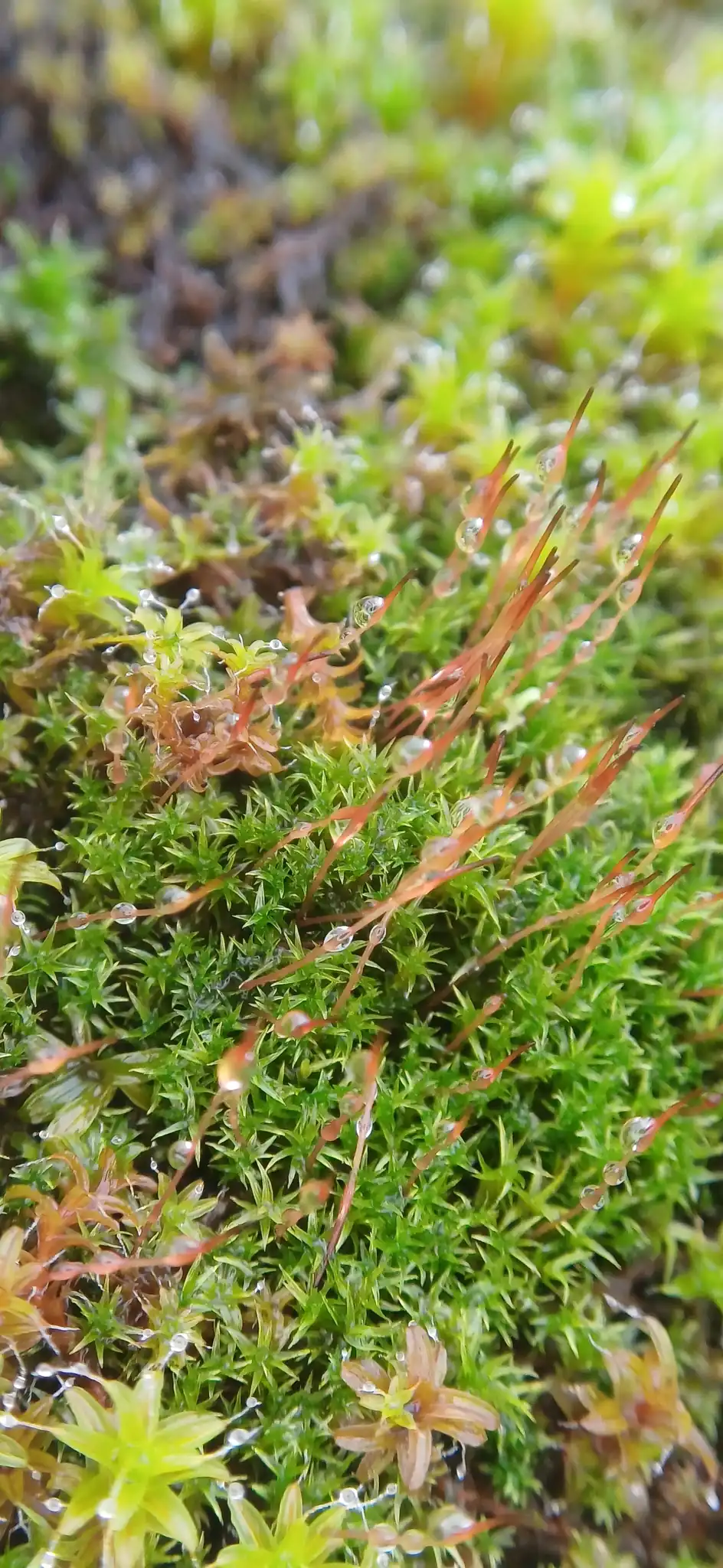
Ceratodon purpureus, commonly known as fire moss, is a cosmopolitan, turf-forming bryophyte that colonizes disturbed, acidic, or burnt soils across North America. It forms dense, low-growing cushions of erect stems with tiny, lanceolate leaves that shift from yellow-green to ginger-brown depending on light exposure.
This pioneer species is highly desiccation-tolerant, entering dormancy during dry spells and reviving rapidly upon rehydration. In spring and summer, it produces prominent, upright, reddish sporophyte stalks topped with furrowed, cylindrical capsules.
Uses & Benefits:
Essentials
At a Glance
Plant Type
Groundcover
Height
3"
Width
12"
Light
Full Sun, Partial Sun
Zones
4, 5, 6, 7, 8, 9
Water
Low
Humidity
Moderate
Lifespan
Perennial
Native To
North America, Australia, Antarctica, Global
Toxicity
Non-toxic
Bloom period
Spring – Summer
In flower about 6 months of the year
Planting
How to Grow
- Select an open site with full sun to partial shade and sandy, gravelly, or disturbed mineral soil.
- Clear the planting area of all weeds, debris, and loose organic matter to expose bare mineral substrate.
- Press the moss plugs or patches firmly onto the damp soil surface to ensure direct contact.
- Water lightly but consistently for the first few weeks until the colony establishes its hold on the substrate.
Pro Tip
Avoid applying high-nitrogen fertilizers or planting in heavy, poorly drained soils, as these conditions suffocate the moss and encourage aggressive vascular weeds.
Keep It Thriving
Care Guide
Do
- Keep the planting area free of fallen leaves and debris that can block light.
- Ensure excellent drainage to prevent waterlogging.
- Allow the moss to dry out naturally between watering cycles.
Don't
- Do not rake or aggressively weed established moss carpets.
- Do not apply chemical fertilizers, which promote competing algae and weeds.
- Do not plant in heavy clay or waterlogged soils.
Seasonal Care Calendar
| Task | Jan | Feb | Mar | Apr | May | Jun | Jul | Aug | Sep | Oct | Nov | Dec |
|---|---|---|---|---|---|---|---|---|---|---|---|---|
| Pest Check | ||||||||||||
| Plant | ||||||||||||
| Propagate | ||||||||||||
| Spring Cleanup |
Watch Out For
Pests & Diseases
Common Pests
Common Diseases
In the Garden
Landscape Uses & Companions
Landscape Uses
Multiply
Propagation Methods
Good to Know
Common Questions
Fire Moss questions
What zones can Fire Moss grow in?
Fire Moss is hardy in USDA Zones 4–9. Inside that range it survives winter in the ground; outside it, grow it as an annual or a container plant you protect.
Is Fire Moss deer resistant?
Yes — Fire Moss is rated deer-resistant. Deer typically pass it over, though extreme hunger can override any plant's defenses.
When does Fire Moss bloom?
Fire Moss typically blooms in spring through summer. Exact timing shifts a week or two with your zone — Sow's bloom calendar maps it to your garden.
Does Fire Moss need full sun?
Fire Moss does best in full sun to part shade. In hot climates, afternoon shade keeps blooms fresher longer.
Is Fire Moss drought tolerant?
Yes — once established (usually after the first full season), Fire Moss handles dry spells with minimal watering. Water deeply its first year to build the root system that makes that possible.
Keep exploring
Explore the genus
Grow Fire Moss with confidence
See it in a design of your actual yard, get zone-matched care reminders, and track it season by season in your garden journal.