
The Story
Plant Bio
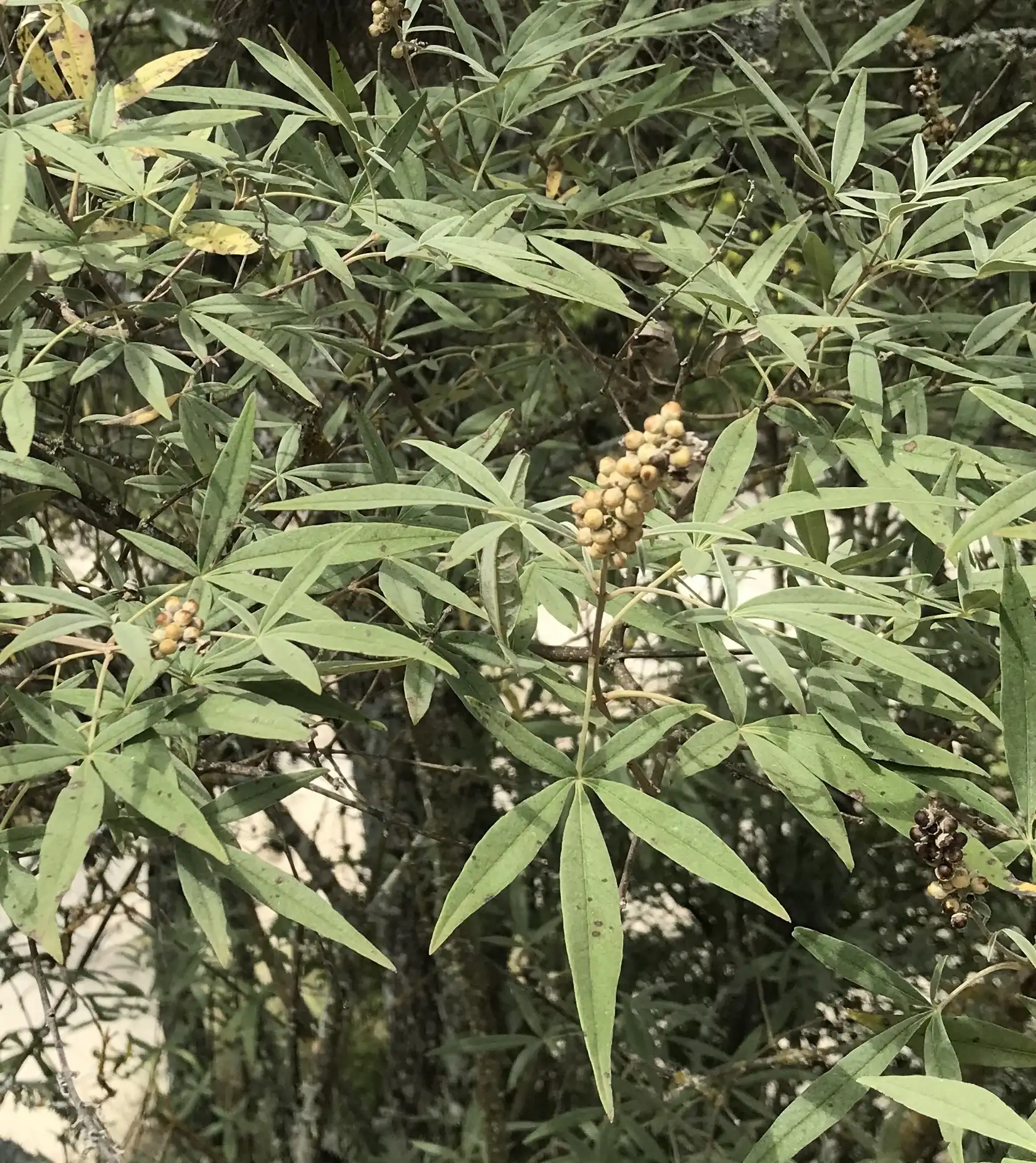
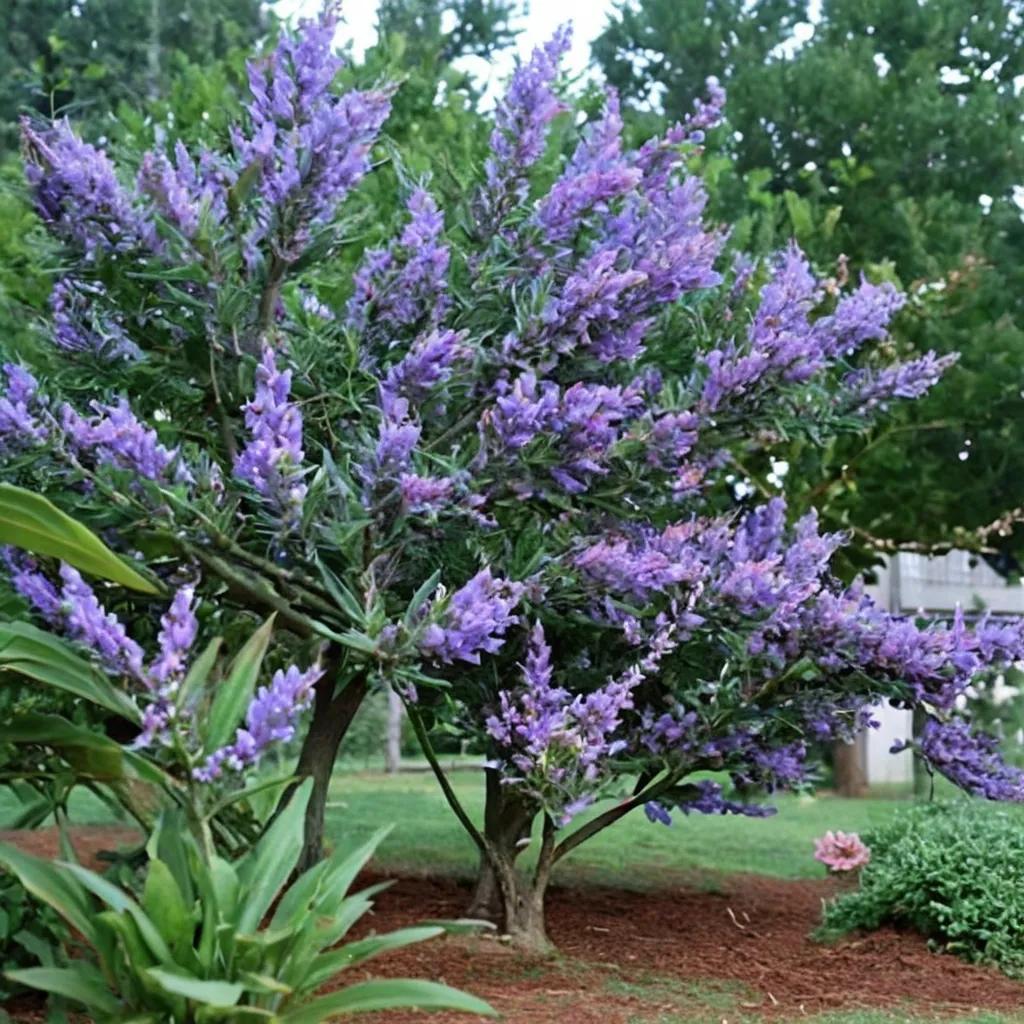
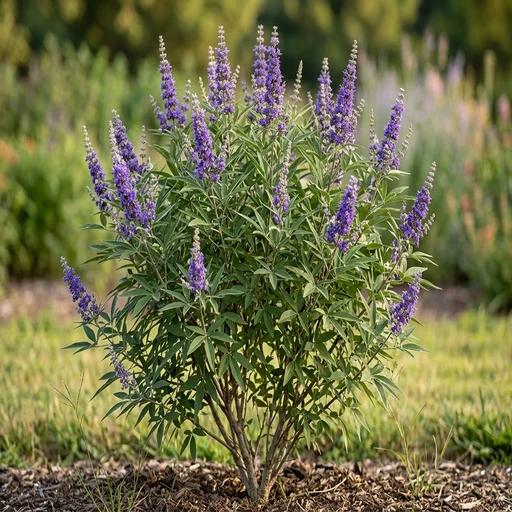
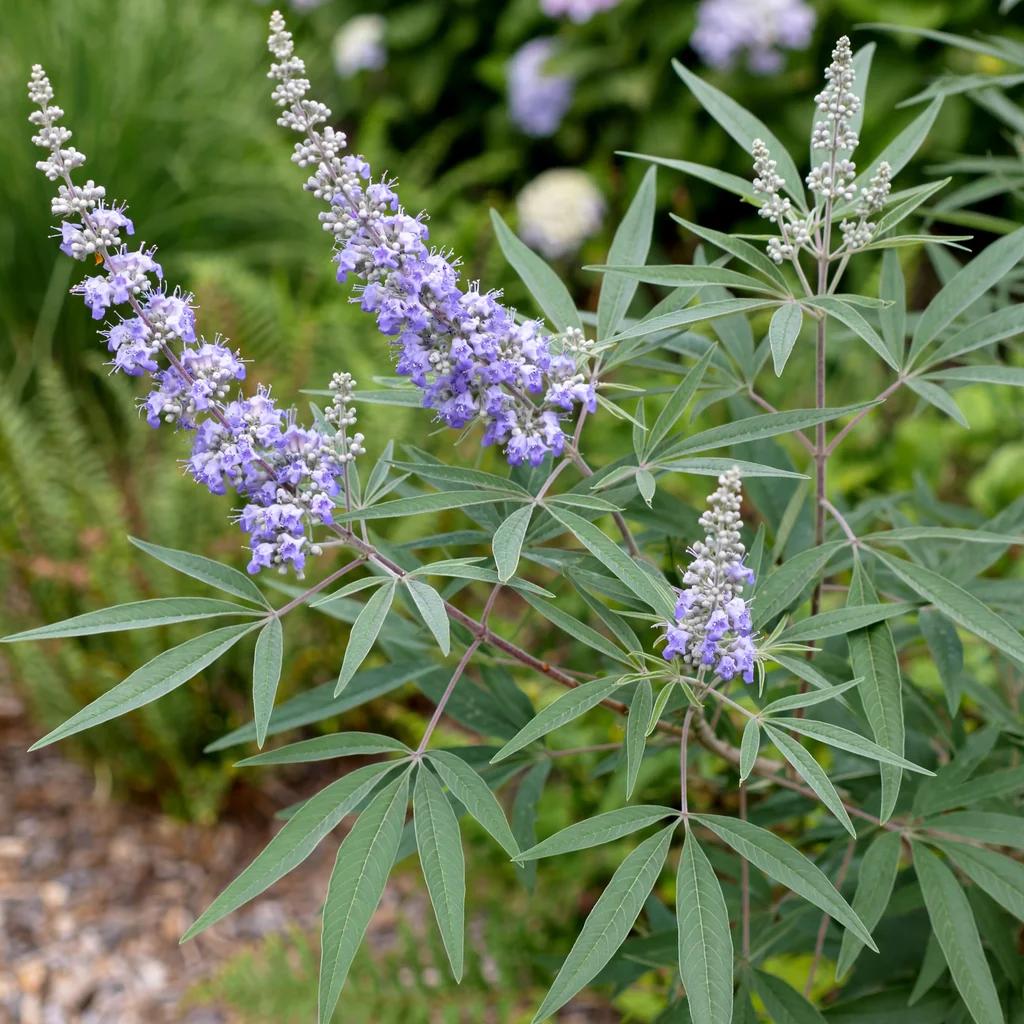
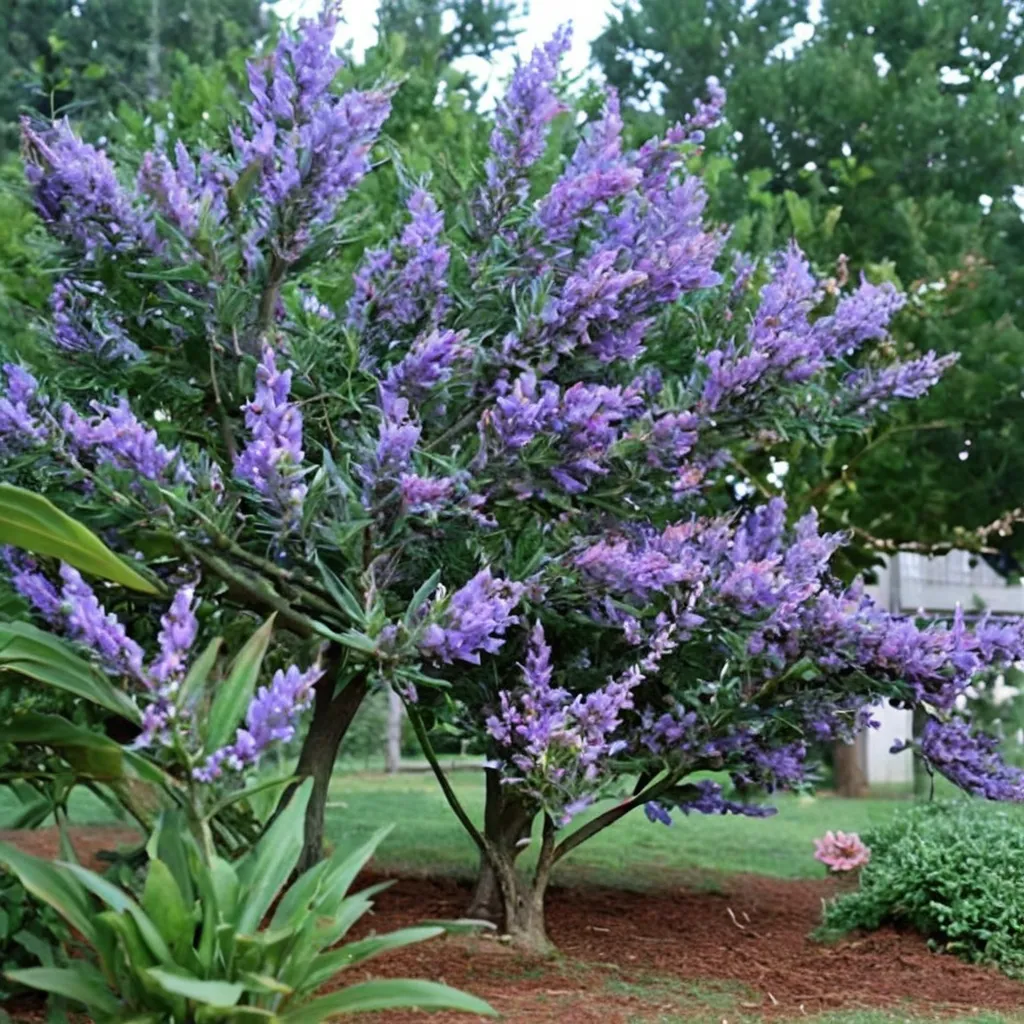
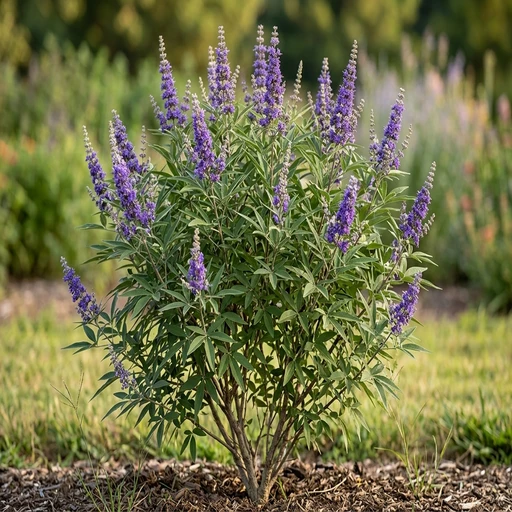
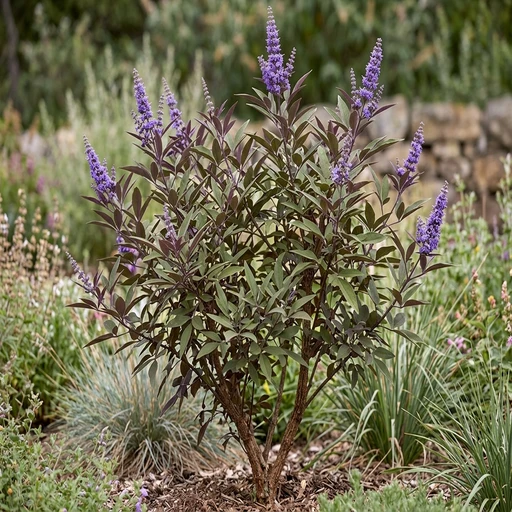
Vitex agnus-castus, chastetree, is a fast open deciduous shrub or small tree from the Mediterranean east to Pakistan, reaching eight to twenty feet with a rounded spreading crown. Aromatic grey-green palmate leaves clothe the branches, and upright spikes of small tubular lilac-blue flowers open through summer and are worked constantly by bees.
It flowers on the current season's wood, so it can be cut back hard each spring and grown as a large perennial where winters kill the top growth — that flexibility is unusual in a plant this size. It self-seeds enough to be watched in parts of Texas and the Southeast, so deadhead the spikes if you garden near natural areas.
Uses & Benefits:
Essentials
At a Glance
Plant Type
Shrub
Height
168"
Width
78"
Light
Full Sun, Partial Sun
Zones
6, 7, 8, 9
Water
Low
Humidity
Low
Lifespan
Perennial
Native To
Mediterranean to Pakistan
Toxicity
Non-toxic
Marketplace
Where to Buy
Shipping costs Year-round shipping Free shipping
Planting
How to Grow
- Plant in full sun; it will not flower well in shade.
- Give it free-draining soil and little else.
- Water while establishing, then only in drought.
- Cut back hard in late winter to control size.
- Deadhead spent spikes to prolong flowering.
- Avoid rich feeding, which reduces flower.
Pro Tip
Deadheading spent spikes brings a second and often third flush, so a summer of shearing doubles the flowering season.
Keep It Thriving
Care Guide
Do
- Give it full sun and sharp drainage ☀️
- Cut back hard in late winter ✂️
- Deadhead for repeat flushes 🌸
- Plant it where bees can work it 🐝
Don't
- Plant it in shade ❌
- Feed or water it richly ❌
- Let it seed near natural areas ❌
Seasonal Care Calendar
| Task | Jan | Feb | Mar | Apr | May | Jun | Jul | Aug | Sep | Oct | Nov | Dec |
|---|---|---|---|---|---|---|---|---|---|---|---|---|
| Deadhead | ||||||||||||
| Prune |
Watch Out For
Pests & Diseases
Common Pests
Common Diseases
In the Garden
Landscape Uses & Companions
Landscape Uses
Companion Plants
Multiply
Propagation Methods
Good to Know
Common Questions
Chaste Tree questions
What zones can Chaste Tree grow in?
Chaste Tree is hardy in USDA Zones 6–9. Inside that range it survives winter in the ground; outside it, grow it as an annual or a container plant you protect.
Is Chaste Tree deer resistant?
Yes — Chaste Tree is rated deer-resistant. Deer typically pass it over, though extreme hunger can override any plant's defenses.
When does Chaste Tree bloom?
Chaste Tree typically blooms in summer through late summer. Exact timing shifts a week or two with your zone — Sow's bloom calendar maps it to your garden.
Does Chaste Tree need full sun?
Chaste Tree does best in full sun to part shade. In hot climates, afternoon shade keeps blooms fresher longer.
Is Chaste Tree drought tolerant?
Yes — once established (usually after the first full season), Chaste Tree handles dry spells with minimal watering. Water deeply its first year to build the root system that makes that possible.
More Vitex to compare
Keep exploring
Explore the genus
Hardy in your zone?
Grow Chaste Tree with confidence
See it in a design of your actual yard, get zone-matched care reminders, and track it season by season in your garden journal.