


The Story
Plant Bio
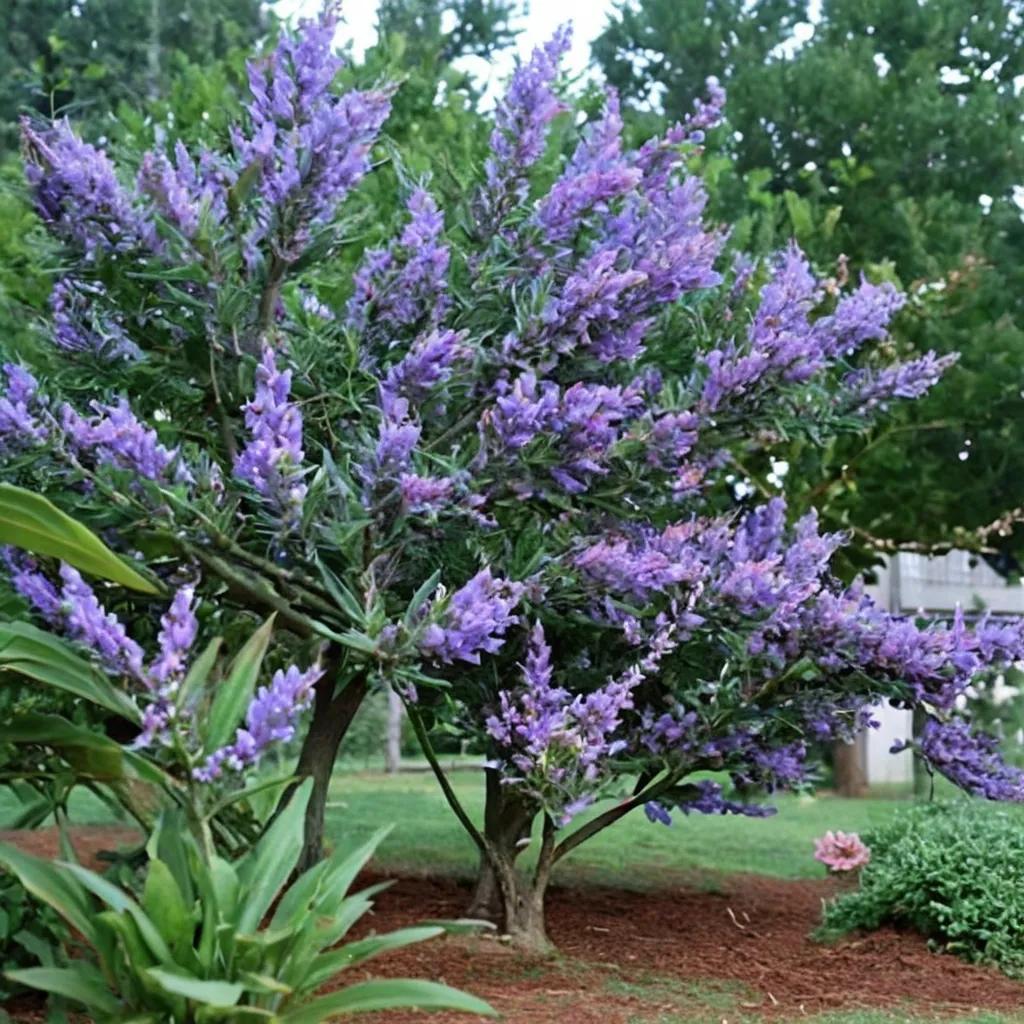
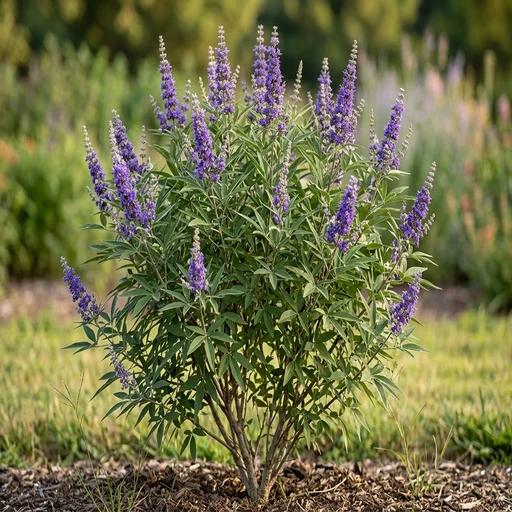
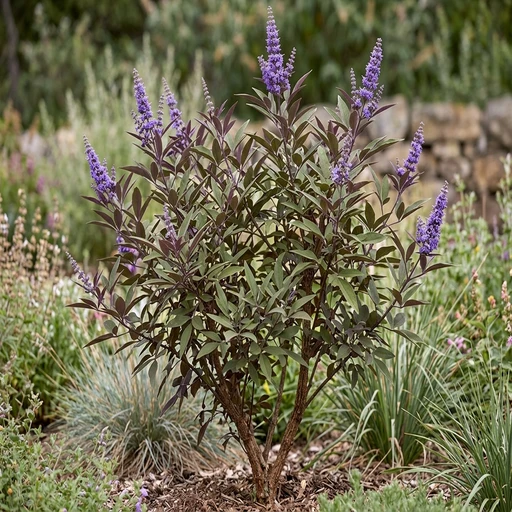
Vitex agnus-castus is a vigorous, multi-stemmed deciduous shrub or small tree native to southern Europe and western Asia, characterized by its upright, vase-shaped habit and aromatic, palmately compound leaves. In late spring through fall, it produces dense terminal spikes of lavender-blue flowers on new growth, which attract a wide range of pollinators.
'LeCompte' is a highly resilient selection discovered in Texas, recognized for its exceptional heat tolerance and deep lavender-blue flower panicles that can reach up to 12 inches in length. This cultivar maintains a dense, broad-spreading form and exhibits superior performance in hot, humid southern climates compared to the species.
Uses & Benefits:
Essentials
At a Glance
Plant Type
Shrub
Height
144"
Width
144"
Light
Full Sun
Zones
7, 8, 9, 10
Water
Low (once established)
Humidity
High
Lifespan
Long-lived
Native To
Europe, Asia, North Africa
Toxicity
Phytoestrogenic seeds/leaves; potential skin irritant
Bloom period
Spring – Fall
In flower about 9 months of the year
Planting
How to Grow
- Select a planting site in full sun with well-drained soil, avoiding low-lying areas prone to standing water.
- Dig a hole twice as wide as the root ball and of equal depth, placing the plant so the root flare sits level with the surrounding soil.
- Backfill with native soil, firming gently to remove air pockets, and water thoroughly to settle the roots.
- Apply a 2-inch layer of organic mulch around the base, keeping it a few inches away from the main stems to prevent rot.
Pro Tip
Establish young plants with regular irrigation before relying on their high drought tolerance; in warm climates, allow the plant to develop its natural multi-trunked tree form rather than shearing it annually.
Keep It Thriving
Care Guide
Do
- Prune back hard in late winter or early spring to encourage robust new growth and maximize summer blooms.
- Deadhead spent flower spikes throughout the summer to stimulate a secondary flush of flowers.
- Ensure the soil drains rapidly, as the root system is highly intolerant of waterlogged conditions.
Don't
- Do not overfertilize, as excess nutrients lead to rapid, weak vegetative growth at the expense of flowers.
- Do not prune into old, leafless wood that lacks visible, active buds.
- Do not plant in heavy shade, which causes leggy growth and significantly reduces flower production.
Seasonal Care Calendar
| Task | Jan | Feb | Mar | Apr | May | Jun | Jul | Aug | Sep | Oct | Nov | Dec |
|---|---|---|---|---|---|---|---|---|---|---|---|---|
| Deadhead | ||||||||||||
| Fertilize | ||||||||||||
| Propagate | ||||||||||||
| Prune |
Watch Out For
Pests & Diseases
Common Pests
Common Diseases
In the Garden
Landscape Uses & Companions
Landscape Uses
Multiply
Propagation Methods
Good to Know
Common Questions
Chaste Tree questions
What zones can Chaste Tree grow in?
Chaste Tree is hardy in USDA Zones 7–10. Inside that range it survives winter in the ground; outside it, grow it as an annual or a container plant you protect.
Is Chaste Tree deer resistant?
Yes — Chaste Tree is rated deer-resistant. Deer typically pass it over, though extreme hunger can override any plant's defenses.
When does Chaste Tree bloom?
Chaste Tree typically blooms in spring through fall. Exact timing shifts a week or two with your zone — Sow's bloom calendar maps it to your garden.
Does Chaste Tree need full sun?
Chaste Tree does best in full sun (6+ hours).
Is Chaste Tree drought tolerant?
Yes — once established (usually after the first full season), Chaste Tree handles dry spells with minimal watering. Water deeply its first year to build the root system that makes that possible.
More Vitex to compare
Keep exploring
Explore the genus
Hardy in your zone?
Grow Chaste Tree with confidence
See it in a design of your actual yard, get zone-matched care reminders, and track it season by season in your garden journal.