The Story
Plant Bio
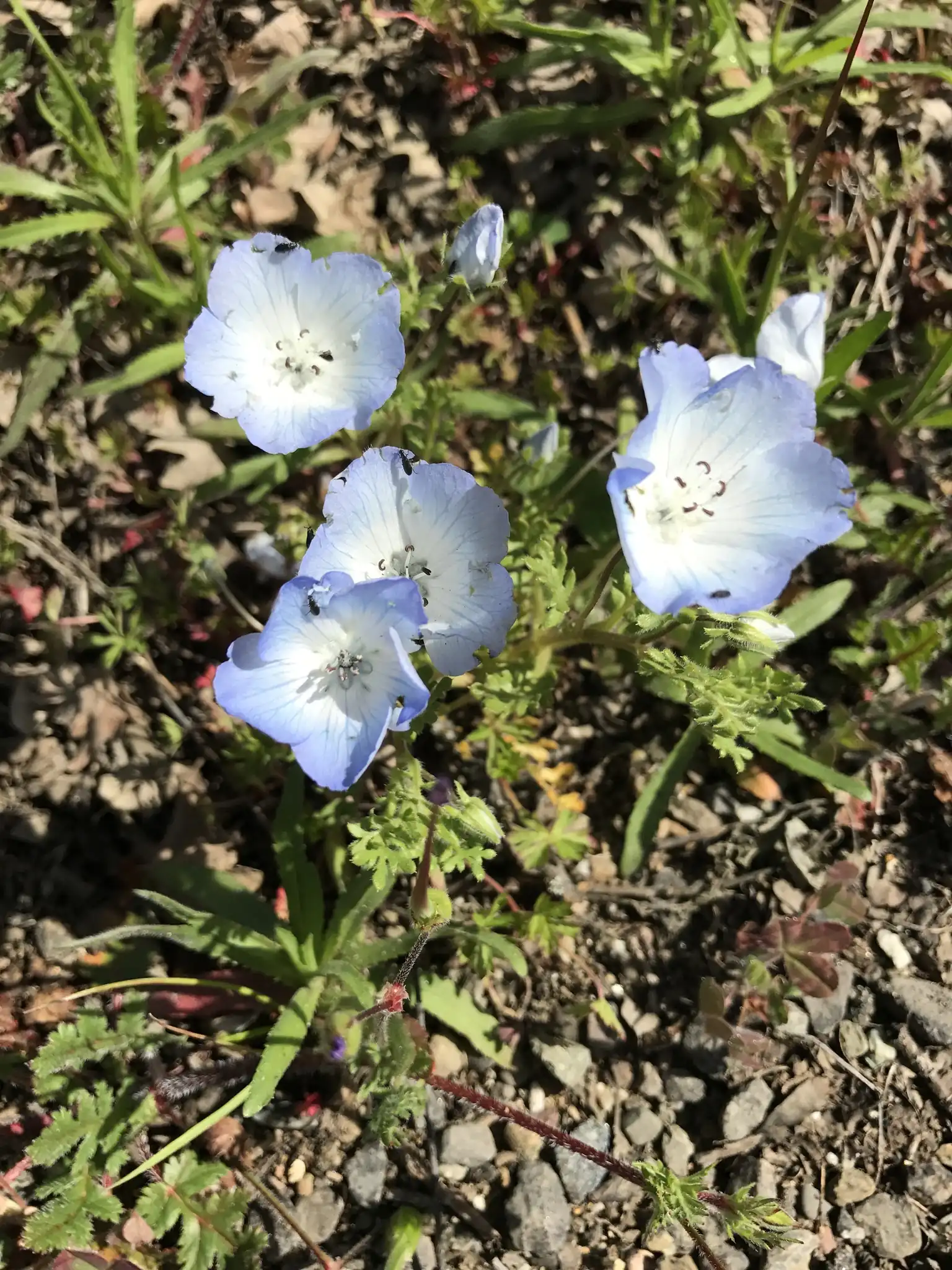
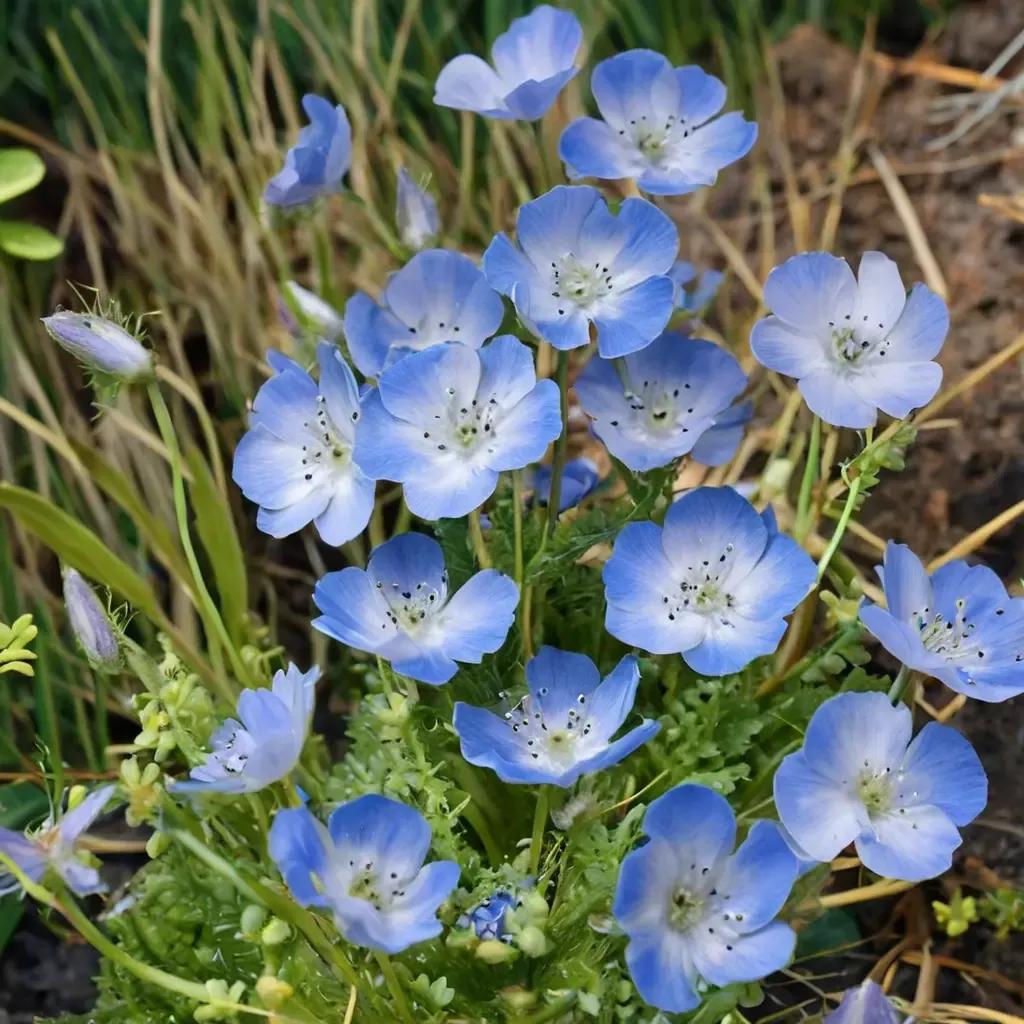
Nemophila menziesii, baby blue eyes, is a low spreading annual native to California, Nevada, Oregon and Mexico, reaching three to six inches. Finely lobed grey-green leaves form a soft mound, and cup-shaped sky-blue flowers about an inch across, each paling to white at the centre, open over several weeks in spring.
It is a cool-season annual that germinates in autumn rains and flowers before summer heat, which is why it carpets Californian hillsides in spring and fails when sown late elsewhere. It self-sows readily where happy, returning year after year without replanting.
Uses & Benefits:
Essentials
At a Glance
Plant Type
Annual
Height
5"
Width
9"
Light
Full Sun, Partial Sun
Zones
5, 6, 7, 8
Water
Moderate
Humidity
Moderate
Lifespan
Annual
Native To
California, Nevada, Oregon and Mexico
Toxicity
Non-toxic
Planting
How to Grow
- Sow seed directly in autumn where winters are mild, or early spring elsewhere.
- Choose full sun to partial shade.
- Scatter seed on the surface and press in lightly.
- Keep moist until germination.
- Thin seedlings to about six inches apart.
- Let some plants set seed to self-sow.
Pro Tip
Sow it directly and early — it resents transplanting, and plants started late simply burn out when heat arrives.
Keep It Thriving
Care Guide
Do
- Sow direct in autumn or very early spring 🌱
- Keep moist while germinating 💧
- Let it self-sow for next year 🌸
- Use it in containers and hanging baskets 🪴
Don't
- Transplant seedlings; they resent it ❌
- Sow late and expect summer flowers ❌
- Let it dry out while establishing ❌
Seasonal Care Calendar
| Task | Jan | Feb | Mar | Apr | May | Jun | Jul | Aug | Sep | Oct | Nov | Dec |
|---|---|---|---|---|---|---|---|---|---|---|---|---|
| Monitor | ||||||||||||
| Prune |
Watch Out For
Pests & Diseases
Common Pests
Common Diseases
In the Garden
Landscape Uses & Companions
Landscape Uses
Companion Plants
Multiply
Propagation Methods
Good to Know
Common Questions
Baby Blue Eyes questions
What zones can Baby Blue Eyes grow in?
Baby Blue Eyes is hardy in USDA Zones 5–8. Inside that range it survives winter in the ground; outside it, grow it as an annual or a container plant you protect.
Is Baby Blue Eyes deer resistant?
Yes — Baby Blue Eyes is rated deer-resistant. Deer typically pass it over, though extreme hunger can override any plant's defenses.
When does Baby Blue Eyes bloom?
Baby Blue Eyes typically blooms in spring through early summer. Exact timing shifts a week or two with your zone — Sow's bloom calendar maps it to your garden.
Does Baby Blue Eyes need full sun?
Baby Blue Eyes does best in full sun to part shade. In hot climates, afternoon shade keeps blooms fresher longer.
More Nemophila to compare
Keep exploring
Explore the genus
Hardy in your zone?
Grow Baby Blue Eyes with confidence
See it in a design of your actual yard, get zone-matched care reminders, and track it season by season in your garden journal.