The Story
Plant Bio
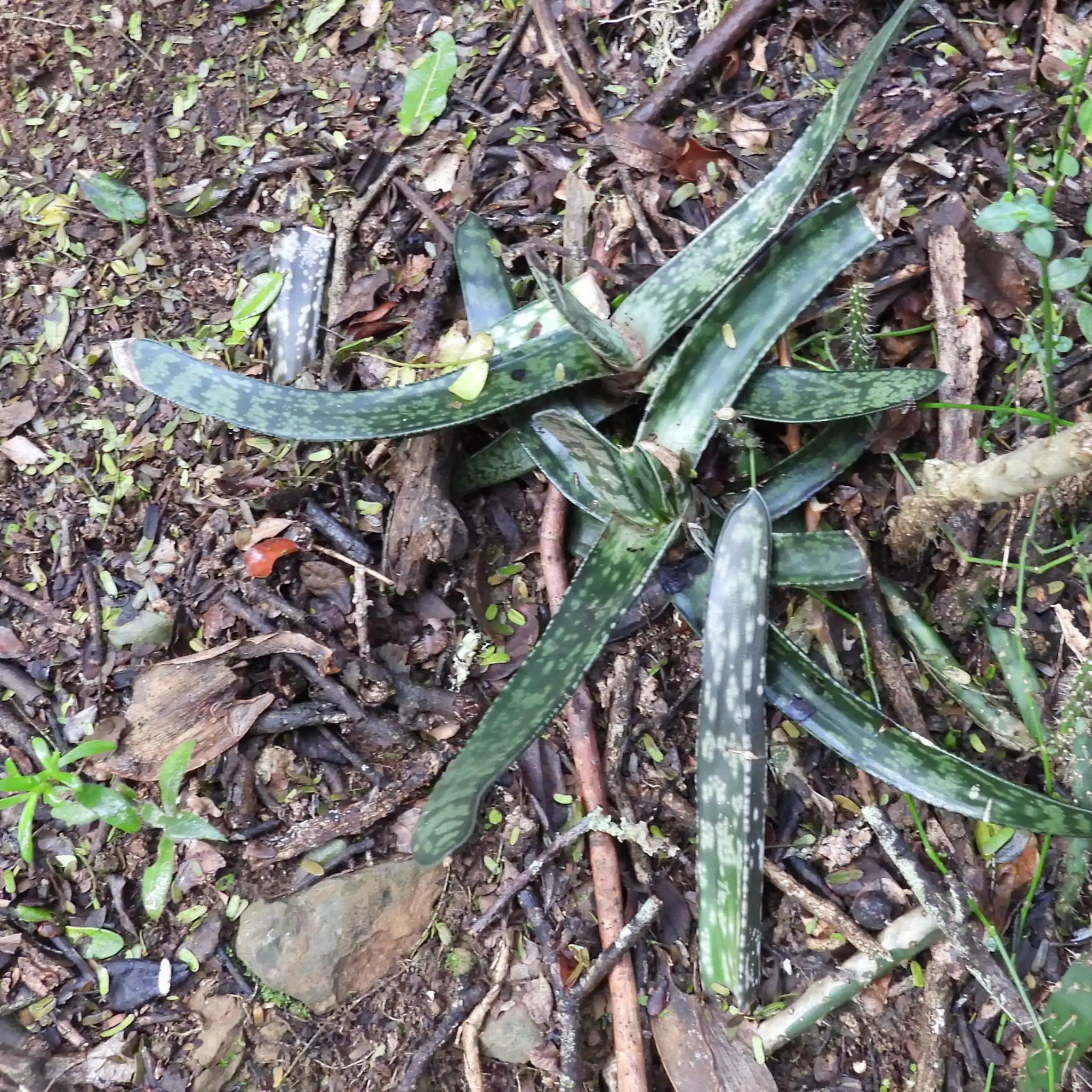
Gasteria obliqua is a slow-growing succulent perennial native to South Africa that forms compact, two-ranked fans or tight rosettes of thick, tongue-shaped leaves. The dark glossy green foliage lacks rough warts and is heavily mottled with creamy-white spots, eventually clustering via basal offsets.
This species is distinguished by its smooth leaf surfaces and arching, slender racemes carrying pendulous, stomach-shaped flowers. The tubular blooms display a pink to orange-red coloration with distinct green tips, rising on scapes up to twenty inches tall.
Uses & Benefits:
Essentials
At a Glance
Plant Type
Cactus Succulent
Height
8"
Width
8"
Light
Partial Sun, Shade
Zones
9, 10
Water
Low
Humidity
Low (30-50%)
Lifespan
Perennial
Native To
South Africa
Toxicity
Non-toxic to pets and humans
Bloom period
Late winter – Spring
In flower about 4 months of the year
Planting
How to Grow
- Select a container with excellent drainage holes and fill it with a gritty, porous cactus and succulent potting mix.
- Position the plant in a location that receives bright, indirect light or filtered morning sun, avoiding harsh afternoon exposure.
- Water thoroughly only when the potting medium has dried out completely, pouring water directly onto the soil rather than over the foliage.
- Maintain indoor temperatures above freezing, keeping the plant dry if temperatures dip near forty degrees Fahrenheit.
Pro Tip
Keep the rosette center dry and avoid overhead watering; standing moisture in the crown or damp soil rapidly triggers fungal black spots and fatal collar rot.
Keep It Thriving
Care Guide
Do
- Grow in a highly porous, mineral-based potting mix with a pH between 6.0 and 7.5.
- Water deeply but infrequently, allowing the soil to dry out completely between waterings.
- Provide bright, indirect light or partial shade to maintain rich leaf coloration.
- Separate basal offsets with a sharp, clean knife to propagate new plants.
Don't
- Do not allow water to pool in the center of the leaf rosette.
- Do not expose the plant to direct, intense midday sun, which causes leaf scorch.
- Do not overwater or let the container sit in standing water.
- Do not prune into old, bare wood; only remove completely dead lower leaves.
Seasonal Care Calendar
| Task | Jan | Feb | Mar | Apr | May | Jun | Jul | Aug | Sep | Oct | Nov | Dec |
|---|---|---|---|---|---|---|---|---|---|---|---|---|
| Fertilize | ||||||||||||
| Pest Check | ||||||||||||
| Propagate | ||||||||||||
| Prune | ||||||||||||
| Winter Prep |
Watch Out For
Pests & Diseases
Common Pests
Common Diseases
In the Garden
Landscape Uses & Companions
Landscape Uses
Multiply
Propagation Methods
Good to Know
Common Questions
Ox Tongue questions
What zones can Ox Tongue grow in?
Ox Tongue is hardy in USDA Zones 9–10. Inside that range it survives winter in the ground; outside it, grow it as an annual or a container plant you protect.
When does Ox Tongue bloom?
Ox Tongue typically blooms in late winter through spring. Exact timing shifts a week or two with your zone — Sow's bloom calendar maps it to your garden.
Does Ox Tongue need full sun?
Ox Tongue does best in part shade.
Is Ox Tongue drought tolerant?
Yes — once established (usually after the first full season), Ox Tongue handles dry spells with minimal watering. Water deeply its first year to build the root system that makes that possible.
Keep exploring
Explore the genus
Hardy in your zone?
Grow Ox Tongue with confidence
See it in a design of your actual yard, get zone-matched care reminders, and track it season by season in your garden journal.