The Story
Plant Bio
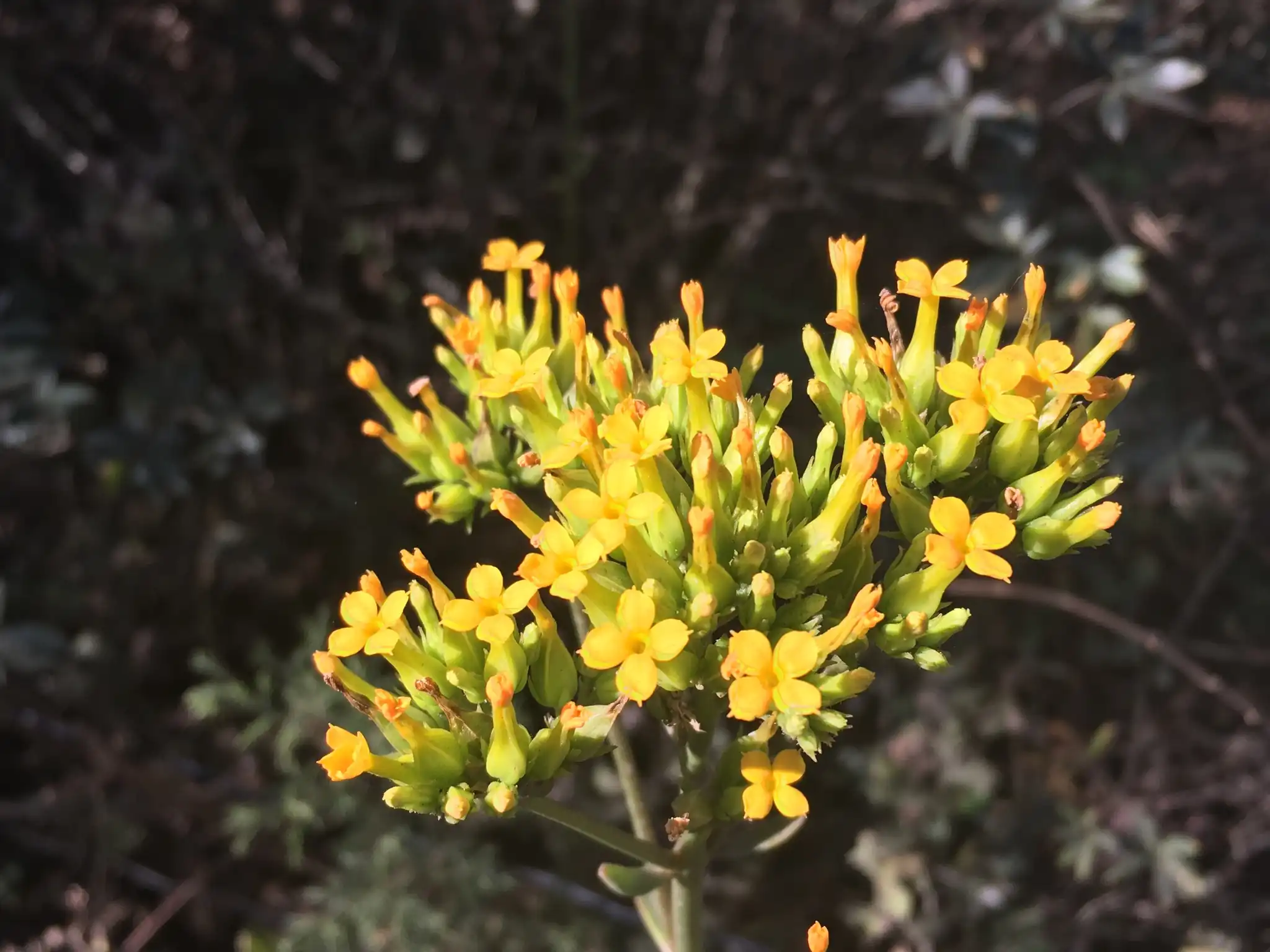
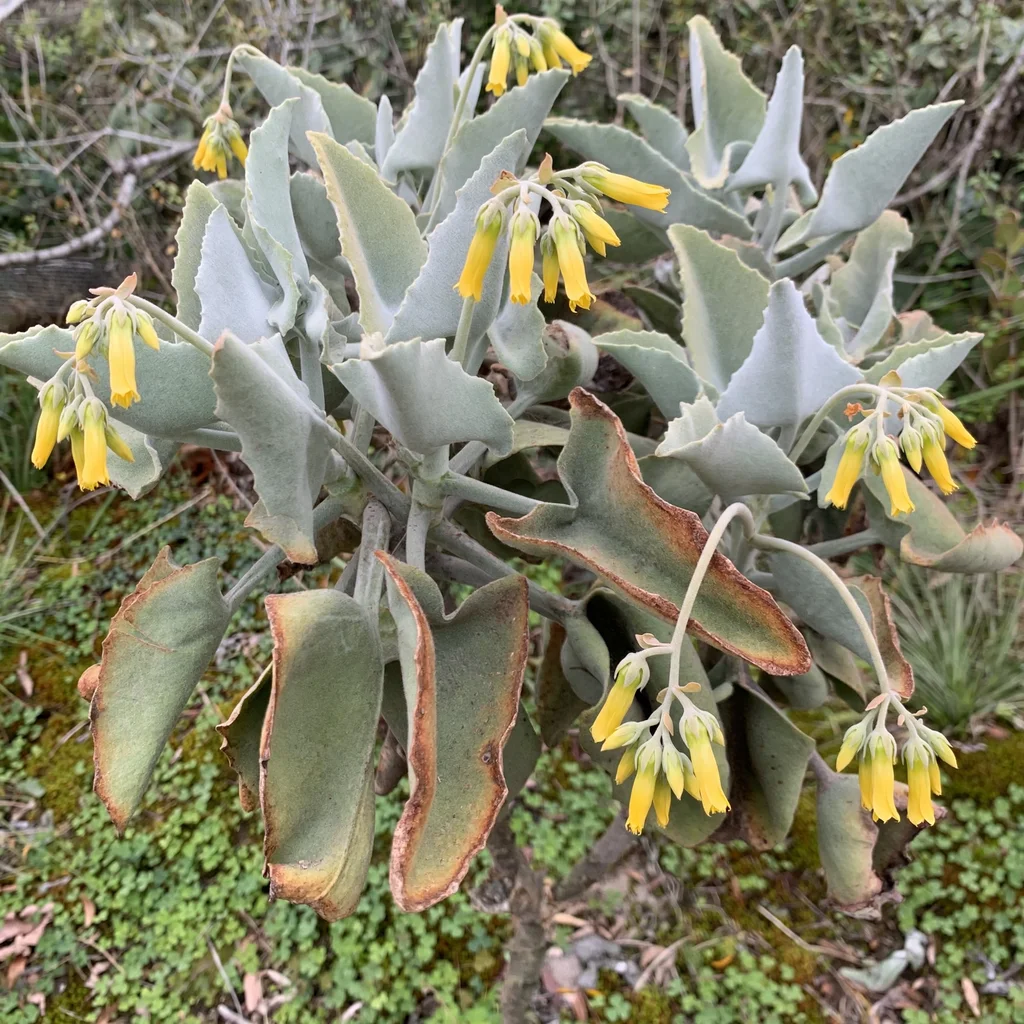
Kalanchoe crenata is an erect, evergreen succulent subshrub native to tropical and southern Africa, characterized by fleshy, opposite leaves with distinctively scalloped margins. In fall and winter, it produces terminal, many-flowered paniculate cymes of tubular yellow, orange, or brick-red flowers on stems rising from a strong taproot.
The large, thick leaves can reach up to twelve inches long and are sometimes edged in reddish tones, contrasting with bright yellowish-green new growth. When grown outdoors in warm climates, the brightly colored tubular flowers attract hummingbirds.
Uses & Benefits:
Essentials
At a Glance
Plant Type
Cactus Succulent
Height
79"
Width
39"
Light
Full Sun, Partial Sun
Zones
9, 10
Water
Low
Humidity
Moderate
Lifespan
Perennial
Native To
Tropical and southern Africa, Arabian Peninsula
Toxicity
Toxic to humans and pets
Bloom period
Fall – Winter
In flower about 6 months of the year
Planting
How to Grow
- Select a container with excellent drainage holes and fill it with a sandy, gritty mineral soil mix.
- Position the plant in a location that receives full sun to partial shade, ensuring adequate air circulation.
- Water thoroughly only when the potting medium has dried out completely, using the soak-and-dry method.
- Bring the container indoors before temperatures drop near freezing, as the plant has no frost tolerance.
Pro Tip
Avoid using heavy organic potting composts that retain moisture; instead, pot in a gritty, mineral-based medium and allow the soil to dry out completely between waterings to prevent basal rot.
Keep It Thriving
Care Guide
Do
- Allow the soil to dry out completely between waterings.
- Provide bright winter light and respect the plant's natural winter dormancy cues.
- Use a balanced, low-concentration liquid fertilizer once or twice during the active spring and summer growing season.
Don't
- Do not overwater or allow the plant to sit in stagnant, wet soil.
- Do not cut hard into old, leafless, woody stems during pruning as they fail to regenerate reliably.
- Do not ingest any part of the plant or allow pets access, as it contains toxic cardiac glycosides.
Seasonal Care Calendar
| Task | Jan | Feb | Mar | Apr | May | Jun | Jul | Aug | Sep | Oct | Nov | Dec |
|---|---|---|---|---|---|---|---|---|---|---|---|---|
| Fertilize | ||||||||||||
| Pest Check | ||||||||||||
| Propagate | ||||||||||||
| Prune | ||||||||||||
| Winter Prep |
Watch Out For
Pests & Diseases
Common Pests
Common Diseases
In the Garden
Landscape Uses & Companions
Landscape Uses
Companion Plants
Multiply
Propagation Methods
Good to Know
Common Questions
Neverdie questions
What zones can Neverdie grow in?
Neverdie is hardy in USDA Zones 9–10. Inside that range it survives winter in the ground; outside it, grow it as an annual or a container plant you protect.
Is Neverdie deer resistant?
Yes — Neverdie is rated deer-resistant. Deer typically pass it over, though extreme hunger can override any plant's defenses.
When does Neverdie bloom?
Neverdie typically blooms in fall through winter. Exact timing shifts a week or two with your zone — Sow's bloom calendar maps it to your garden.
Does Neverdie need full sun?
Neverdie does best in full sun to part shade. In hot climates, afternoon shade keeps blooms fresher longer.
Is Neverdie drought tolerant?
Yes — once established (usually after the first full season), Neverdie handles dry spells with minimal watering. Water deeply its first year to build the root system that makes that possible.
More Kalanchoe to compare
Keep exploring
Explore the genus
Hardy in your zone?
Grow Neverdie with confidence
See it in a design of your actual yard, get zone-matched care reminders, and track it season by season in your garden journal.