The Story
Plant Bio
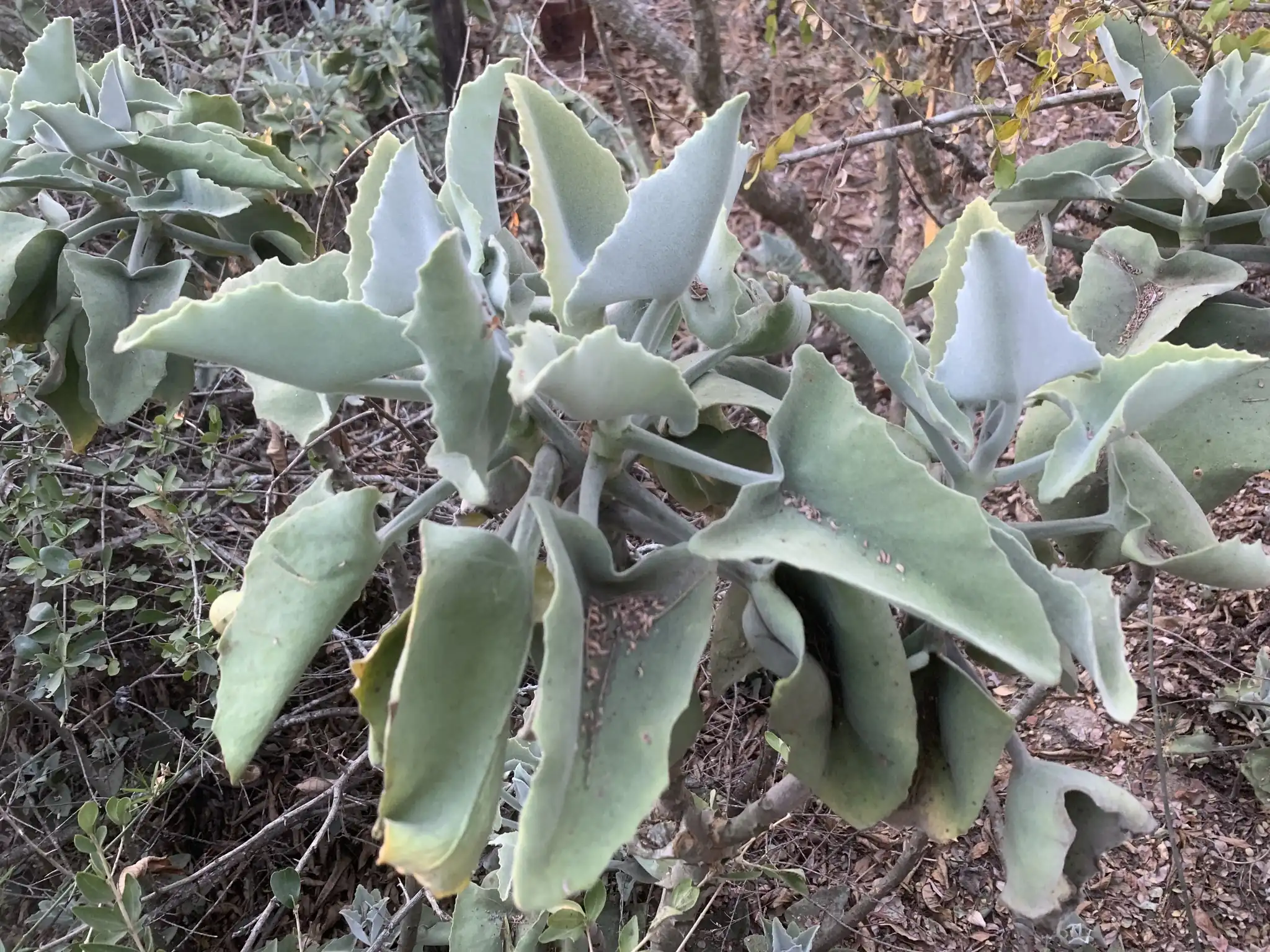
Kalanchoe beharensis is a slow-growing succulent shrub native to southern Madagascar that develops a tree-like form with a stout, woody main stem. The upright branches bear prominent, sharp-angled leaf scars and form a branching canopy near the top over time.
The large, fleshy, triangular leaves are covered in dense, velvety, stellate hairs that give them a distinct silvery-gray to olive-green color. Irregularly lobed and folded, the foliage often features rusty-brown margins and undersides.
Uses & Benefits:
Essentials
At a Glance
Plant Type
Cactus Succulent
Height
144"
Width
144"
Light
Full Sun, Partial Sun
Zones
9, 10
Water
Low
Humidity
Low to moderate
Lifespan
Perennial
Native To
Madagascar
Toxicity
Toxic to humans, dogs, cats, and livestock
Bloom period
Winter – Early spring
In flower about 4 months of the year
Planting
How to Grow
- Plant in a well-draining sandy, loamy, or gritty cactus and succulent soil mix.
- Position in full sun to partial shade, providing light afternoon shade in hot inland climates.
- Water deeply only when the soil has dried out completely, and restrict water during winter.
- Apply a balanced, low-nitrogen liquid fertilizer diluted to half-strength once per season during active spring and summer growth.
Pro Tip
Do not prune hard into old, dry, leafless wood as it fails to resprout easily; instead, preserve the natural tree-like silhouette by limiting pruning to leggy or damaged stems in spring.
Keep It Thriving
Care Guide
Do
- Wear gloves when handling to prevent skin irritation from the dense plant hairs and sap.
- Ensure exceptional drainage to prevent fatal root rot.
- Protect from frost and temperatures dropping below 30 degrees Fahrenheit.
- Inspect the thick leaf folds periodically for hidden pests.
Don't
- Do not overwater or plant in rich, moisture-retaining organic potting soil.
- Do not attempt to prune or shape the plant into a dense, leafy hedge.
- Do not prune hard into old, dry, leafless wood.
- Do not expose to direct, heavy, marine salt-laden gales.
Seasonal Care Calendar
| Task | Jan | Feb | Mar | Apr | May | Jun | Jul | Aug | Sep | Oct | Nov | Dec |
|---|---|---|---|---|---|---|---|---|---|---|---|---|
| Fertilize | ||||||||||||
| Pest Check | ||||||||||||
| Propagate | ||||||||||||
| Prune |
Watch Out For
Pests & Diseases
Common Pests
Common Diseases
In the Garden
Landscape Uses & Companions
Landscape Uses
Multiply
Propagation Methods
Good to Know
Common Questions
Felt Bush questions
What zones can Felt Bush grow in?
Felt Bush is hardy in USDA Zones 9–10. Inside that range it survives winter in the ground; outside it, grow it as an annual or a container plant you protect.
Is Felt Bush deer resistant?
Yes — Felt Bush is rated deer-resistant. Deer typically pass it over, though extreme hunger can override any plant's defenses.
When does Felt Bush bloom?
Felt Bush typically blooms in winter through early spring. Exact timing shifts a week or two with your zone — Sow's bloom calendar maps it to your garden.
Does Felt Bush need full sun?
Felt Bush does best in full sun to part shade. In hot climates, afternoon shade keeps blooms fresher longer.
Is Felt Bush drought tolerant?
Yes — once established (usually after the first full season), Felt Bush handles dry spells with minimal watering. Water deeply its first year to build the root system that makes that possible.
More Kalanchoe to compare
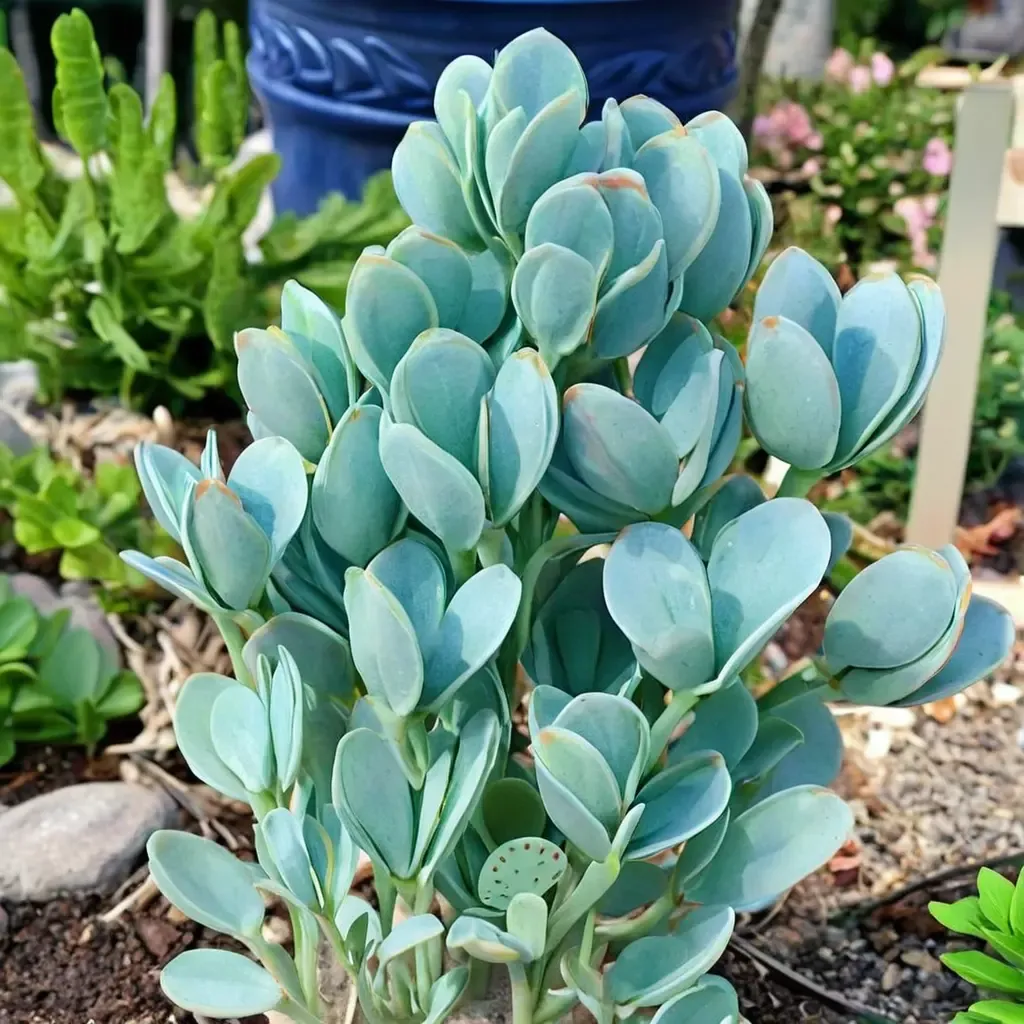
Cathedral Bells
Kalanchoe pinnata
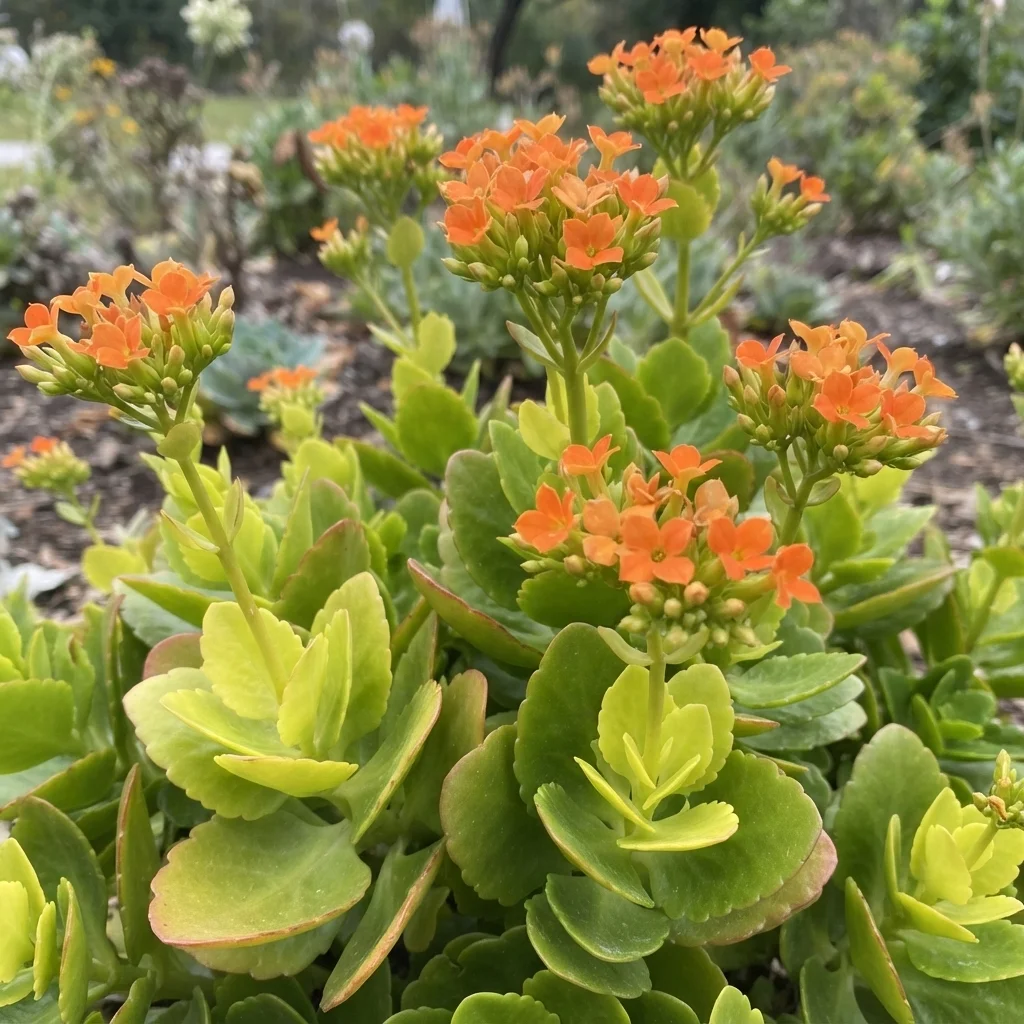
Neverdie
Kalanchoe crenata
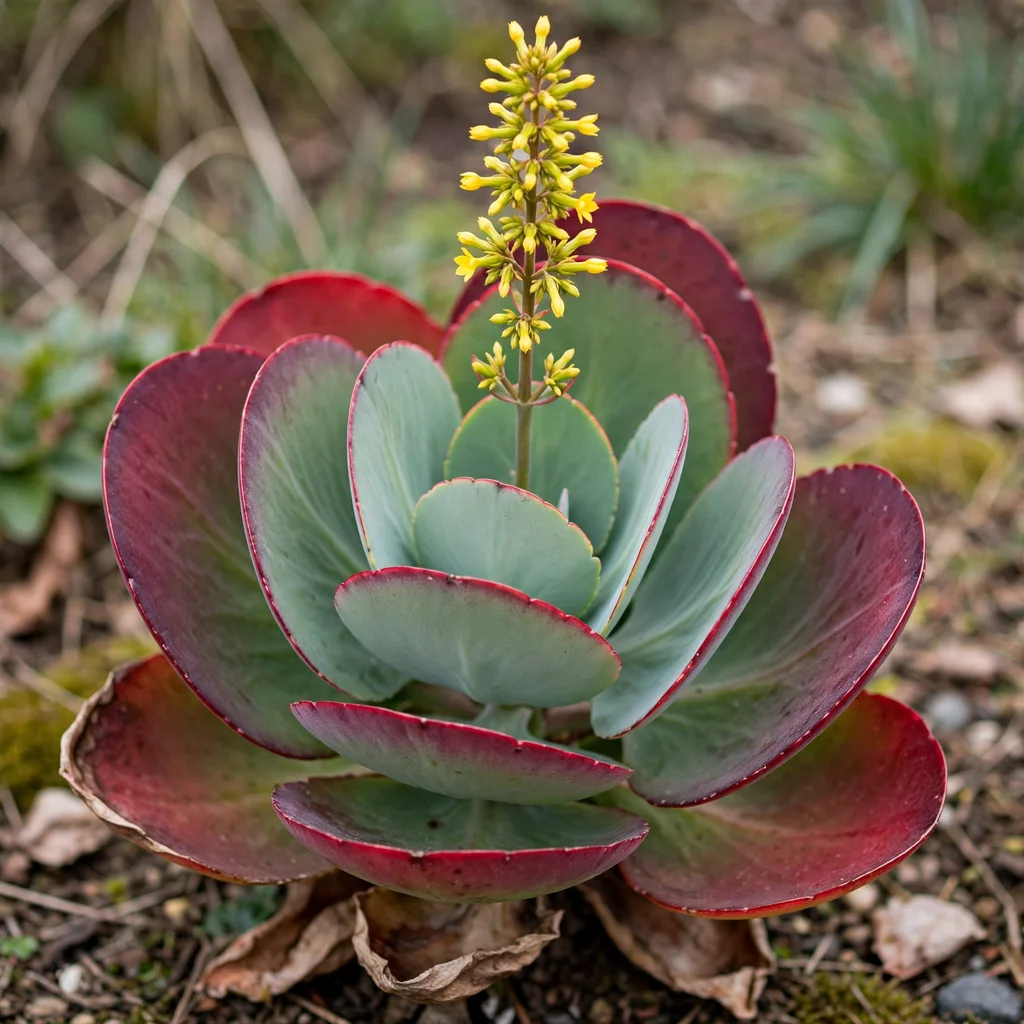
Paddle Plant
Kalanchoe luciae
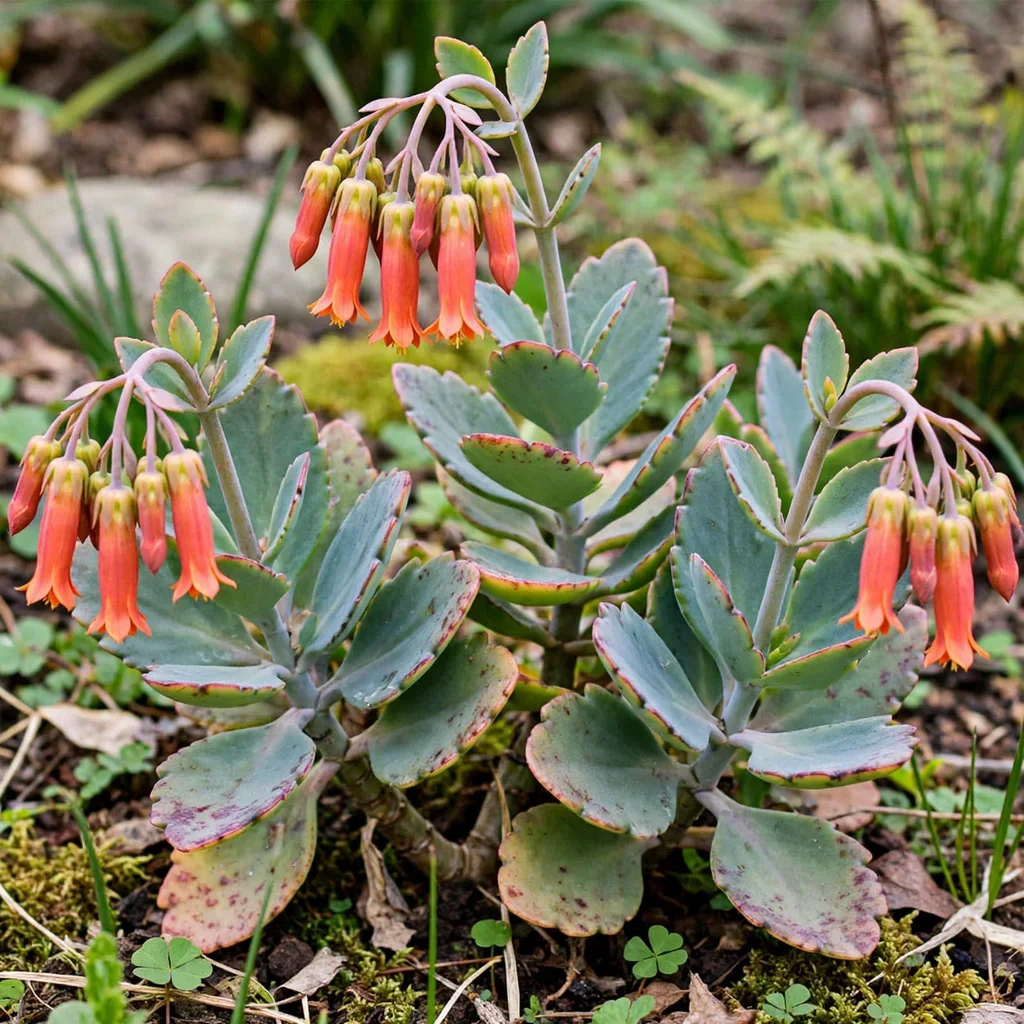
Christmas Bells
Kalanchoe laxiflora 'Milky Widow's Tears'
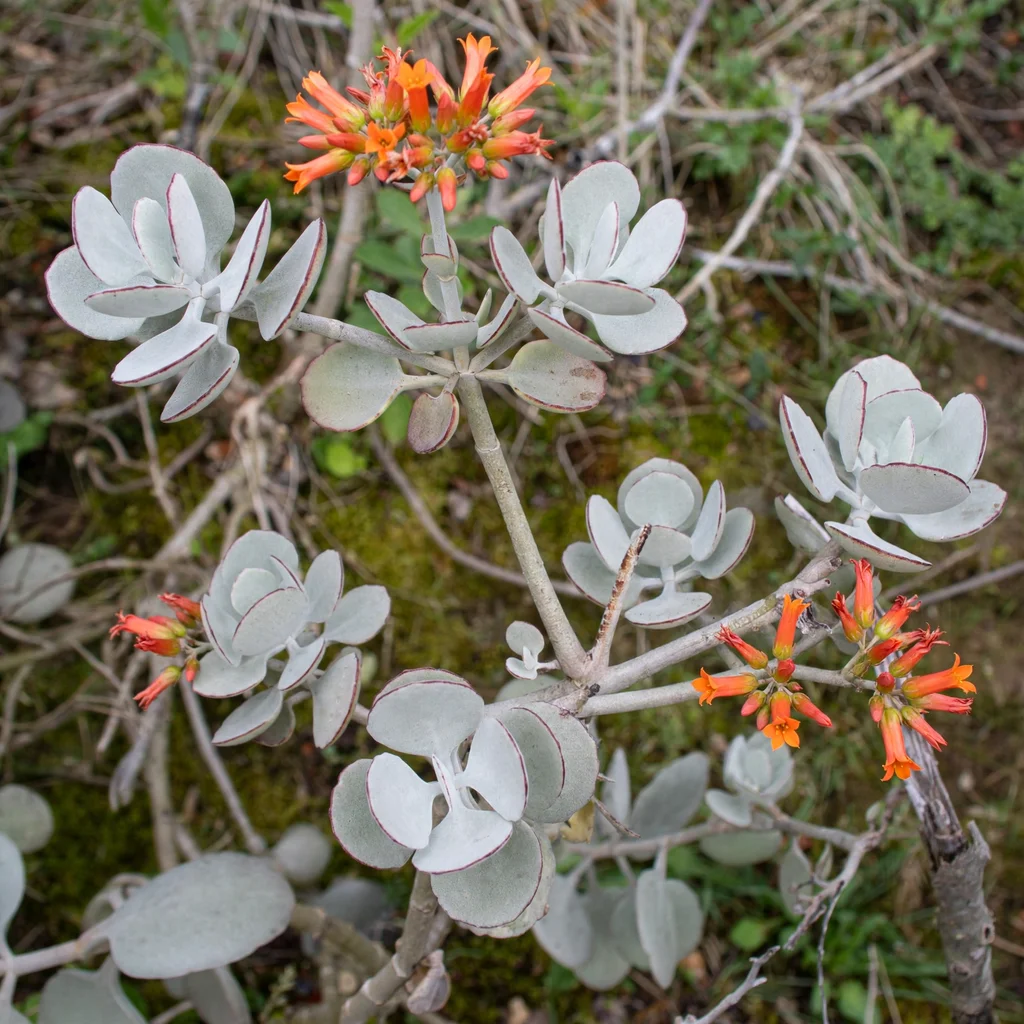
Silver Spoons
Kalanchoe bracteata
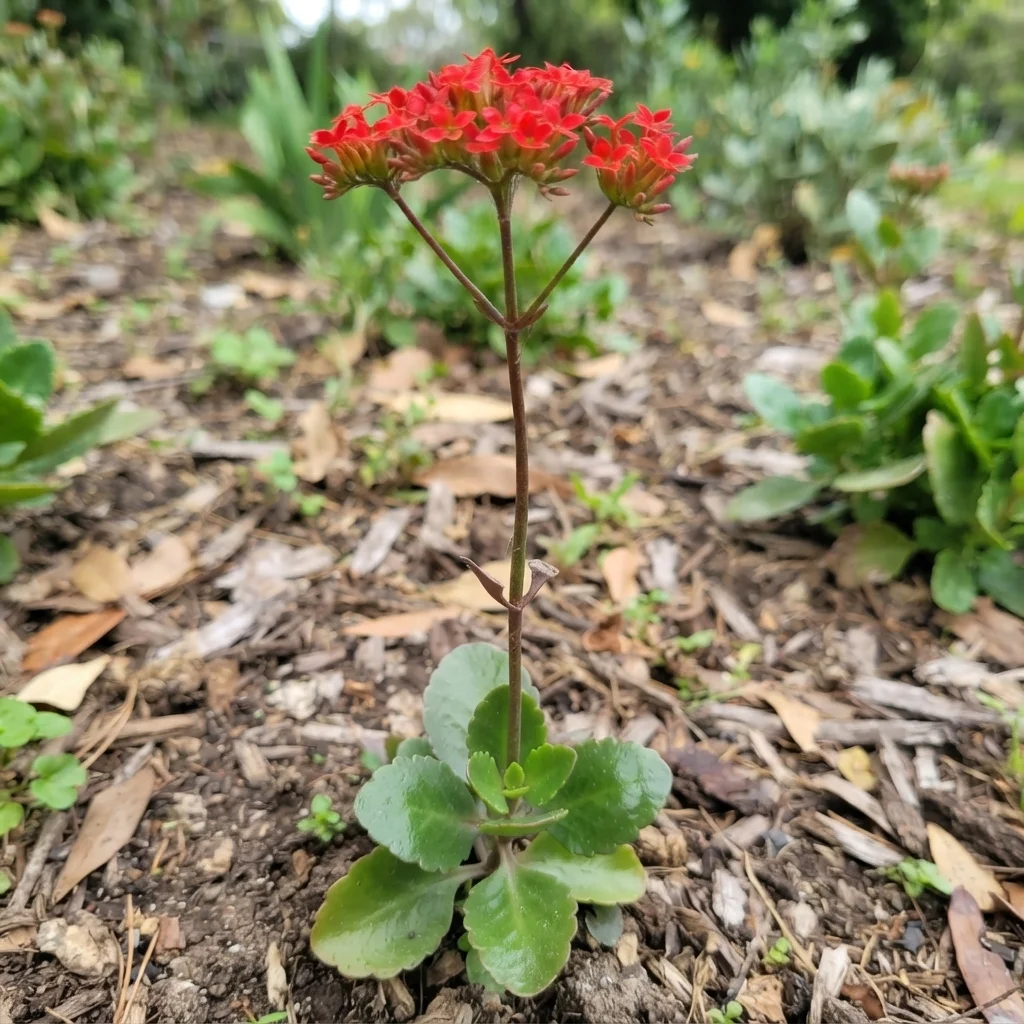
Flaming Katy
Kalanchoe blossfeldiana
Keep exploring
Explore the genus
Hardy in your zone?
Grow Felt Bush with confidence
See it in a design of your actual yard, get zone-matched care reminders, and track it season by season in your garden journal.