The Story
Plant Bio
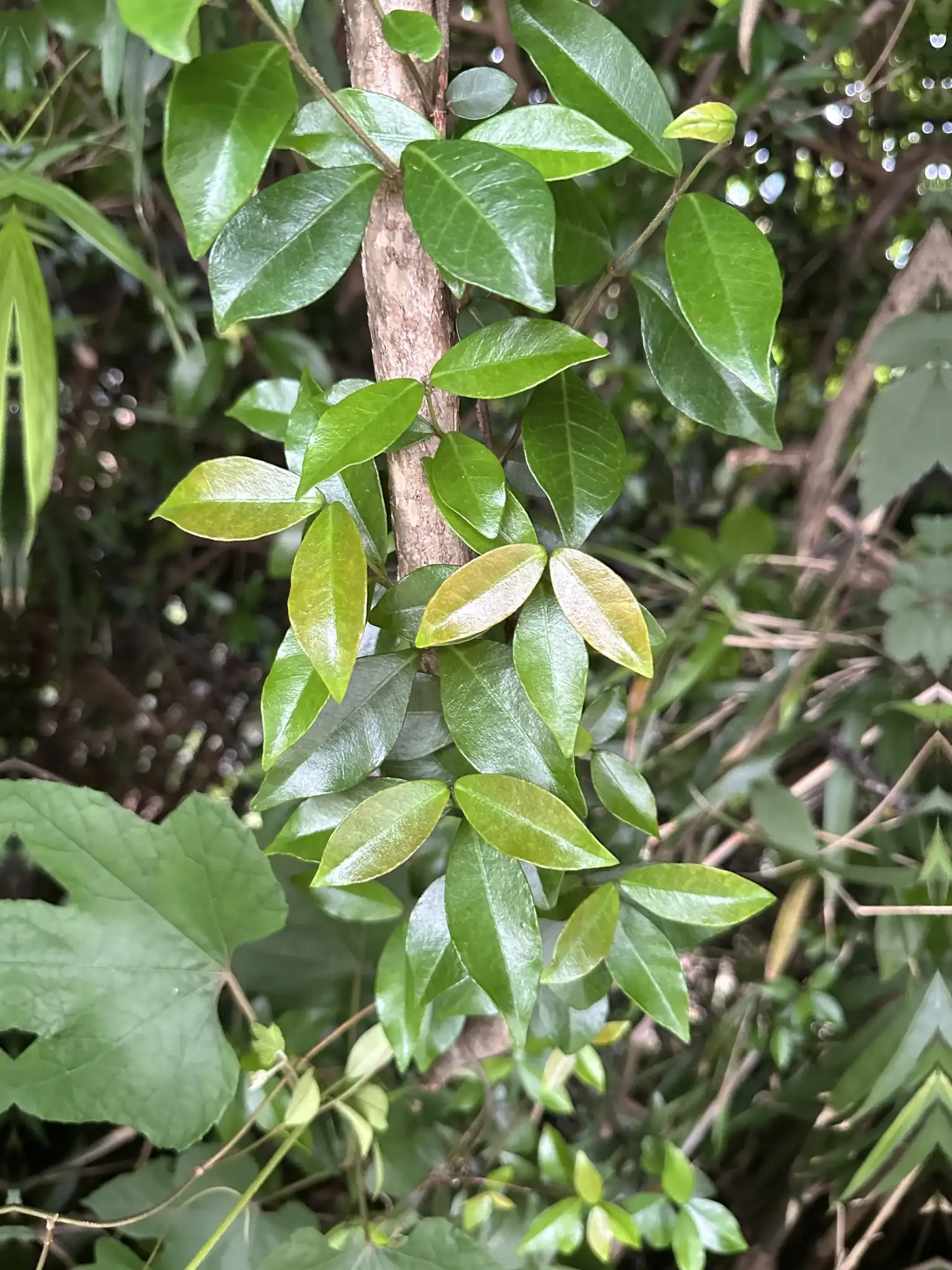
Trachelospermum asiaticum, Asiatic jasmine, is a woody evergreen twiner from China, Japan and Korea, usually grown flat as a groundcover a foot or two deep that runs ten to twelve feet across. Small glossy dark green oval leaves, bronze when new, cover wiry twining stems, and small creamy star-shaped flowers appear in early summer on plants left unclipped.
It is the standard tough groundcover across the South, taking drought, shade, poor soil and hard shearing, and it rarely flowers when kept mown. That same vigour lets it escape into woodland in the Southeast, so keep it clipped at the edges and away from natural areas. The milky sap can irritate skin, so wear gloves when cutting it back.
Uses & Benefits:
Essentials
At a Glance
Plant Type
Groundcover
Height
7"
Width
120"
Light
Full Sun, Partial Sun, Shade
Zones
7, 8, 9, 10
Water
Low
Humidity
Moderate
Lifespan
Perennial
Native To
China, Japan and Korea
Toxicity
Milky sap can irritate skin
Marketplace
Where to Buy
Shipping costs Year-round shipping Free shipping
Planting
How to Grow
- Plant in sun or shade in any reasonably drained soil.
- Space plants two to three feet apart to knit together.
- Water through the first year while it establishes.
- Shear or mow the mat annually to keep it flat.
- Cut the edges back hard to stop it creeping outward.
- Wear gloves; the milky sap irritates skin.
Pro Tip
Mow the whole mat on a high blade setting in late winter — it regrows dense and flat, which no amount of hand-clipping matches.
Keep It Thriving
Care Guide
Do
- Shear or mow the mat each late winter ✂️
- Clip the edges to contain it 🚧
- Wear gloves when cutting it back 🧤
- Use it on dry, shaded banks 🌑
Don't
- Let it run into woodland ❌
- Plant it where it cannot be edged ❌
- Handle cut stems bare-handed ❌
Seasonal Care Calendar
| Task | Jan | Feb | Mar | Apr | May | Jun | Jul | Aug | Sep | Oct | Nov | Dec |
|---|---|---|---|---|---|---|---|---|---|---|---|---|
| Edge | ||||||||||||
| Mow |
Watch Out For
Pests & Diseases
Common Pests
Common Diseases
In the Garden
Landscape Uses & Companions
Landscape Uses
Companion Plants
Multiply
Propagation Methods
Good to Know
Common Questions
Asiatic Jasmine questions
What zones can Asiatic Jasmine grow in?
Asiatic Jasmine is hardy in USDA Zones 7–10. Inside that range it survives winter in the ground; outside it, grow it as an annual or a container plant you protect.
Is Asiatic Jasmine deer resistant?
Yes — Asiatic Jasmine is rated deer-resistant. Deer typically pass it over, though extreme hunger can override any plant's defenses.
When does Asiatic Jasmine bloom?
Asiatic Jasmine typically blooms in early summer through mid-summer. Exact timing shifts a week or two with your zone — Sow's bloom calendar maps it to your garden.
Does Asiatic Jasmine need full sun?
Asiatic Jasmine does best in full sun to part shade. In hot climates, afternoon shade keeps blooms fresher longer.
Is Asiatic Jasmine drought tolerant?
Yes — once established (usually after the first full season), Asiatic Jasmine handles dry spells with minimal watering. Water deeply its first year to build the root system that makes that possible.
More Trachelospermum to compare
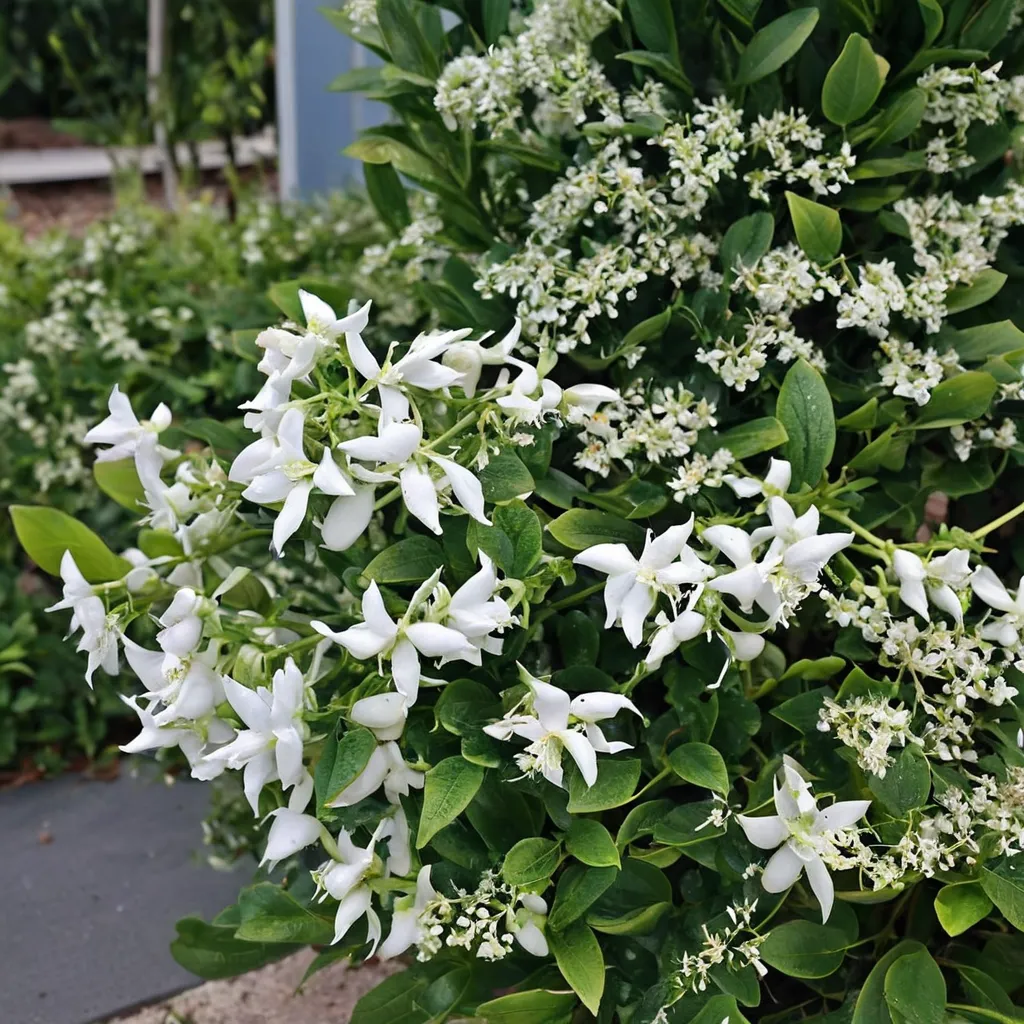
Star Jasmine
Trachelospermum jasminoides
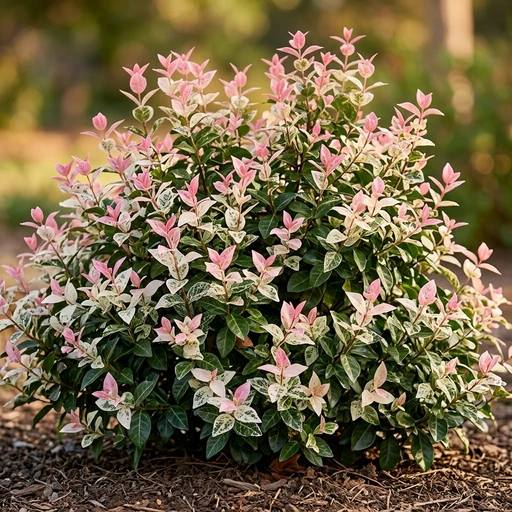
Snow-N-Summer Asiatic Jasmine
Trachelospermum asiaticum 'Snow-N-Summer'
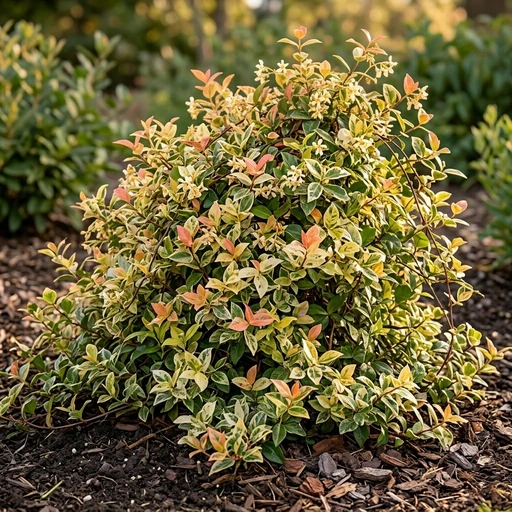
Summer Sunset Asian Jasmine
Trachelospermum asiaticum 'Summer Sunset'
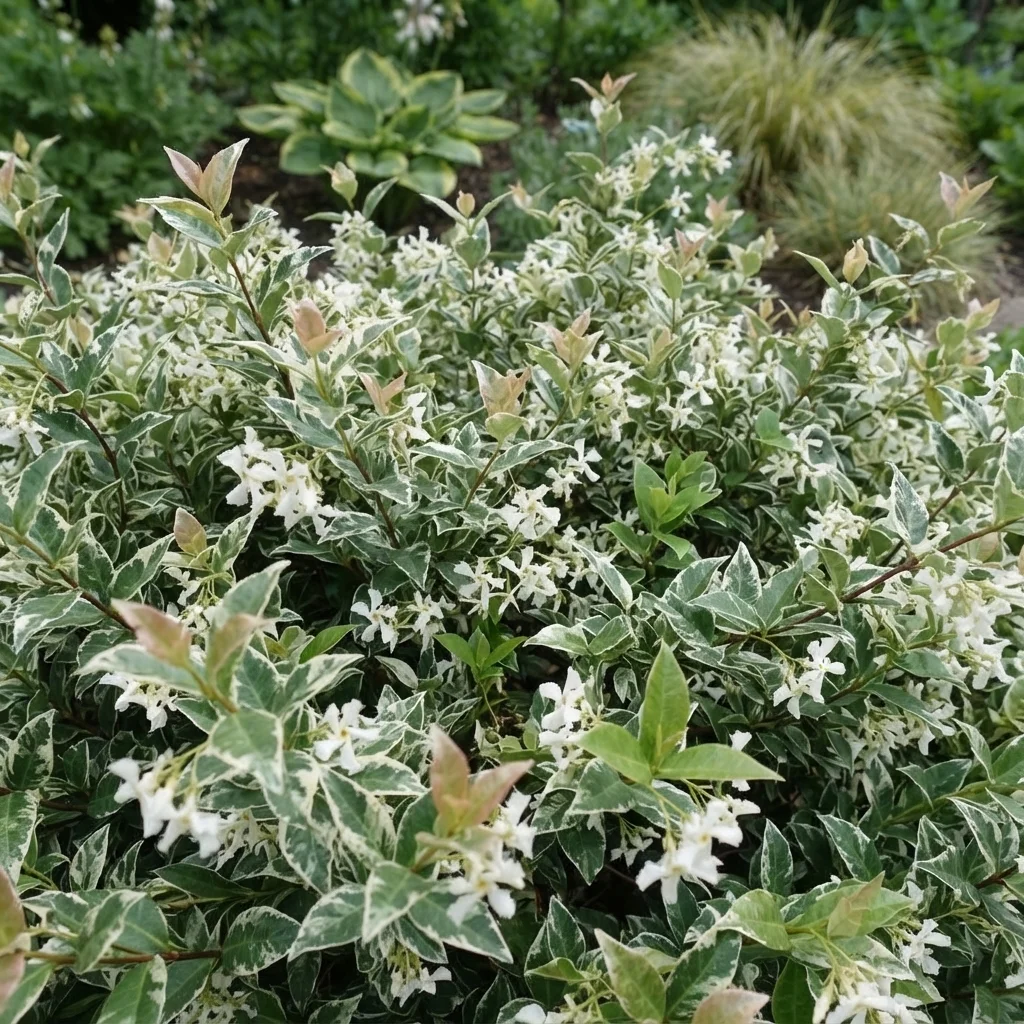
Variegated Star Jasmine
Trachelospermum jasminoides 'Variegatum'
Keep exploring
Explore the genus
Hardy in your zone?
Grow Asiatic Jasmine with confidence
See it in a design of your actual yard, get zone-matched care reminders, and track it season by season in your garden journal.