The Story
Plant Bio
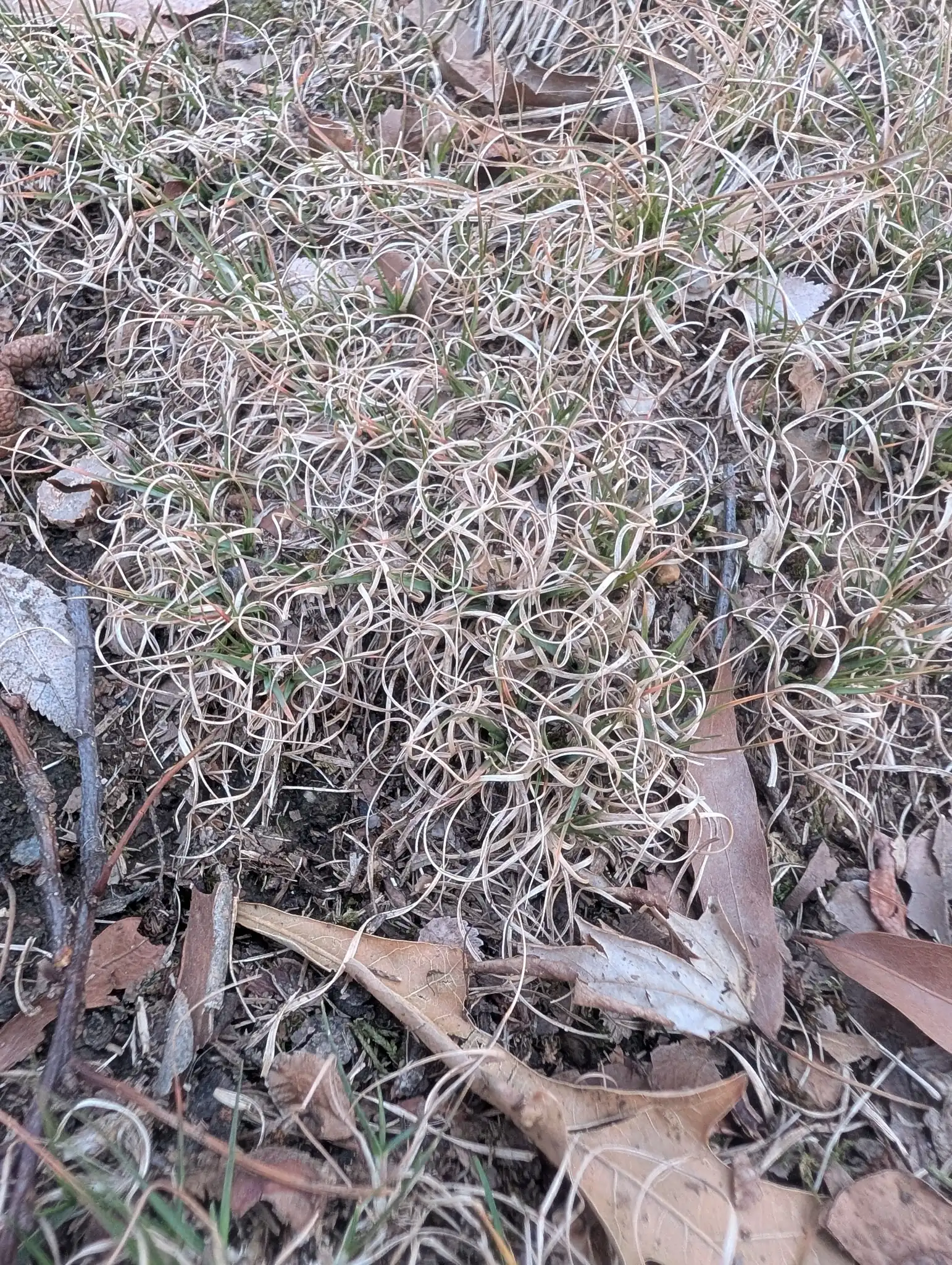
Danthonia spicata is a native North American perennial grass that forms low, dense tufts of curly, wiry foliage on dry, sterile soils. The narrow, light green leaf blades roll inward and eventually cure to a distinctive, persistent bronze-straw color at the base of the clump.
This species is exceptionally drought-tolerant and thrives in highly acidic, nutrient-deficient substrates where other grasses fail to establish. In late spring, it produces narrow, spike-like panicles bearing small spikelets with twisted, prominent awns.
Uses & Benefits:
Essentials
At a Glance
Plant Type
Grass
Height
24"
Width
12"
Light
Full Sun, Partial Sun
Zones
4, 5, 6, 7, 8
Water
Low
Humidity
Low to Moderate
Lifespan
Perennial
Native To
North America
Toxicity
Non-toxic
Bloom period
Late spring – Early fall
In flower about 5 months of the year
Planting
How to Grow
- Select a planting site with full sun to partial shade and exceptionally well-drained, poor soil.
- Plant container plugs in spring or early fall, spacing them twelve inches apart to allow the clumps to expand.
- Water sparingly during the first few weeks to establish the root system, then cease supplemental irrigation.
- Leave the persistent, curly basal foliage intact over winter to protect the crown and provide wildlife shelter.
Pro Tip
Do not apply nitrogen fertilizers or rich organic compost to this grass; high soil fertility disrupts its natural growth cycle and causes the clumps to rapidly decline and die.
Keep It Thriving
Care Guide
Do
- Grow in nutrient-poor, sandy, gravelly, or rocky soils.
- Ensure excellent drainage to prevent crown rot.
- Comb out dead thatch gently by hand in early spring if needed for aesthetics.
Don't
- Do not apply nitrogen fertilizers or compost.
- Do not plant in heavily shaded areas beneath dense tree canopies.
- Do not overwater once the root system is established.
Seasonal Care Calendar
| Task | Jan | Feb | Mar | Apr | May | Jun | Jul | Aug | Sep | Oct | Nov | Dec |
|---|---|---|---|---|---|---|---|---|---|---|---|---|
| Pest Check | ||||||||||||
| Plant | ||||||||||||
| Propagate | ||||||||||||
| Spring Cleanup |
Watch Out For
Pests & Diseases
Common Pests
Common Diseases
In the Garden
Landscape Uses & Companions
Landscape Uses
Multiply
Propagation Methods
Good to Know
Common Questions
Poverty Oatgrass questions
What zones can Poverty Oatgrass grow in?
Poverty Oatgrass is hardy in USDA Zones 4–8. Inside that range it survives winter in the ground; outside it, grow it as an annual or a container plant you protect.
When does Poverty Oatgrass bloom?
Poverty Oatgrass typically blooms in late spring through early fall. Exact timing shifts a week or two with your zone — Sow's bloom calendar maps it to your garden.
Does Poverty Oatgrass need full sun?
Poverty Oatgrass does best in full sun to part shade. In hot climates, afternoon shade keeps blooms fresher longer.
Is Poverty Oatgrass drought tolerant?
Yes — once established (usually after the first full season), Poverty Oatgrass handles dry spells with minimal watering. Water deeply its first year to build the root system that makes that possible.
Keep exploring
Explore the genus
Hardy in your zone?
Grow Poverty Oatgrass with confidence
See it in a design of your actual yard, get zone-matched care reminders, and track it season by season in your garden journal.