The Story
Plant Bio
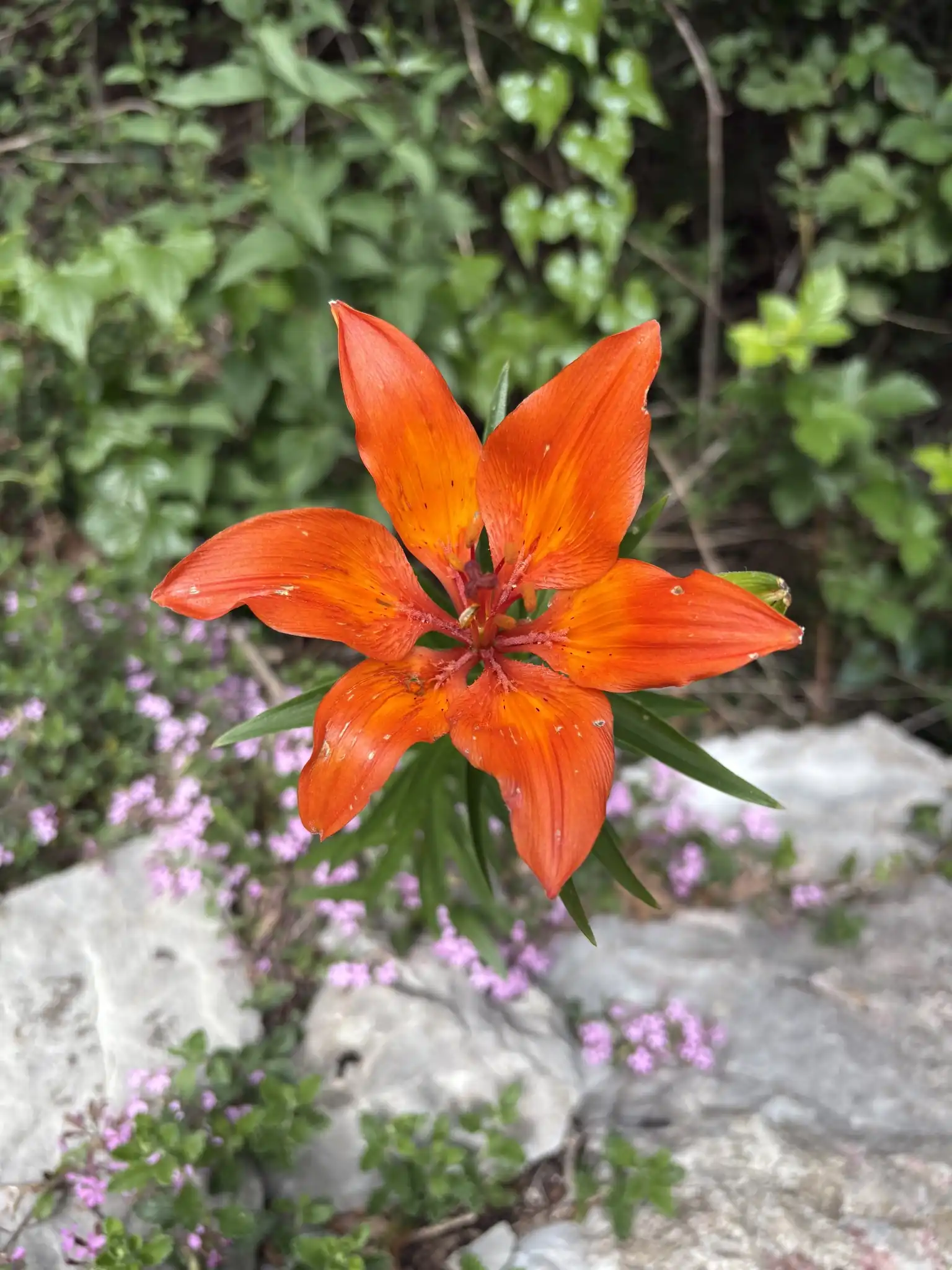
Lilium bulbiferum is a deciduous, bulbous herbaceous perennial native to the mountainous regions of continental Europe, producing stiff, upright, unbranched stems. The foliage consists of dark green, linear to lance-shaped leaves arranged spirally or scattered along the stems.
The species is distinguished by its upright, open bowl-shaped flowers of bright yellow-orange to dark orange, marked with reddish-brown spots. Subspecies bulbiferum produces dark purple-brown bulbils in the leaf axils, whereas variety croceum lacks these structures.
Uses & Benefits:
Essentials
At a Glance
Plant Type
Bulb Corm Tuber
Height
48"
Width
18"
Light
Full Sun, Partial Sun
Zones
4, 5, 6, 7, 8
Water
Medium
Humidity
Moderate
Lifespan
Perennial
Native To
Continental Europe
Toxicity
Highly toxic to cats; toxic to dogs and humans
Bloom period
Late spring – Summer
In flower about 4 months of the year
Planting
How to Grow
- Select a planting site that receives full sun to partial shade, ideally where the upper stems are exposed to sunlight while the root zone remains shaded and cool.
- Prepare a rich, organic, well-draining loam with a neutral to slightly acidic or alkaline pH, avoiding heavy clay that retains excess moisture.
- Plant bulbs in fall or early spring at a depth of three times the height of the bulb, ensuring the soil is loose and aerated beneath them.
- Maintain even soil moisture throughout the growing season, watering when the top inch of soil dries out, but never allowing the ground to become waterlogged.
Pro Tip
Leave the green flower stalks intact after blooming; cutting them back too early deprives the underground bulb of the photosynthetic energy required to survive winter and flower the following year.
Keep It Thriving
Care Guide
Do
- Mulch the root zone to keep the soil cool and retain necessary moisture.
- Apply a balanced, slow-release organic fertilizer in spring as new growth emerges.
- Provide good air circulation around the foliage to prevent fungal diseases like botrytis blight.
- Remove spent flowers to prevent seed production and redirect energy back into the bulb.
Don't
- Do not cut back the green foliage or stems after flowering until they have completely yellowed and died back in late fall.
- Do not plant in heavy, poorly drained clay soils where standing water will cause the bulbs to rot.
- Do not allow the soil to dry out completely, as the plant has low to moderate drought tolerance.
- Do not use overhead watering, which increases the risk of botrytis blight on leaves and flowers.
Seasonal Care Calendar
| Task | Jan | Feb | Mar | Apr | May | Jun | Jul | Aug | Sep | Oct | Nov | Dec |
|---|---|---|---|---|---|---|---|---|---|---|---|---|
| Deadhead | ||||||||||||
| Fertilize | ||||||||||||
| Pest Check | ||||||||||||
| Winter Prep |
Watch Out For
Pests & Diseases
Common Pests
Common Diseases
In the Garden
Landscape Uses & Companions
Landscape Uses
Companion Plants
Multiply
Propagation Methods
Good to Know
Common Questions
Orange Lily questions
What zones can Orange Lily grow in?
Orange Lily is hardy in USDA Zones 4–8. Inside that range it survives winter in the ground; outside it, grow it as an annual or a container plant you protect.
Is Orange Lily deer resistant?
Not reliably. Deer may browse Orange Lily, especially tender spring growth — plan on repellents or fencing where pressure is high.
When does Orange Lily bloom?
Orange Lily typically blooms in late spring through summer. Exact timing shifts a week or two with your zone — Sow's bloom calendar maps it to your garden.
Does Orange Lily need full sun?
Orange Lily does best in full sun to part shade. In hot climates, afternoon shade keeps blooms fresher longer.
More Lilium to compare
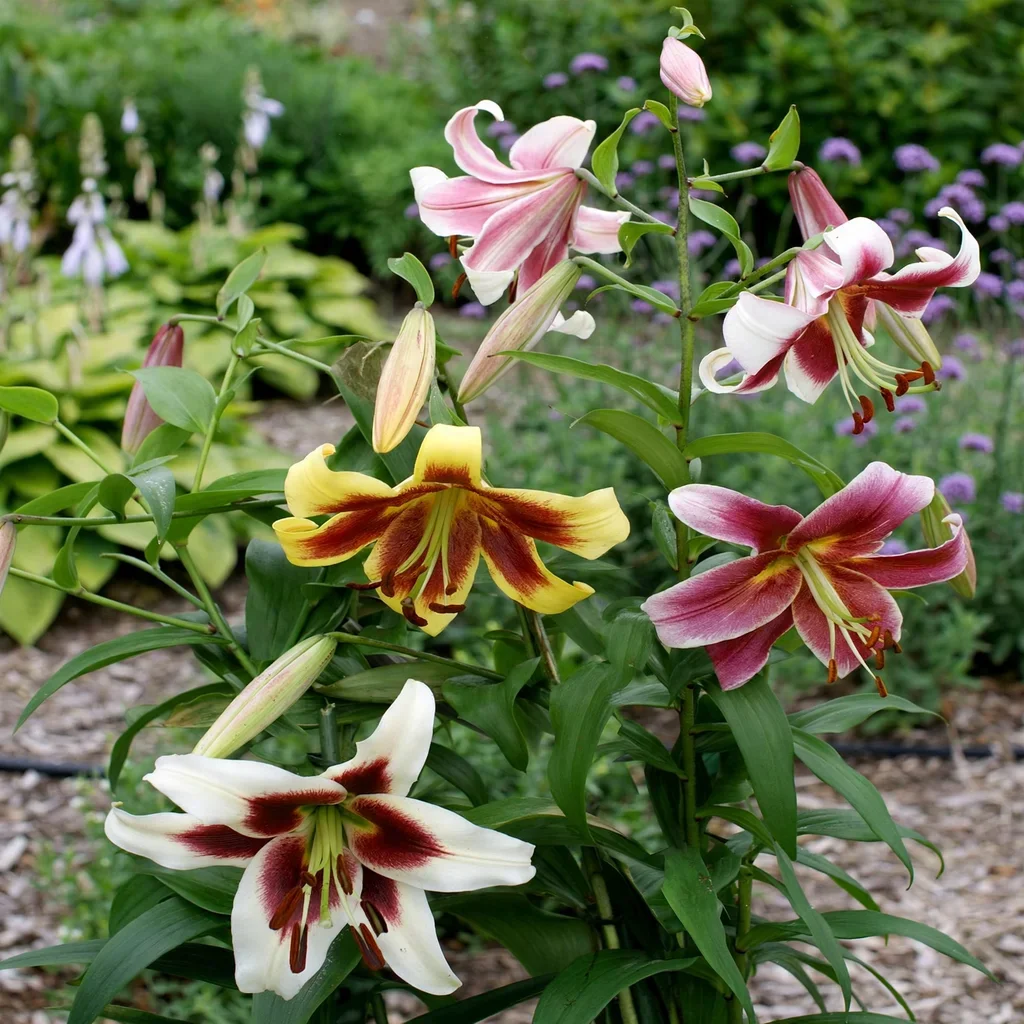
Tree Lily
Lilium x hybrida 'Tree Mix'
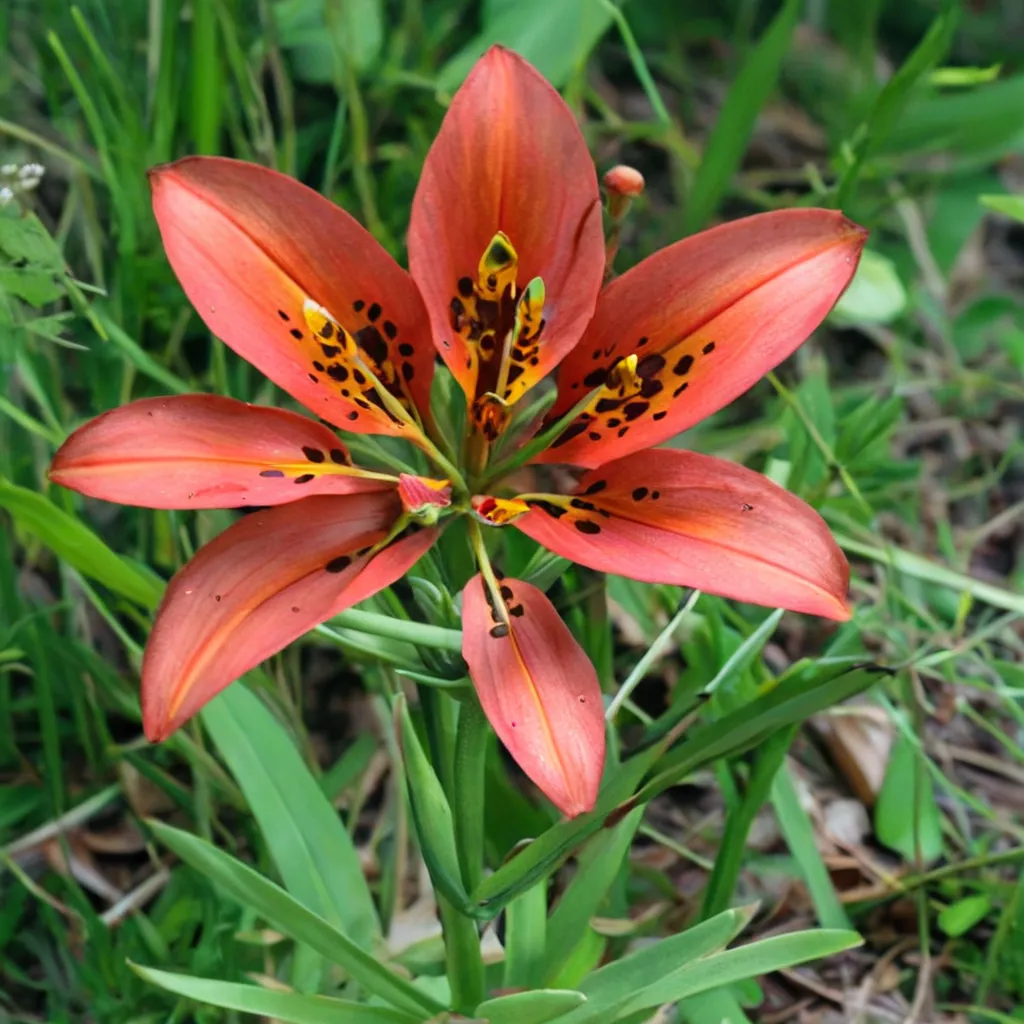
Wood Lily
Lilium philadelphicum
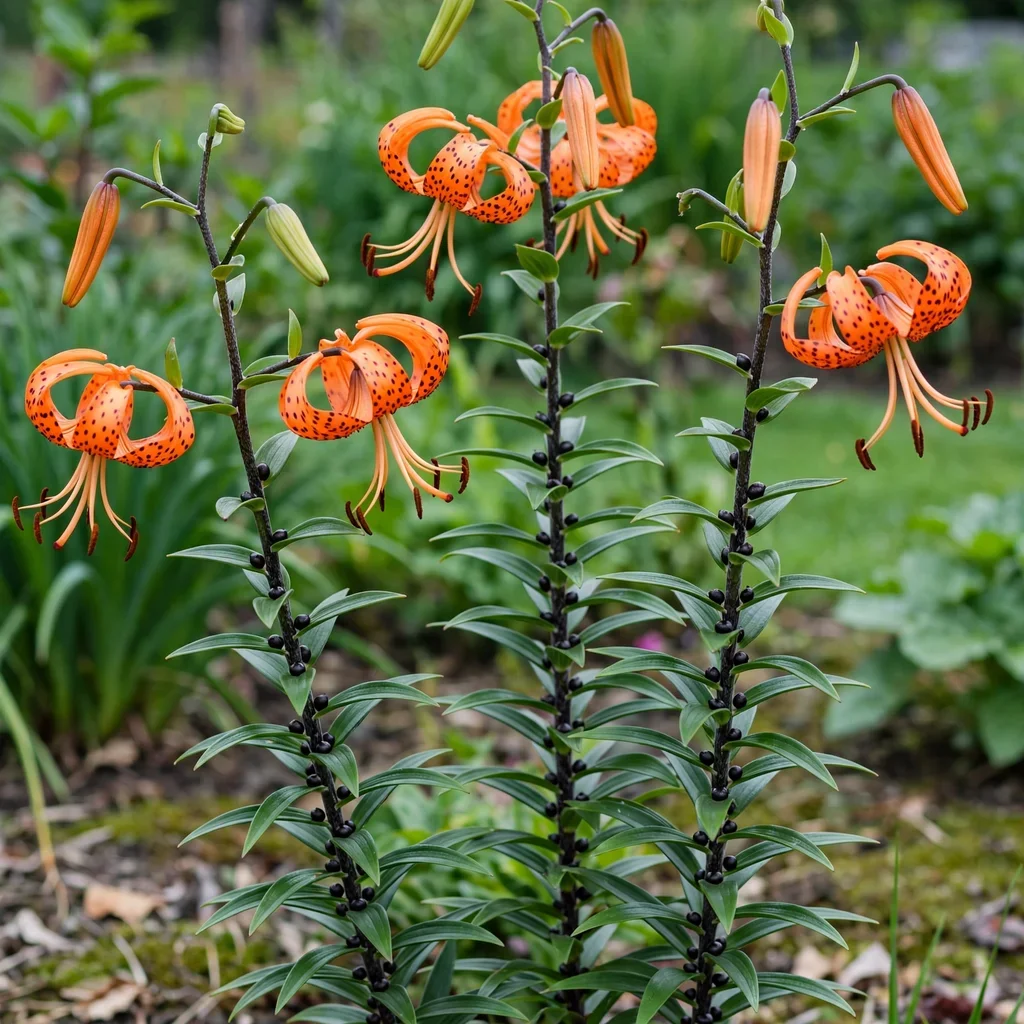
Tiger Lily
Lilium lancifolium
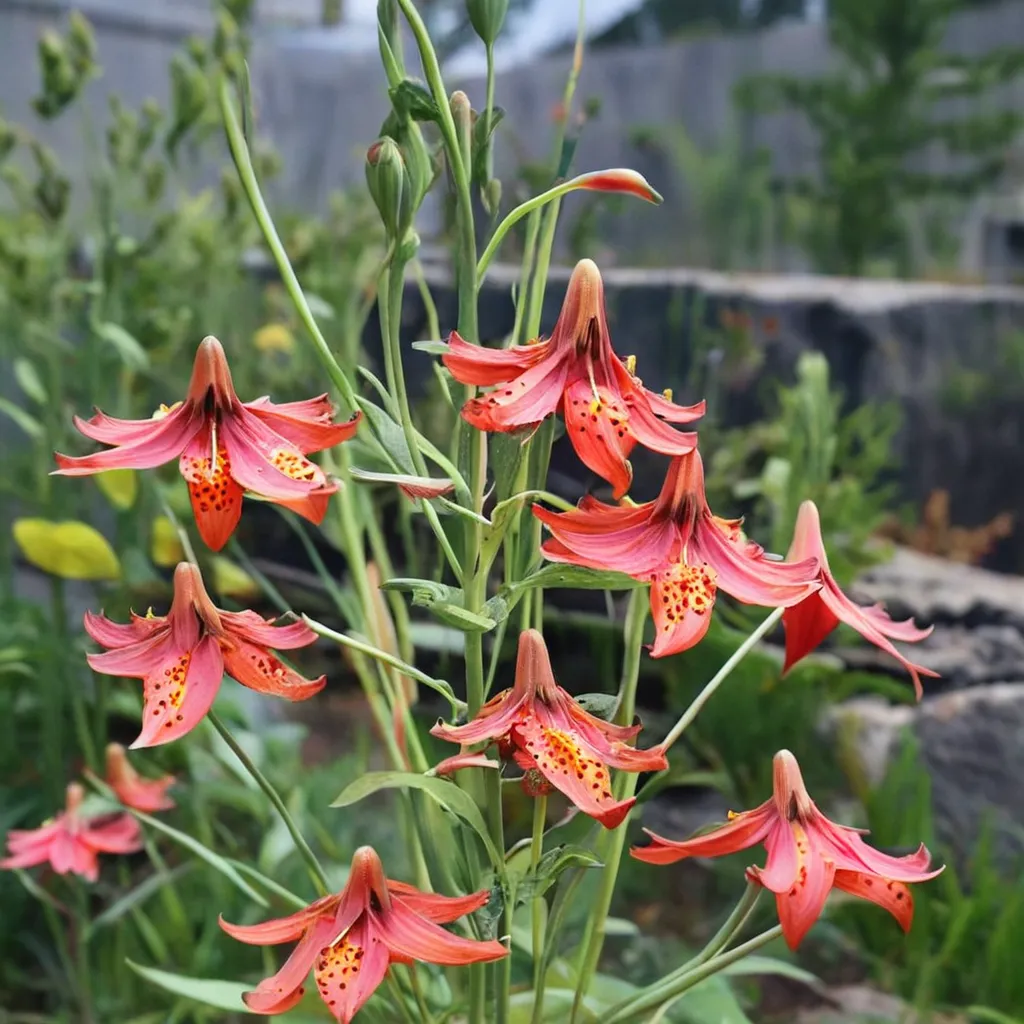
Canada Lily 'Reverend Walker'
Lilium canadense 'Reverend Walker'
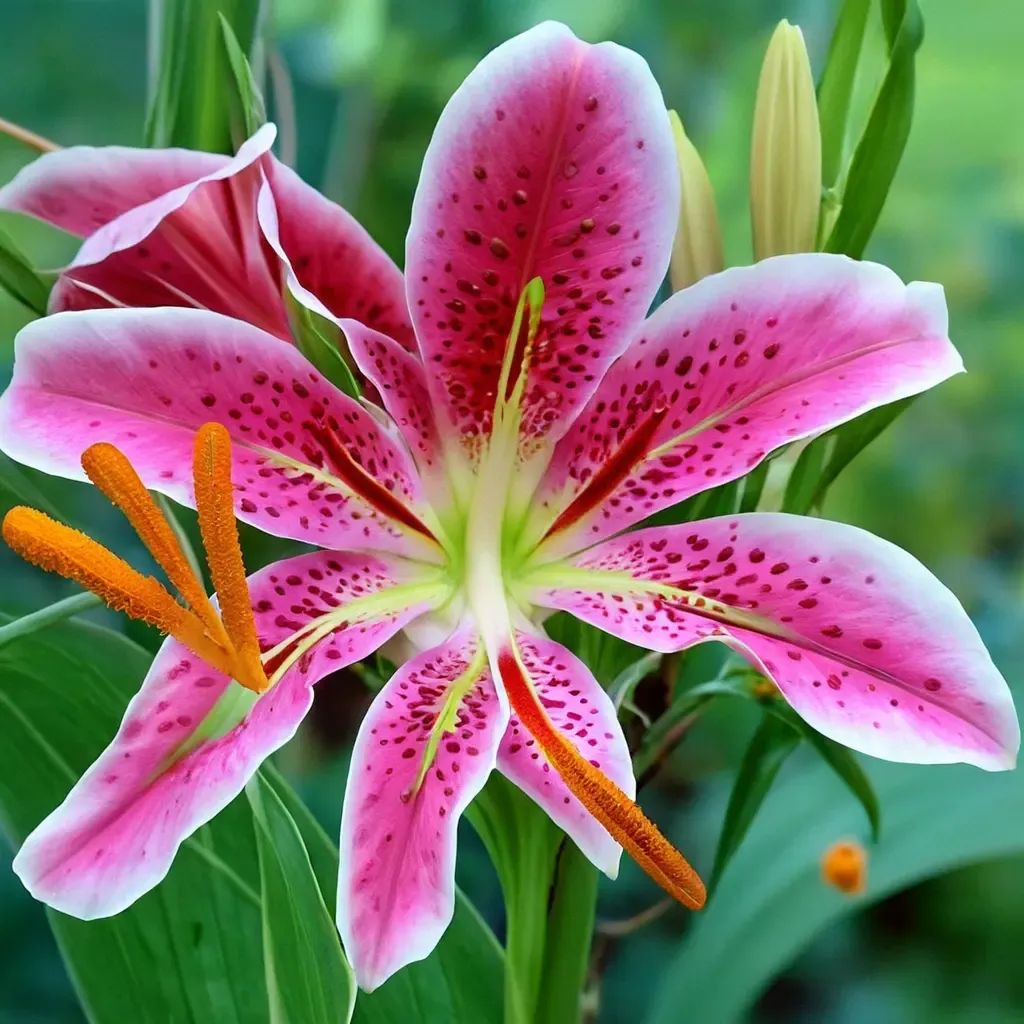
Stargazer Lily
Lilium lancifolium 'Stargazer'
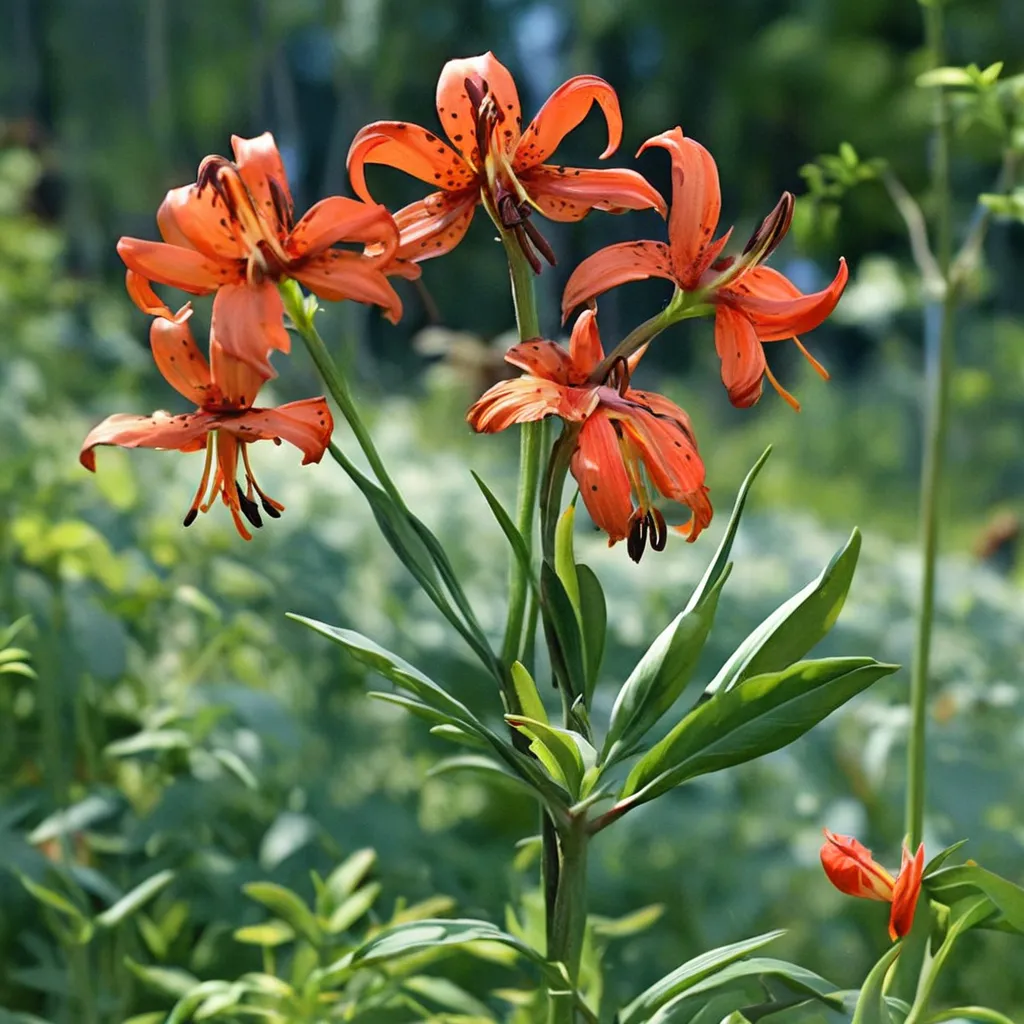
Michigan Lily
Lilium michiganense
Keep exploring
Explore the genus
Hardy in your zone?
Grow Orange Lily with confidence
See it in a design of your actual yard, get zone-matched care reminders, and track it season by season in your garden journal.