The Story
Plant Bio
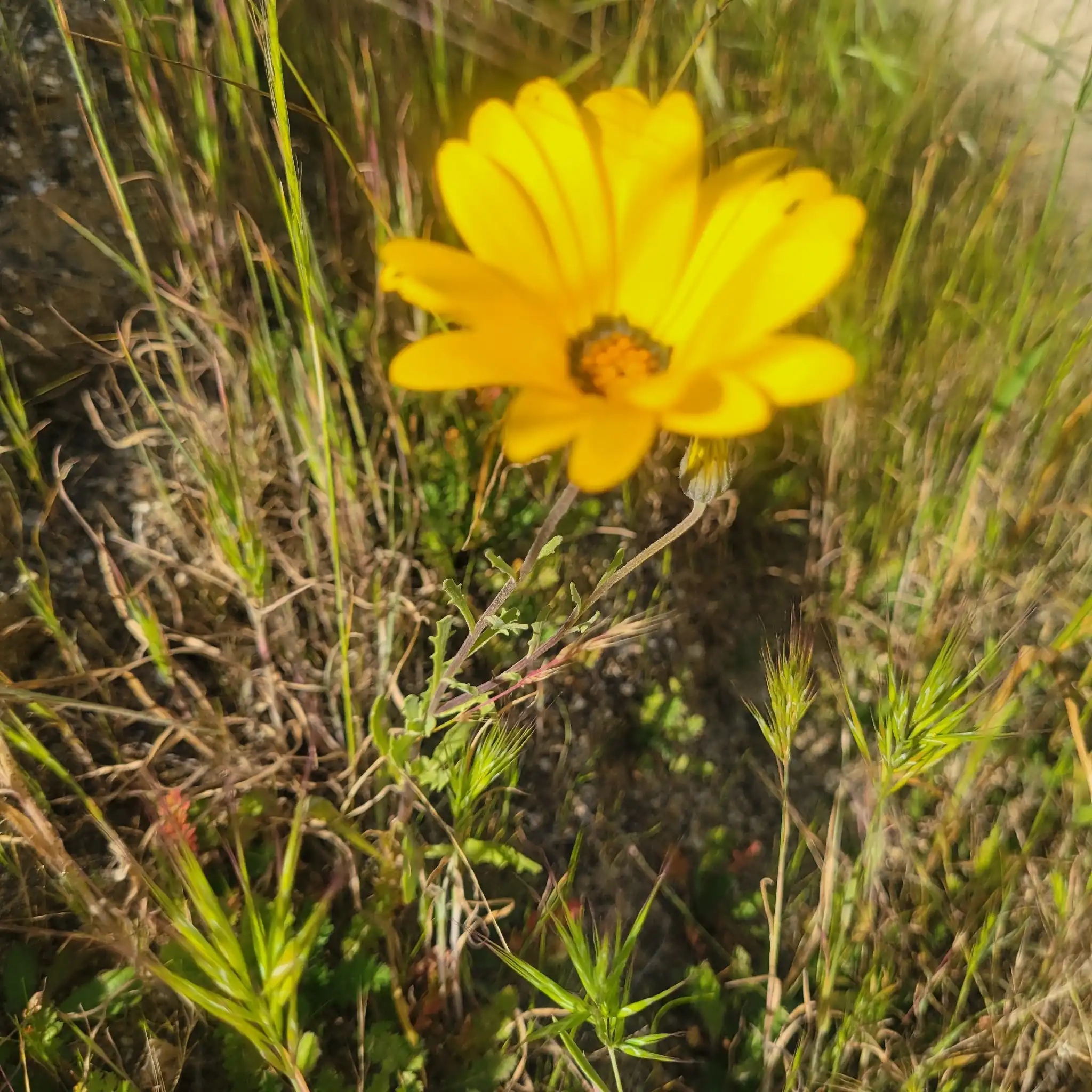
Dimorphotheca sinuata is a low-growing, spreading annual herb native to the dry regions of southern Africa. The bushy foliage consists of narrow, slightly toothed green leaves covered in glandular hairs, supporting daisy-like flower heads that open fully in bright sun and close during overcast weather.
The species is distinguished by its vivid ray petals in shades of orange, yellow, salmon, or white, surrounding a contrasting central disc. It thrives in lean, sandy soils where more delicate annuals fail, providing rapid ground cover on dry slopes.
Uses & Benefits:
Essentials
At a Glance
Plant Type
Annual
Height
12"
Width
18"
Light
Full Sun
Zones
4, 5, 6, 7, 8, 9, 10
Water
Low
Humidity
Low
Lifespan
Annual
Native To
Southern Africa
Toxicity
Skin irritant (glandular secretions)
Bloom period
Spring – Early summer
In flower about 4 months of the year
Planting
How to Grow
- Select a site in full sun with exceptionally well-drained, sandy or gravelly soil.
- Sow seeds directly into the soil in early spring after the last frost, or in fall in mild-winter climates.
- Water sparingly during germination and establishment, then transition to minimal irrigation once the plants are established.
- Deadhead spent blooms periodically to prolong the flowering season, but avoid pruning back into old, leafless wood.
Pro Tip
Plant in poor, gravelly soils and withhold summer irrigation; excess water and heavy fertilizers trigger root rot and produce weak, leafy growth with few flowers.
Keep It Thriving
Care Guide
Do
- Sow seeds directly in place for the strongest root development.
- Ensure the planting site has sharp drainage to prevent root rot.
- Allow the soil to dry out completely between waterings.
Don't
- Do not over-fertilize, as this leads to lush foliage and fewer flowers.
- Do not use overhead watering, which encourages powdery mildew and fungal leaf issues.
- Do not plant in heavy clay or waterlogged coastal soils.
Seasonal Care Calendar
| Task | Jan | Feb | Mar | Apr | May | Jun | Jul | Aug | Sep | Oct | Nov | Dec |
|---|---|---|---|---|---|---|---|---|---|---|---|---|
| Deadhead | ||||||||||||
| Pest Check | ||||||||||||
| Plant | ||||||||||||
| Spring Cleanup |
Watch Out For
Pests & Diseases
Common Pests
Common Diseases
In the Garden
Landscape Uses & Companions
Landscape Uses
Companion Plants
Multiply
Propagation Methods
Good to Know
Common Questions
African Daisy questions
What zones can African Daisy grow in?
African Daisy is hardy in USDA Zones 4–10. Inside that range it survives winter in the ground; outside it, grow it as an annual or a container plant you protect.
When does African Daisy bloom?
African Daisy typically blooms in spring through early summer. Exact timing shifts a week or two with your zone — Sow's bloom calendar maps it to your garden.
Does African Daisy need full sun?
African Daisy does best in full sun (6+ hours).
Is African Daisy drought tolerant?
Yes — once established (usually after the first full season), African Daisy handles dry spells with minimal watering. Water deeply its first year to build the root system that makes that possible.
More Dimorphotheca to compare
Keep exploring
Explore the genus
Grow African Daisy with confidence
See it in a design of your actual yard, get zone-matched care reminders, and track it season by season in your garden journal.