The Story
Plant Bio
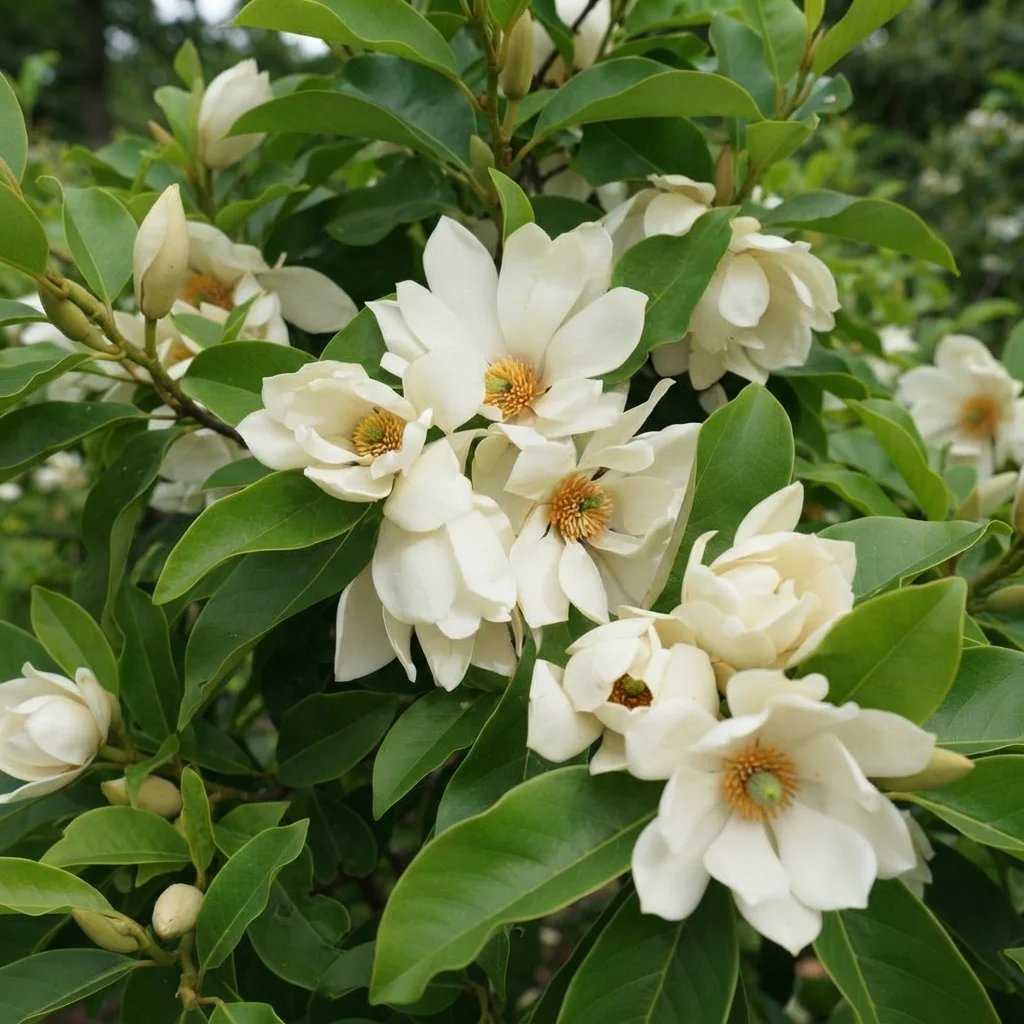
Michelia doltsopa, commonly known as sweet michelia, is a large evergreen shrub or medium tree native to the eastern Himalayas and western China. It develops a dense, upright oval canopy of glossy dark green leaves with pale, grayish-green undersides and prominent stipular scars.
From mid-winter to mid-spring, the branches bear large, highly fragrant, cup-shaped flowers composed of multiple creamy-white tepals. New foliage emerges with light bronze or pale green tones, providing subtle color contrast before maturing.
Uses & Benefits:
Essentials
At a Glance
Plant Type
Tree
Height
472"
Width
295"
Light
Full Sun, Partial Sun
Zones
8, 9, 10
Water
Moderate
Humidity
Moderate to High
Lifespan
Long
Native To
Asia (Himalayas to China)
Toxicity
Non-toxic
Bloom period
Winter – Spring
In flower about 6 months of the year
Planting
How to Grow
- Select a planting site in full sun to partial shade with rich, acidic to neutral soil.
- Dig a hole twice as wide as the root ball but no deeper, ensuring the trunk flare sits slightly above the surrounding soil level to prevent root rot.
- Backfill with native soil, water deeply to settle, and apply a thick layer of organic mulch to retain moisture.
- Provide regular supplemental irrigation during dry spells, keeping the soil evenly moist but never waterlogged.
Pro Tip
Prune strictly after flowering concludes in spring; pruning in late summer or winter removes the developing flower buds for the next season.
Keep It Thriving
Care Guide
Do
- Prune lightly immediately after flowering finishes to shape the canopy.
- Apply a balanced, slow-release fertilizer formulated for acid-loving plants in early spring.
- Ensure excellent soil drainage to protect the sensitive root system.
Don't
- Do not plant in heavy clay or poorly drained soils where standing water occurs.
- Do not prune in late summer, autumn, or winter, which cuts away the next season's flower buds.
- Do not plant too deeply, as burying the root flare leads to fatal rot.
Seasonal Care Calendar
| Task | Jan | Feb | Mar | Apr | May | Jun | Jul | Aug | Sep | Oct | Nov | Dec |
|---|---|---|---|---|---|---|---|---|---|---|---|---|
| Fertilize | ||||||||||||
| Mulch | ||||||||||||
| Pest Check | ||||||||||||
| Prune |
Watch Out For
Pests & Diseases
Common Pests
Common Diseases
In the Garden
Landscape Uses & Companions
Landscape Uses
Companion Plants
Multiply
Propagation Methods
Good to Know
Common Questions
Sweet Michelia questions
What zones can Sweet Michelia grow in?
Sweet Michelia is hardy in USDA Zones 8–10. Inside that range it survives winter in the ground; outside it, grow it as an annual or a container plant you protect.
When does Sweet Michelia bloom?
Sweet Michelia typically blooms in winter through spring. Exact timing shifts a week or two with your zone — Sow's bloom calendar maps it to your garden.
Does Sweet Michelia need full sun?
Sweet Michelia does best in full sun to part shade. In hot climates, afternoon shade keeps blooms fresher longer.
Keep exploring
Explore the genus
Hardy in your zone?
Grow Sweet Michelia with confidence
See it in a design of your actual yard, get zone-matched care reminders, and track it season by season in your garden journal.