
The Story
Plant Bio
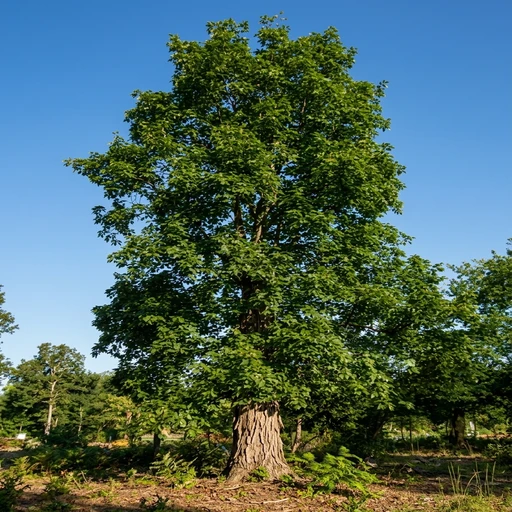
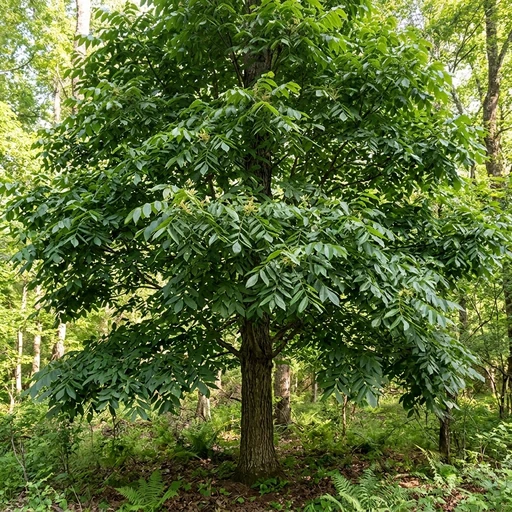
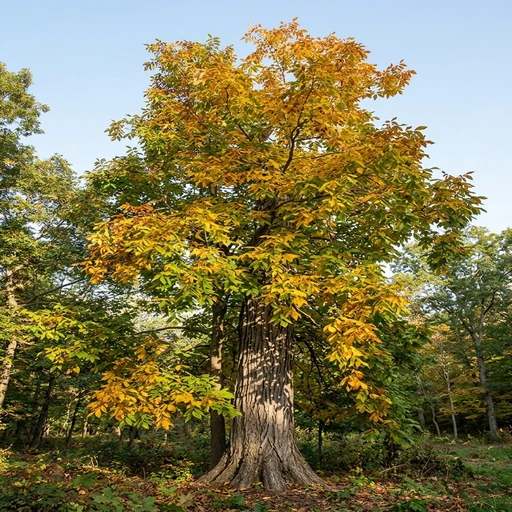
A large, majestic deciduous tree in the hickory family, native to the Mississippi River valley. It is famed for its delicious, edible nuts and is valued as a stately shade tree with a massive, rounded crown.
The species is distinguished by its large size, strong wood, and production of one of the most commercially important nuts native to North America. It has a deep taproot, making it very drought tolerant once established.
Uses & Benefits:
Essentials
At a Glance
Plant Type
Tree
Height
960"
Width
720"
Light
Full Sun
Zones
6, 7, 8, 9
Water
Moderate
Humidity
Moderate to high
Lifespan
Very long-lived, 200+ years
Native To
Central and Southern United States
Toxicity
Roots produce juglone, which can inhibit growth of other plants
Bloom period
Mid-spring – Late spring
In flower about 2 months of the year
Planting
How to Grow
- Select a site with deep, fertile, well-drained soil and full sun.
- Dig a very deep hole to accommodate the long taproot.
- Plant the tree at the same depth it grew in the nursery.
- Backfill with soil, water deeply to eliminate air pockets.
- Stake the young tree for the first year or two to keep it straight.
- Water regularly and deeply for the first few years to establish the taproot.
Pro Tip
Pecans require zinc for proper nut development. Apply a foliar zinc spray several times during the early growing season for best results.
Keep It Thriving
Care Guide
Do
- Provide ample space for this very large tree to grow.
- Plant at least two different cultivars for cross-pollination and good nut set.
- Water deeply and regularly, especially during nut-filling stage.
- Conduct a soil test and provide necessary nutrients, especially zinc.
- Manage pests and diseases proactively for a good harvest.
Don't
- Do not plant in shallow, compacted, or poorly drained soil.
- Avoid planting near buildings or power lines due to its massive size.
- Don't plant juglone-sensitive plants like tomatoes or azaleas under the canopy.
- Avoid wounding the thin bark, which can lead to disease entry.
- Do not expect nuts for 8-10 years on seedling trees; grafted trees are faster.
Seasonal Care Calendar
| Task | Jan | Feb | Mar | Apr | May | Jun | Jul | Aug | Sep | Oct | Nov | Dec |
|---|---|---|---|---|---|---|---|---|---|---|---|---|
| Fertilize | ||||||||||||
| Harvest | ||||||||||||
| Plant | ||||||||||||
| Prune |
Watch Out For
Pests & Diseases
Common Pests
Common Diseases
In the Garden
Landscape Uses & Companions
Landscape Uses
Companion Plants
Multiply
Propagation Methods
Good to Know
Common Questions
Pecan questions
What zones can Pecan grow in?
Pecan is hardy in USDA Zones 6–9. Inside that range it survives winter in the ground; outside it, grow it as an annual or a container plant you protect.
Is Pecan deer resistant?
Not reliably. Deer may browse Pecan, especially tender spring growth — plan on repellents or fencing where pressure is high.
When does Pecan bloom?
Pecan typically blooms in mid-spring through late spring. Exact timing shifts a week or two with your zone — Sow's bloom calendar maps it to your garden.
Does Pecan need full sun?
Pecan does best in full sun (6+ hours).
Is Pecan drought tolerant?
Yes — once established (usually after the first full season), Pecan handles dry spells with minimal watering. Water deeply its first year to build the root system that makes that possible.
More Carya to compare
Keep exploring
Explore the genus
Hardy in your zone?
Grow Pecan with confidence
See it in a design of your actual yard, get zone-matched care reminders, and track it season by season in your garden journal.