The Story
Plant Bio
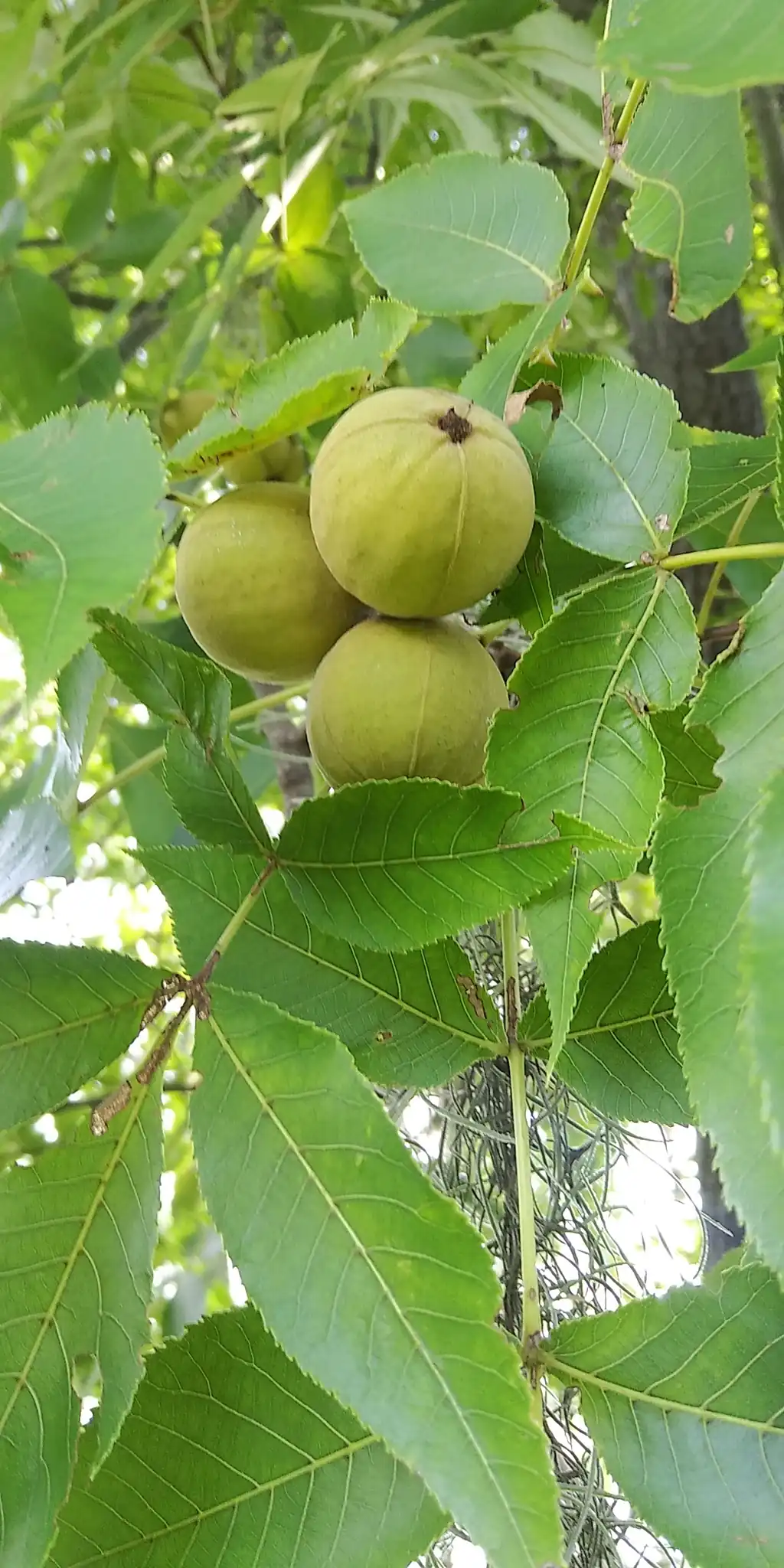
Carya glabra is a large, long-lived deciduous tree native to eastern North America, characterized by its compound leaves, tight gray bark, and a deep taproot. It is a dominant species in oak-hickory forests.
This species is valued for its extremely hard, durable wood, used for tool handles and smoking meats. Its pear-shaped nuts, while edible, have thick shells and small kernels, hence the name 'pignut'.
Uses & Benefits:
Essentials
At a Glance
Plant Type
Tree
Height
720"
Width
420"
Light
Full Sun, Partial Sun
Zones
4, 5, 6, 7, 8, 9
Water
Low to moderate
Humidity
Adaptable
Lifespan
200+ years
Native To
Eastern North America
Toxicity
Non-toxic, but juglone from roots can affect nearby plants.
Bloom period
Mid-spring – Late spring
In flower about 2 months of the year
Planting
How to Grow
- Select a large, open site with deep, well-drained soil.
- Dig a hole two to three times wider than the container.
- Carefully remove the tree and place it in the hole.
- Ensure the root flare is slightly above the surrounding soil grade.
- Backfill with native soil, watering gently to remove air pockets.
- Water deeply and regularly for the first two years to establish the taproot.
Pro Tip
Plant young, container-grown trees as the deep taproot makes transplanting larger specimens very difficult and often unsuccessful.
Keep It Thriving
Care Guide
Do
- Provide ample space for its mature size.
- Protect young trees from deer browse.
- Allow leaves to decompose on the forest floor in naturalized areas.
- Be patient; hickories are slow-growing but incredibly long-lived.
Don't
- Don't plant near gardens or plants sensitive to juglone.
- Avoid soil compaction over the root zone from vehicles or heavy foot traffic.
- Don't attempt to transplant mature trees.
- Avoid excessive fertilization; it's adapted to forest soils.
Seasonal Care Calendar
| Task | Jan | Feb | Mar | Apr | May | Jun | Jul | Aug | Sep | Oct | Nov | Dec |
|---|---|---|---|---|---|---|---|---|---|---|---|---|
| Prune | ||||||||||||
| Spring Cleanup |
Watch Out For
Pests & Diseases
Common Pests
Common Diseases
In the Garden
Landscape Uses & Companions
Landscape Uses
Multiply
Propagation Methods
Good to Know
Common Questions
Pignut Hickory questions
What zones can Pignut Hickory grow in?
Pignut Hickory is hardy in USDA Zones 4–9. Inside that range it survives winter in the ground; outside it, grow it as an annual or a container plant you protect.
Is Pignut Hickory deer resistant?
Yes — Pignut Hickory is rated deer-resistant. Deer typically pass it over, though extreme hunger can override any plant's defenses.
When does Pignut Hickory bloom?
Pignut Hickory typically blooms in mid-spring through late spring. Exact timing shifts a week or two with your zone — Sow's bloom calendar maps it to your garden.
Does Pignut Hickory need full sun?
Pignut Hickory does best in full sun to part shade. In hot climates, afternoon shade keeps blooms fresher longer.
Is Pignut Hickory drought tolerant?
Yes — once established (usually after the first full season), Pignut Hickory handles dry spells with minimal watering. Water deeply its first year to build the root system that makes that possible.
More Carya to compare
Keep exploring
Explore the genus
Grow Pignut Hickory with confidence
See it in a design of your actual yard, get zone-matched care reminders, and track it season by season in your garden journal.