The Story
Plant Bio
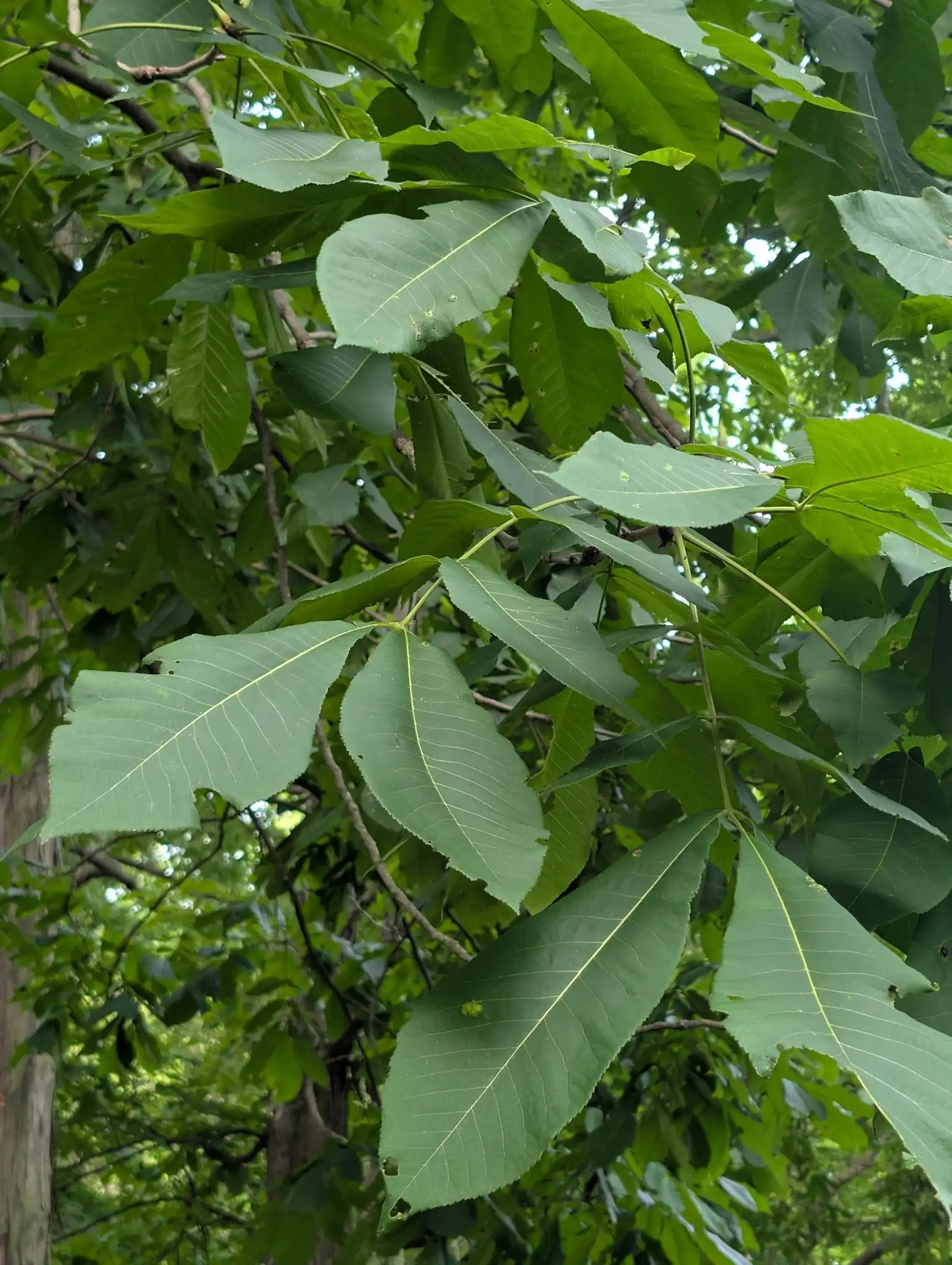
A large, slow-growing deciduous tree native to floodplain forests of the central and eastern US, prized for its large, sweet, edible nuts and distinctive shaggy bark.
It produces the largest nuts of all hickory species, and its long, peeling strips of gray bark provide dramatic winter interest, giving it the common name 'shellbark'.
Uses & Benefits:
Essentials
At a Glance
Plant Type
Tree
Height
840"
Width
600"
Light
Full Sun
Zones
5, 6, 7, 8
Water
Medium to Wet
Humidity
High
Lifespan
Very long-lived (200+ years)
Native To
Central and Eastern United States
Toxicity
Nuts are edible; other parts non-toxic
Bloom period
Mid-spring – Late spring
In flower about 2 months of the year
Planting
How to Grow
- Select a large, open site in full sun with rich, moist soil.
- Dig a deep hole to accommodate the taproot without bending it.
- Handle the root ball with care to minimize root disturbance.
- Set the tree at the same depth it grew in the nursery.
- Backfill with native soil and water deeply to settle.
- Mulch widely but keep it away from the trunk.
Pro Tip
Plant this tree where it can live for centuries; its deep taproot makes it a permanent and difficult-to-transplant fixture.
Keep It Thriving
Care Guide
Do
- Provide ample water, especially during establishment and dry spells.
- Protect young trees from deer browse with trunk guards.
- Be patient; this is a slow-growing but very long-lived tree.
- Clean up fallen nuts and husks to prevent them from becoming a nuisance.
Don't
- Don't plant in small yards or near buildings or pavement.
- Avoid trying to transplant established trees.
- Don't plant in dry, sandy, or infertile soils.
- Don't compact the soil over the root zone with heavy equipment.
Seasonal Care Calendar
| Task | Jan | Feb | Mar | Apr | May | Jun | Jul | Aug | Sep | Oct | Nov | Dec |
|---|---|---|---|---|---|---|---|---|---|---|---|---|
| Harvest | ||||||||||||
| Plant | ||||||||||||
| Prune |
Watch Out For
Pests & Diseases
Common Pests
Common Diseases
In the Garden
Landscape Uses & Companions
Landscape Uses
Multiply
Propagation Methods
Good to Know
Common Questions
Shellbark Hickory questions
What zones can Shellbark Hickory grow in?
Shellbark Hickory is hardy in USDA Zones 5–8. Inside that range it survives winter in the ground; outside it, grow it as an annual or a container plant you protect.
Is Shellbark Hickory deer resistant?
Yes — Shellbark Hickory is rated deer-resistant. Deer typically pass it over, though extreme hunger can override any plant's defenses.
When does Shellbark Hickory bloom?
Shellbark Hickory typically blooms in mid-spring through late spring. Exact timing shifts a week or two with your zone — Sow's bloom calendar maps it to your garden.
Does Shellbark Hickory need full sun?
Shellbark Hickory does best in full sun (6+ hours).
More Carya to compare
Keep exploring
Explore the genus
Hardy in your zone?
Grow Shellbark Hickory with confidence
See it in a design of your actual yard, get zone-matched care reminders, and track it season by season in your garden journal.