The Story
Plant Bio
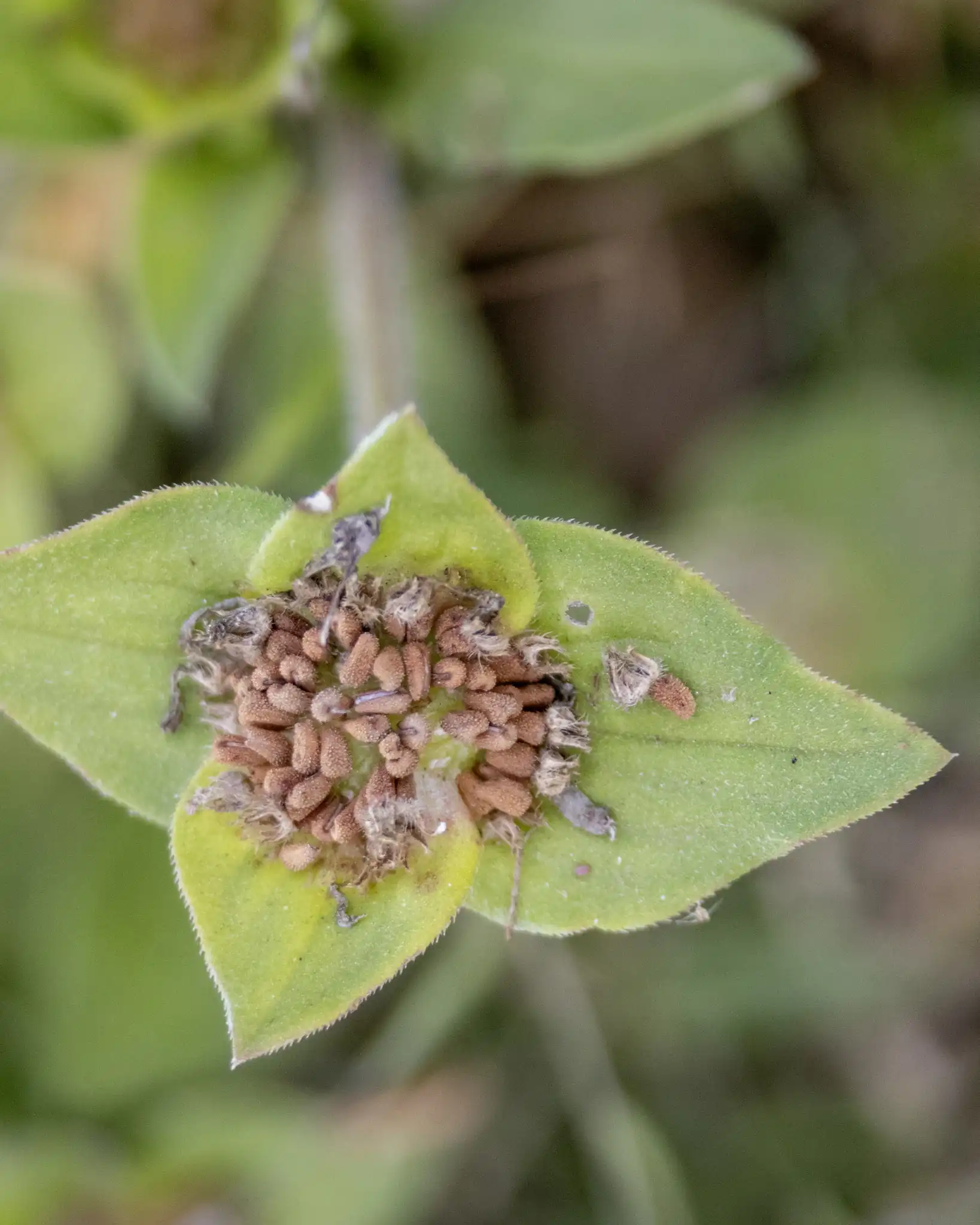
Richardia scabra, commonly known as Florida pusley, is a low-branching, sprawling annual or short-lived perennial groundcover that forms dense mats over sandy soils. The rough-textured, opposite leaves feature hairy margins and sheathing stipules, while terminal clusters of small, white, star-shaped flowers bloom from spring through fall.
This species is distinguished by its highly scabrous foliage and stems, which can cause mild mechanical skin irritation upon physical contact. It is frequently confused with Brazil pusley or buttonweeds, but can be identified by its specific calyx lobes and hair structures.
Uses & Benefits:
Essentials
At a Glance
Plant Type
Groundcover
Height
30"
Width
40"
Light
Full Sun, Partial Sun
Zones
8, 9, 10
Water
Low
Humidity
High
Lifespan
Annual or short-lived perennial
Native To
Central and South America, Southeastern United States
Toxicity
Non-toxic (foliage can cause mild skin irritation)
Bloom period
Spring – Fall
In flower about 9 months of the year
Planting
How to Grow
- Sow seeds directly onto sandy, well-drained soil in a location receiving full sun to partial shade.
- Keep the soil lightly moist until germination, after which the shallow taproot system establishes quickly.
- Withhold supplemental fertilizers, as the plant thrives and spreads rapidly in nutrient-poor conditions.
- Allow the plant to set seed naturally in late summer to ensure a continuous groundcover the following spring.
Pro Tip
Shear the sprawling stems back lightly in spring if they become straggly, but avoid cutting into older, leafless stems to prevent patchy recovery.
Keep It Thriving
Care Guide
Do
- Grow in sandy, loamy, or highly disturbed soils with excellent drainage.
- Provide full sun to maximize the density of the flowering mats.
- Wear gloves when handling the rough, hairy foliage to prevent mild skin irritation.
Don't
- Do not overwater or plant in poorly drained soils where root rot can develop.
- Do not apply supplemental fertilizers, which are unnecessary for this highly adaptable species.
- Do not cut back into old, woody, leafless stems when tidying the plant.
Seasonal Care Calendar
| Task | Jan | Feb | Mar | Apr | May | Jun | Jul | Aug | Sep | Oct | Nov | Dec |
|---|---|---|---|---|---|---|---|---|---|---|---|---|
| Pest Check | ||||||||||||
| Propagate | ||||||||||||
| Spring Cleanup | ||||||||||||
| Winter Prep |
Watch Out For
Pests & Diseases
Common Pests
Common Diseases
In the Garden
Landscape Uses & Companions
Landscape Uses
Companion Plants
Multiply
Propagation Methods
Good to Know
Common Questions
Florida Pusley questions
What zones can Florida Pusley grow in?
Florida Pusley is hardy in USDA Zones 8–10. Inside that range it survives winter in the ground; outside it, grow it as an annual or a container plant you protect.
When does Florida Pusley bloom?
Florida Pusley typically blooms in spring through fall. Exact timing shifts a week or two with your zone — Sow's bloom calendar maps it to your garden.
Does Florida Pusley need full sun?
Florida Pusley does best in full sun to part shade. In hot climates, afternoon shade keeps blooms fresher longer.
Is Florida Pusley drought tolerant?
Yes — once established (usually after the first full season), Florida Pusley handles dry spells with minimal watering. Water deeply its first year to build the root system that makes that possible.
Keep exploring
Explore the genus
Hardy in your zone?
Grow Florida Pusley with confidence
See it in a design of your actual yard, get zone-matched care reminders, and track it season by season in your garden journal.