The Story
Plant Bio
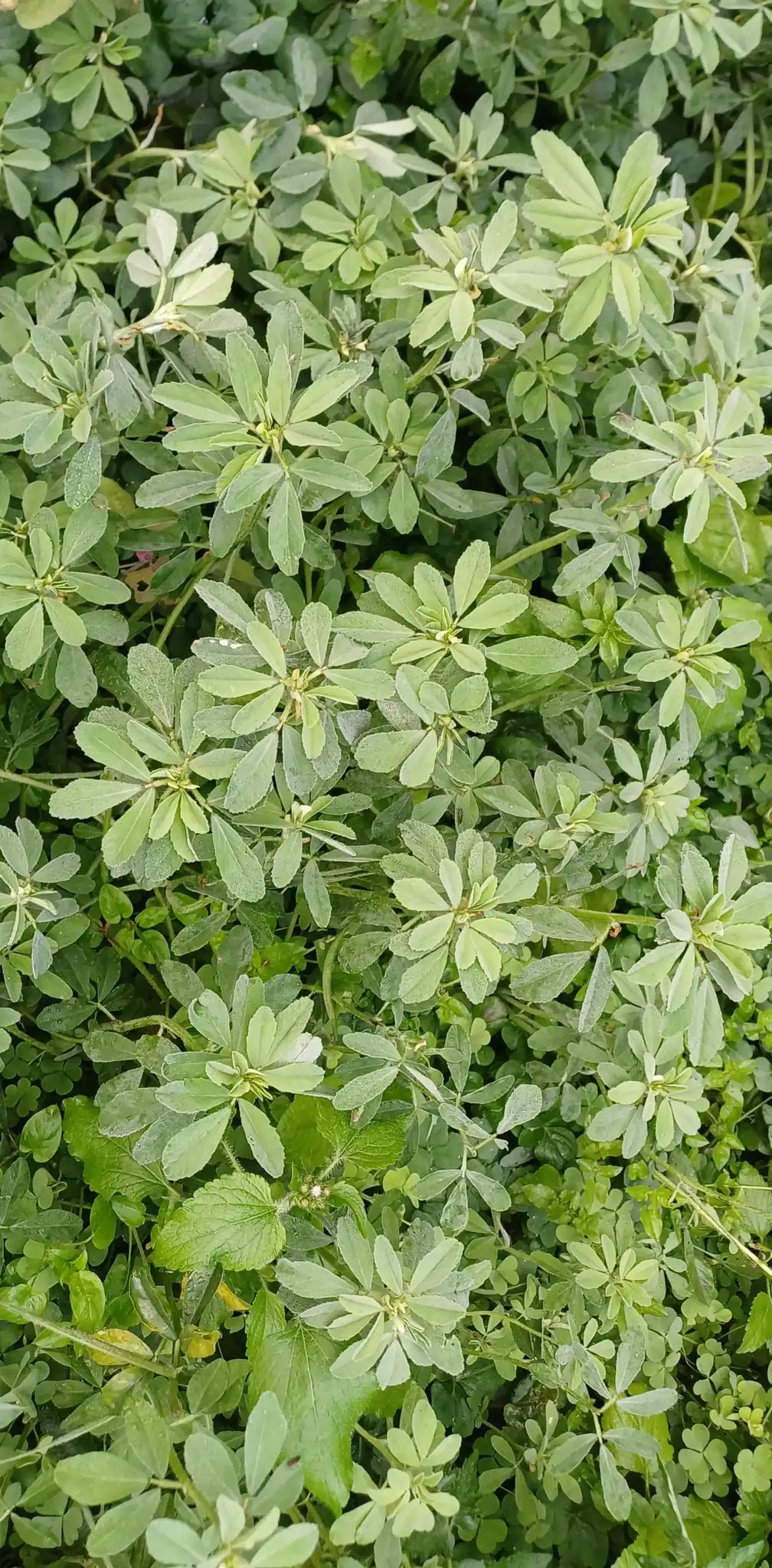
Trigonella foenum-graecum, commonly known as fenugreek, is an erect, branching annual herb native to Western Asia and the Mediterranean region. It produces clover-like, trifoliate leaves that release a distinct, sweet scent reminiscent of maple syrup or warm spices when bruised.
The upright stems bear small, butterfly-like white, yellow, or pale blue flowers in the leaf axils during summer, followed by slender seed pods. This species functions as a nitrogen-fixing legume, enriching the surrounding soil as its root system decays at the end of the season.
Uses & Benefits:
Essentials
At a Glance
Plant Type
Annual
Height
24"
Width
12"
Light
Full Sun
Zones
4, 5, 6, 7, 8, 9, 10
Water
Moderate
Humidity
Moderate
Lifespan
Annual
Native To
Western Asia, Mediterranean
Toxicity
Toxic to pregnant women and sensitive individuals
Bloom period
Summer
In flower about 3 months of the year
Planting
How to Grow
- Select a planting site in full sun with highly drained, sandy or loamy soil.
- Pre-soak the seeds in warm water for 12 hours to soften the seed coat and accelerate germination.
- Sow seeds directly into the garden bed after the danger of hard frost has passed in spring.
- Water moderately during early establishment and flowering, ensuring the soil never becomes waterlogged.
Pro Tip
Avoid applying nitrogen-heavy fertilizers, which suppress the plant's natural nitrogen-fixing root nodules and reduce overall vigor and seed quality.
Keep It Thriving
Care Guide
Do
- Sow seeds directly in their permanent garden position to avoid transplant shock.
- Ensure the planting site has excellent drainage to prevent soil saturation.
- Leave the root systems in the ground at the end of the season to decay and release fixed nitrogen.
Don't
- Do not apply heavy nitrogen fertilizers, which inhibit root nodulation.
- Do not overwater or plant in heavy, poorly draining clay soils.
- Do not allow pregnant women to consume medicinal or high dietary doses of the plant.
Seasonal Care Calendar
| Task | Jan | Feb | Mar | Apr | May | Jun | Jul | Aug | Sep | Oct | Nov | Dec |
|---|---|---|---|---|---|---|---|---|---|---|---|---|
| Fertilize | ||||||||||||
| Harvest | ||||||||||||
| Pest Check | ||||||||||||
| Plant | ||||||||||||
| Winter Prep |
Watch Out For
Pests & Diseases
Common Pests
Common Diseases
In the Garden
Landscape Uses & Companions
Landscape Uses
Companion Plants
Multiply
Propagation Methods
Good to Know
Common Questions
Fenugreek questions
What zones can Fenugreek grow in?
Fenugreek is hardy in USDA Zones 4–10. Inside that range it survives winter in the ground; outside it, grow it as an annual or a container plant you protect.
When does Fenugreek bloom?
Fenugreek typically blooms in summer through summer. Exact timing shifts a week or two with your zone — Sow's bloom calendar maps it to your garden.
Does Fenugreek need full sun?
Fenugreek does best in full sun (6+ hours).
Is Fenugreek drought tolerant?
Yes — once established (usually after the first full season), Fenugreek handles dry spells with minimal watering. Water deeply its first year to build the root system that makes that possible.
Keep exploring
Explore the genus
Grow Fenugreek with confidence
See it in a design of your actual yard, get zone-matched care reminders, and track it season by season in your garden journal.