The Story
Plant Bio
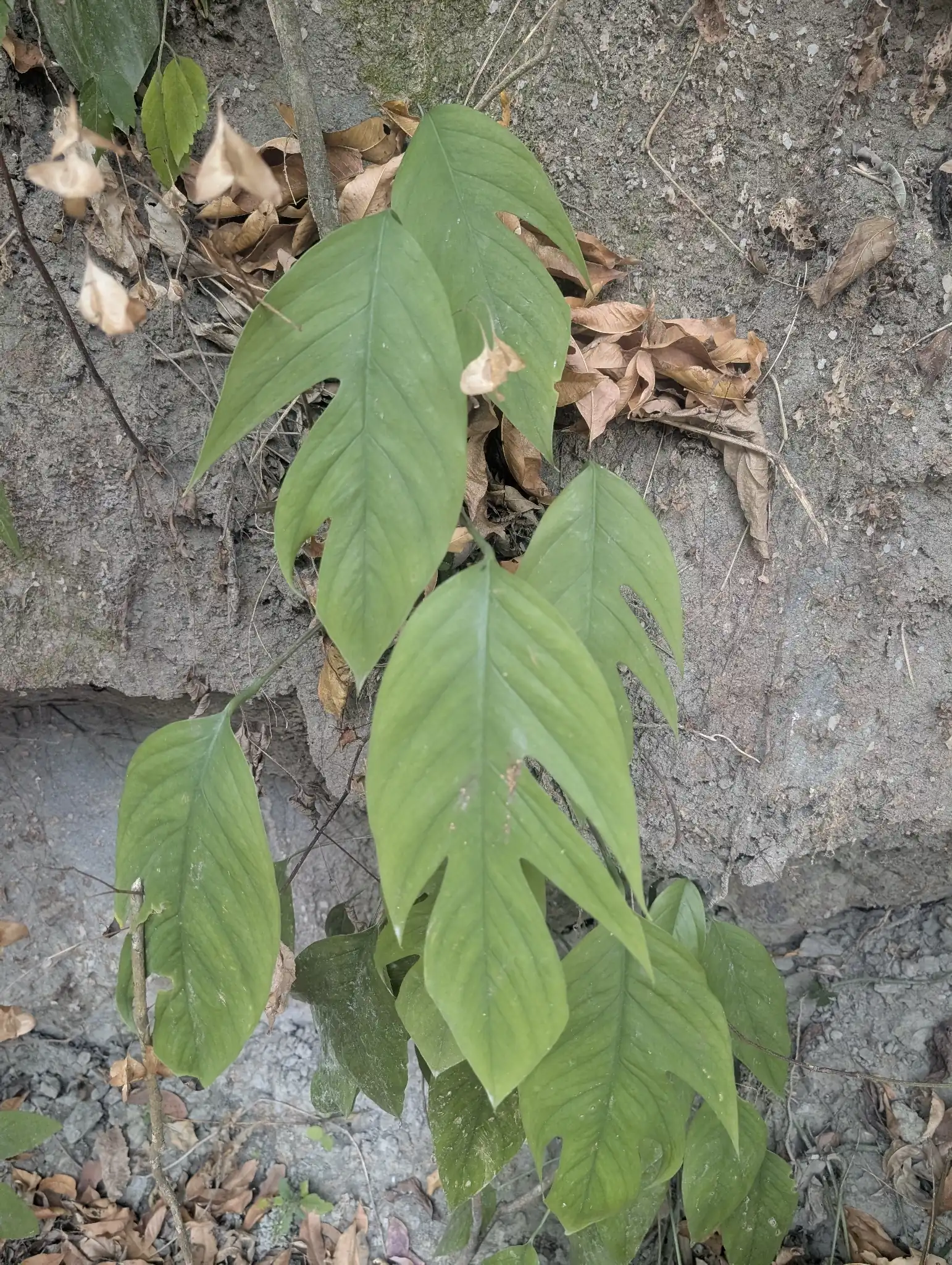
Epipremnum pinnatum is an evergreen, climbing hemiepiphytic vine native to tropical Asia and Oceania, characterized by its dramatic transition from entire, lanceolate juvenile leaves to large, deeply pinnatifid mature foliage. In cultivation, it climbs via aerial roots to reach heights of eight to ten feet, occasionally producing cream-colored spadix inflorescences enclosed in canoe-shaped spathes during spring or summer.
This species is distinguished from common pothos by its narrower, more elongated juvenile leaves and its capacity to develop distinct fenestrations as it matures. Cultivars like 'Cebu Blue' exhibit a unique metallic, silvery-blue cast on new growth before transitioning to a deep green.
Uses & Benefits:
Essentials
At a Glance
Plant Type
Vine
Height
120"
Width
40"
Light
Partial Sun, Shade
Zones
10
Water
Low to moderate
Humidity
High
Lifespan
Perennial
Native To
Asia and Oceania
Toxicity
Toxic to cats, dogs, and humans
Bloom period
Spring – Summer
In flower about 6 months of the year
Planting
How to Grow
- Select a container with excellent bottom drainage and fill it with a rich, organic, well-draining potting mix.
- Insert a sturdy, moisture-retentive support, such as a moss pole or totem, directly into the pot to encourage climbing.
- Position the plant in a location that receives bright, indirect sunlight, shielding it from harsh, direct midday sun.
- Water thoroughly when the top inch of soil feels dry, ensuring excess water drains away completely to prevent root rot.
Pro Tip
To trigger the dramatic, fenestrated mature leaf form, train the vine vertically up a moist moss pole or rough wooden support; allowing the stems to trail horizontally keeps the foliage permanently in its small, juvenile state.
Keep It Thriving
Care Guide
Do
- Provide a vertical support to encourage the development of mature, fenestrated leaves.
- Maintain high humidity levels around the foliage using a humidifier or pebble tray.
- Prune leggy stems in spring or summer to promote bushier growth.
Don't
- Do not allow the pot to sit in standing water, which rapidly induces root rot.
- Never prune heavily into old, completely leafless wood as it may fail to regenerate.
- Avoid placing the plant in direct, intense afternoon sunlight to prevent leaf scorch.
Seasonal Care Calendar
| Task | Jan | Feb | Mar | Apr | May | Jun | Jul | Aug | Sep | Oct | Nov | Dec |
|---|---|---|---|---|---|---|---|---|---|---|---|---|
| Fertilize | ||||||||||||
| Pest Check | ||||||||||||
| Propagate | ||||||||||||
| Prune |
Watch Out For
Pests & Diseases
Common Pests
Common Diseases
In the Garden
Landscape Uses & Companions
Landscape Uses
Companion Plants
Multiply
Propagation Methods
Good to Know
Common Questions
Dragon-Tail Plant questions
What zones can Dragon-Tail Plant grow in?
Dragon-Tail Plant is hardy in USDA Zone 10. Inside that range it survives winter in the ground; outside it, grow it as an annual or a container plant you protect.
When does Dragon-Tail Plant bloom?
Dragon-Tail Plant typically blooms in spring through summer. Exact timing shifts a week or two with your zone — Sow's bloom calendar maps it to your garden.
Does Dragon-Tail Plant need full sun?
Dragon-Tail Plant does best in part shade.
Is Dragon-Tail Plant drought tolerant?
Yes — once established (usually after the first full season), Dragon-Tail Plant handles dry spells with minimal watering. Water deeply its first year to build the root system that makes that possible.
More Epipremnum to compare
Keep exploring
Explore the genus
Hardy in your zone?
Grow Dragon-Tail Plant with confidence
See it in a design of your actual yard, get zone-matched care reminders, and track it season by season in your garden journal.