The Story
Plant Bio
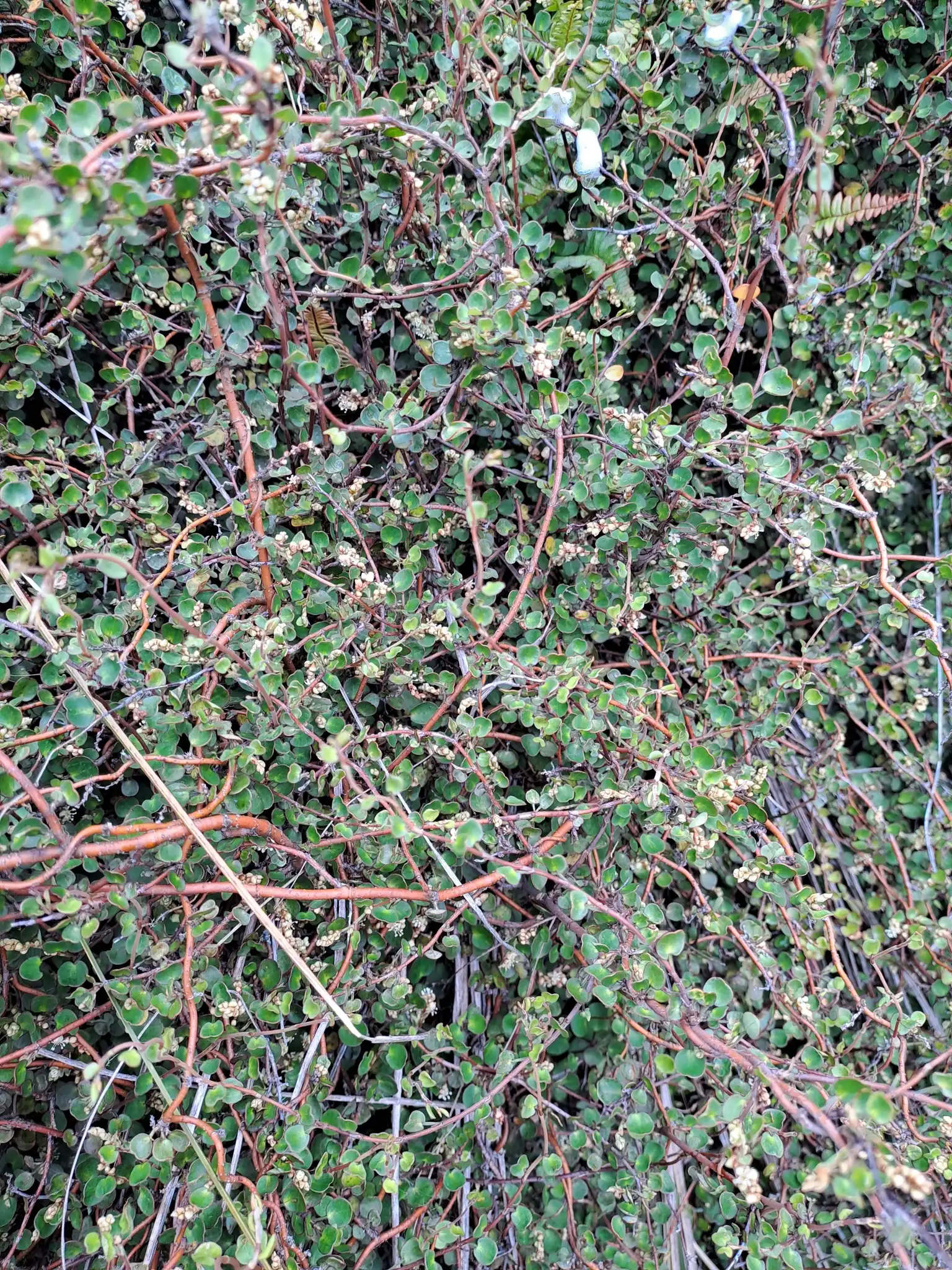
Muehlenbeckia complexa, the wire vine, is a vigorous, semi-evergreen woody scrambler featuring densely interlaced, dark brown-to-black wiry stems that form a tangled mat. The small, glossy, rounded leaves emerge bright green before hardening to a deep green, partially obscuring the tiny, inconspicuous creamy-green flowers that appear in late spring.
This species is highly valued for its exceptional tolerance to coastal salt spray and strong maritime winds, making it an excellent choice for stabilizing sandy banks. The dense, springy cushion of growth provides valuable nesting cover for small birds and lizards while resisting moderate drought once established.
Uses & Benefits:
Essentials
At a Glance
Plant Type
Vine
Height
36"
Width
354"
Light
Full Sun, Partial Sun
Zones
8, 9, 10
Water
Low to moderate
Humidity
Moderate
Lifespan
Perennial
Native To
New Zealand, Lord Howe Island
Toxicity
Non-toxic
Bloom period
Late spring – Summer
In flower about 4 months of the year
Planting
How to Grow
- Select a site with full sun to partial shade and exceptionally well-drained soil.
- Space plants 24 to 36 inches apart to allow the vigorous, scrambling stems room to spread.
- Water regularly after planting to establish the root system, then reduce frequency as the plant develops drought tolerance.
- Shear or prune heavily in early spring to shape the plant and control its rapid spread.
Pro Tip
Never prune hard into old, leafless, dead-wood stems expecting major re-sprouting; ensure there are visible green buds or nodes on the wood before cutting back.
Keep It Thriving
Care Guide
Do
- Provide sharp soil drainage to prevent root rot.
- Shear regularly to maintain a tidy form or to contain growth.
- Apply a light layer of organic mulch in spring to conserve moisture.
Don't
- Do not allow the plant to sit in waterlogged or poorly drained soil.
- Do not prune hard into old, leafless wood lacking visible green buds.
- Do not over-fertilize, as this species thrives in poor, rocky soils.
Seasonal Care Calendar
| Task | Jan | Feb | Mar | Apr | May | Jun | Jul | Aug | Sep | Oct | Nov | Dec |
|---|---|---|---|---|---|---|---|---|---|---|---|---|
| Fertilize | ||||||||||||
| Pest Check | ||||||||||||
| Propagate | ||||||||||||
| Prune | ||||||||||||
| Winter Prep |
Watch Out For
Pests & Diseases
Common Pests
Common Diseases
In the Garden
Landscape Uses & Companions
Landscape Uses
Multiply
Propagation Methods
Good to Know
Common Questions
Wire Vine questions
What zones can Wire Vine grow in?
Wire Vine is hardy in USDA Zones 8–10. Inside that range it survives winter in the ground; outside it, grow it as an annual or a container plant you protect.
Is Wire Vine deer resistant?
Not reliably. Deer may browse Wire Vine, especially tender spring growth — plan on repellents or fencing where pressure is high.
When does Wire Vine bloom?
Wire Vine typically blooms in late spring through summer. Exact timing shifts a week or two with your zone — Sow's bloom calendar maps it to your garden.
Does Wire Vine need full sun?
Wire Vine does best in full sun to part shade. In hot climates, afternoon shade keeps blooms fresher longer.
Is Wire Vine drought tolerant?
Yes — once established (usually after the first full season), Wire Vine handles dry spells with minimal watering. Water deeply its first year to build the root system that makes that possible.
More Muehlenbeckia to compare
Keep exploring
Explore the genus
Hardy in your zone?
Grow Wire Vine with confidence
See it in a design of your actual yard, get zone-matched care reminders, and track it season by season in your garden journal.