The Story
Plant Bio
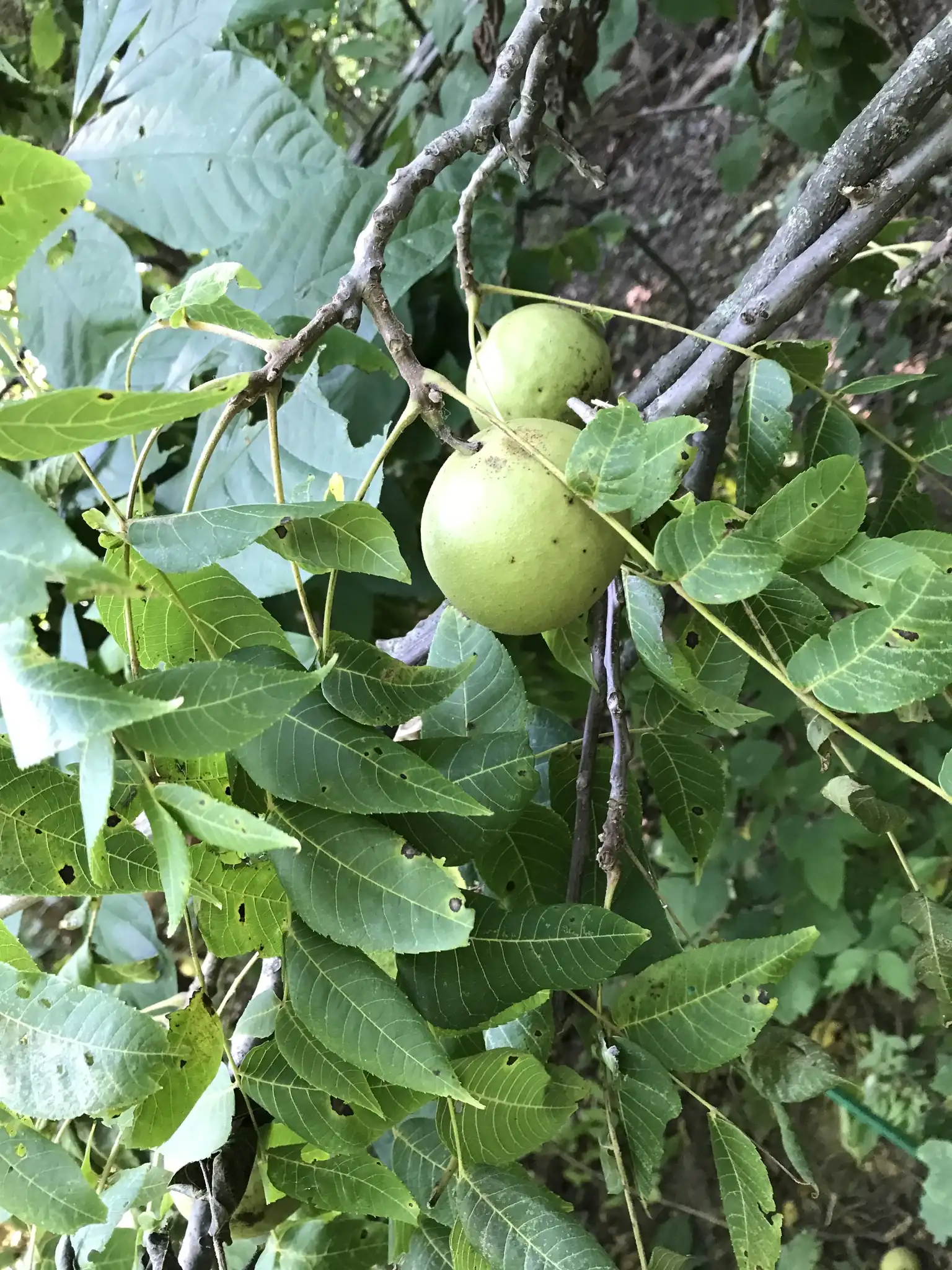
Juglans nigra is a large, majestic deciduous tree native to North America, highly valued for its beautiful, dark, straight-grained wood and edible nuts. It has large, aromatic, compound leaves.
This species is known for producing juglone, an allelopathic chemical exuded from its roots, leaves, and nuts that can inhibit the growth or kill many other plants within its root zone.
Uses & Benefits:
Essentials
At a Glance
Plant Type
Tree
Height
900"
Width
900"
Light
Full Sun
Zones
4, 5, 6, 7, 8, 9
Water
Medium
Humidity
Average to high
Lifespan
150+ years
Native To
Central and Eastern United States
Toxicity
Roots, leaves, and nuts are toxic to many plants (allelopathic)
Bloom period
Late spring – Early summer
In flower about 2 months of the year
Marketplace
Where to Buy
Shipping costs Year-round shipping Free shipping
Planting
How to Grow
- Select a site with full sun and deep, rich, well-drained loamy soil.
- Ensure the location is at least 60-80 feet away from sensitive plants.
- Dig a hole deep and wide enough to accommodate the extensive taproot.
- Plant the sapling at the same depth it was growing in the nursery.
- Water thoroughly and consistently for the first few years.
- Protect young trees from deer and rodent damage with trunk guards.
Pro Tip
Plant it far from vegetable gardens, orchards, and sensitive ornamentals due to the toxic juglone it produces.
Keep It Thriving
Care Guide
Do
- Keep the area under the tree free of weeds to reduce competition.
- Provide supplemental water during prolonged droughts.
- Rake up fallen leaves, twigs, and nuts to minimize juglone in the soil.
- Prune to maintain a strong central leader when young.
Don't
- Do not plant near tomatoes, potatoes, apples, azaleas, or rhododendrons.
- Avoid using wood chips from black walnut as mulch for other plants.
- Do not plant in poorly drained or shallow soils.
- Avoid heavy foot or vehicle traffic over the root zone.
Seasonal Care Calendar
| Task | Jan | Feb | Mar | Apr | May | Jun | Jul | Aug | Sep | Oct | Nov | Dec |
|---|---|---|---|---|---|---|---|---|---|---|---|---|
| Harvest | ||||||||||||
| Prune | ||||||||||||
| Spring Cleanup |
Watch Out For
Pests & Diseases
Common Pests
Common Diseases
In the Garden
Landscape Uses & Companions
Landscape Uses
Multiply
Propagation Methods
Good to Know
Common Questions
Black Walnut questions
What zones can Black Walnut grow in?
Black Walnut is hardy in USDA Zones 4–9. Inside that range it survives winter in the ground; outside it, grow it as an annual or a container plant you protect.
Is Black Walnut deer resistant?
Yes — Black Walnut is rated deer-resistant. Deer typically pass it over, though extreme hunger can override any plant's defenses.
When does Black Walnut bloom?
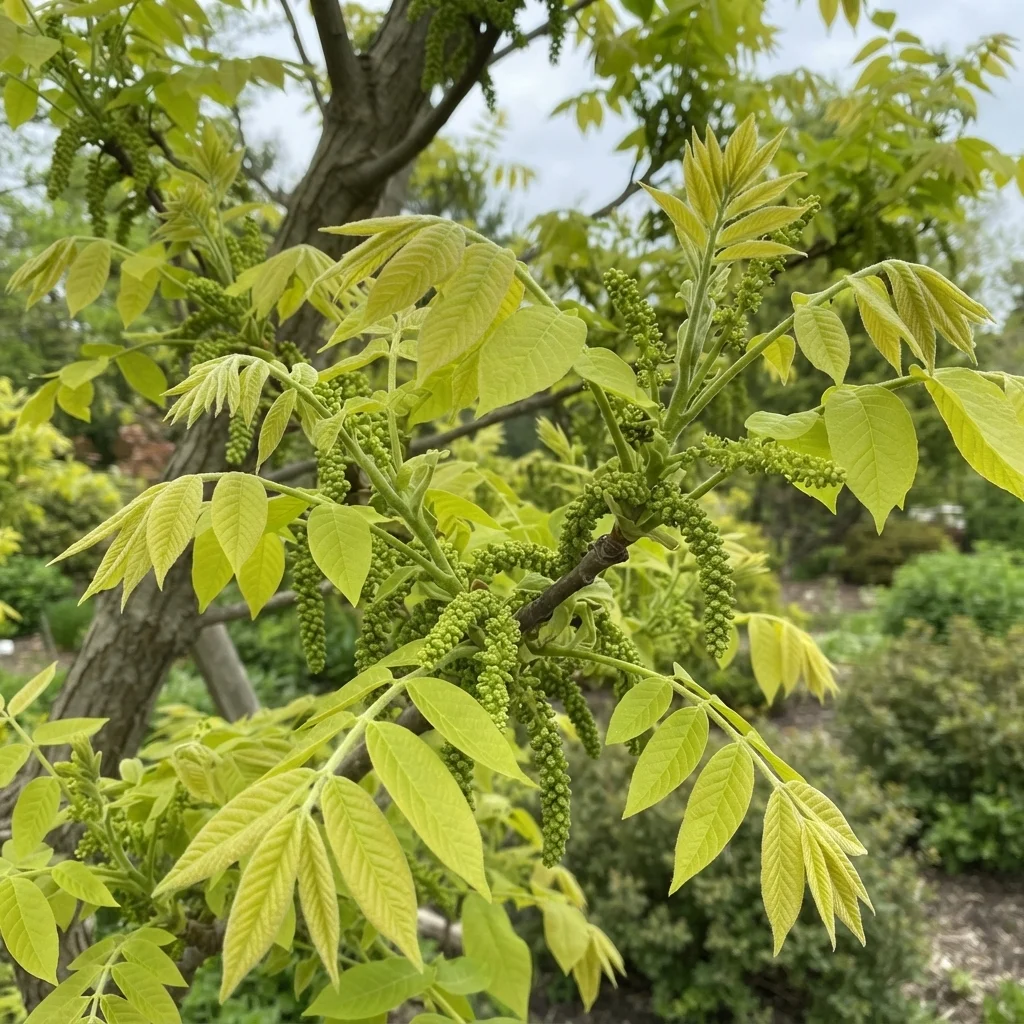
Black Walnut typically blooms in late spring through early summer. Exact timing shifts a week or two with your zone — Sow's bloom calendar maps it to your garden.
Does Black Walnut need full sun?
Black Walnut does best in full sun (6+ hours).
More Juglans to compare

Keep exploring
Explore the genus
Grow Black Walnut with confidence
See it in a design of your actual yard, get zone-matched care reminders, and track it season by season in your garden journal.