The Story
Plant Bio
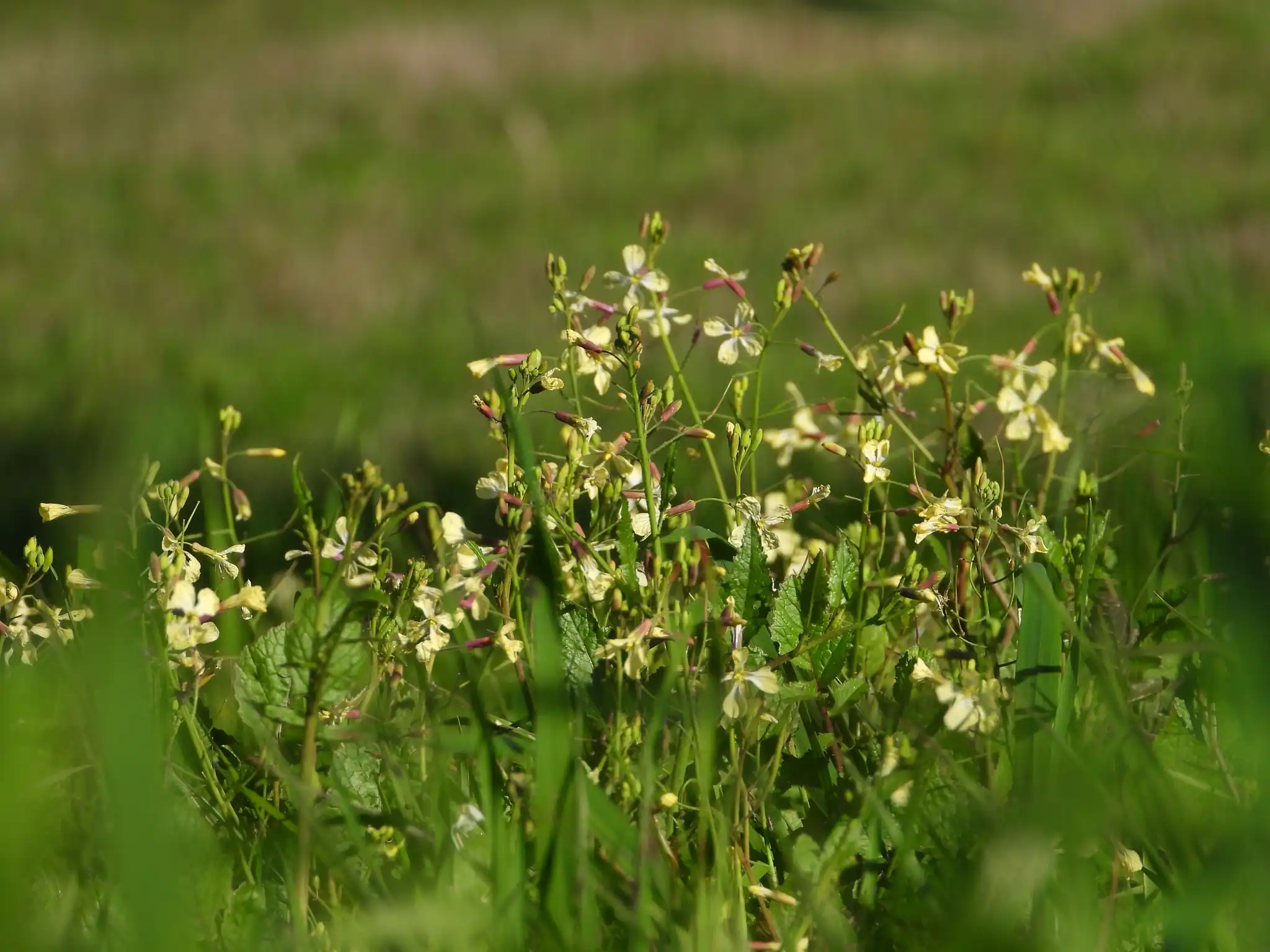
Raphanus raphanistrum is an erect, fast-growing annual herb native to Europe, western Asia, and northern Africa, characterized by its rough, bristly-hairy foliage and tough taproot. The plants produce lax terminal clusters of white, yellow, or pale purple flowers marked with distinct dark veins throughout the warmer months.
This species is widely naturalized in North America, where it behaves as an aggressive agricultural weed in disturbed soils and cultivated fields. Its basal rosette features deeply lobed leaves up to fifteen inches long, which gradually shrink and become more sharply serrated as they ascend the stems.
Uses & Benefits:
Essentials
At a Glance
Plant Type
Annual
Height
30"
Width
18"
Light
Full Sun
Zones
4, 5, 6, 7, 8, 9
Water
Low to Moderate
Humidity
Moderate
Lifespan
Annual
Native To
Europe, Western Asia, Northern Africa
Toxicity
Low toxicity to livestock; skin irritant
Bloom period
Spring – Summer
In flower about 6 months of the year
Planting
How to Grow
- Select a site with full sun and well-drained sandy or loamy soil, avoiding any areas prone to standing water.
- Sow seeds directly into disturbed soil during early spring, as they germinate readily without supplemental fertilization.
- Monitor the area for the characteristic bristly basal rosettes and hand-pull young plants before they can initiate flowering.
- Dispose of all pulled material securely to prevent any late-developing seed pods from maturing and dispersing on the soil.
Pro Tip
Never leave severed seed pods on the ground after weeding; the drying segments break apart into highly viable, single-seeded units that persist in the soil bank for years.
Keep It Thriving
Care Guide
Do
- Pull or mechanically till plants before the flowering stage to prevent seed production.
- Wear gloves when handling the foliage to avoid skin irritation from the stiff, bristly hairs.
- Ensure soil is well-drained, as the root system is highly intolerant of waterlogging.
Don't
- Do not apply supplemental fertilizers, as this weed thrives and outcompetes other plants in low-fertility soils.
- Do not leave cut or mowed seed heads on the ground, as the jointed pods will still mature and release viable seeds.
- Do not allow livestock to heavily graze dense stands, as the plants can accumulate toxic levels of nitrates.
Seasonal Care Calendar
| Task | Jan | Feb | Mar | Apr | May | Jun | Jul | Aug | Sep | Oct | Nov | Dec |
|---|---|---|---|---|---|---|---|---|---|---|---|---|
| Pest Check | ||||||||||||
| Propagate | ||||||||||||
| Prune | ||||||||||||
| Spring Cleanup |
Watch Out For
Pests & Diseases
Common Pests
Common Diseases
In the Garden
Landscape Uses & Companions
Landscape Uses
Multiply
Propagation Methods
Good to Know
Common Questions
Wild Radish questions
What zones can Wild Radish grow in?
Wild Radish is hardy in USDA Zones 4–9. Inside that range it survives winter in the ground; outside it, grow it as an annual or a container plant you protect.
Is Wild Radish deer resistant?
Yes — Wild Radish is rated deer-resistant. Deer typically pass it over, though extreme hunger can override any plant's defenses.
When does Wild Radish bloom?
Wild Radish typically blooms in spring through summer. Exact timing shifts a week or two with your zone — Sow's bloom calendar maps it to your garden.
Does Wild Radish need full sun?
Wild Radish does best in full sun (6+ hours).
Is Wild Radish drought tolerant?
Yes — once established (usually after the first full season), Wild Radish handles dry spells with minimal watering. Water deeply its first year to build the root system that makes that possible.
More Raphanus to compare
Keep exploring
Explore the genus
Grow Wild Radish with confidence
See it in a design of your actual yard, get zone-matched care reminders, and track it season by season in your garden journal.