Also known as Radish · 172 saves
Raphanus
Raphanus, the genus most gardeners know as radish. We track 3 varieties; the ones most used by real gardeners.
The 3 most-saved Raphanus varieties
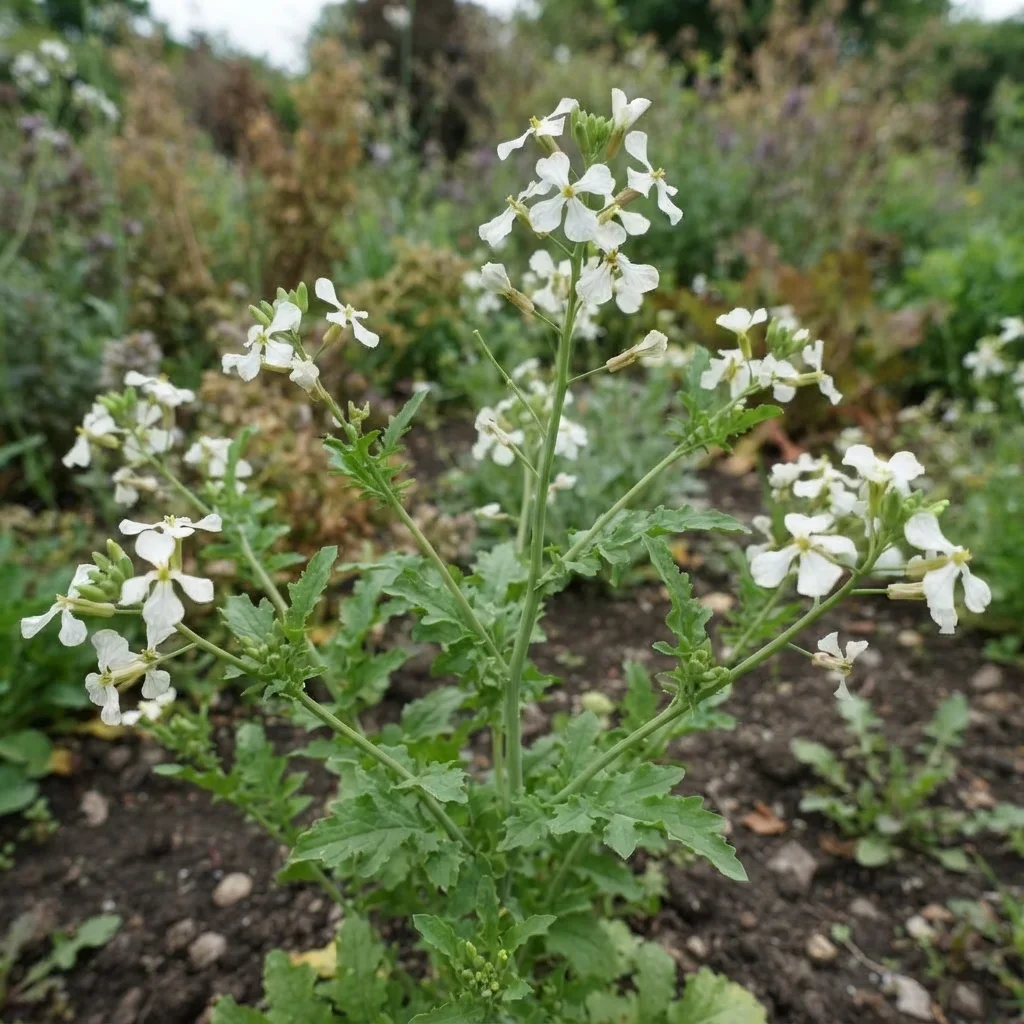
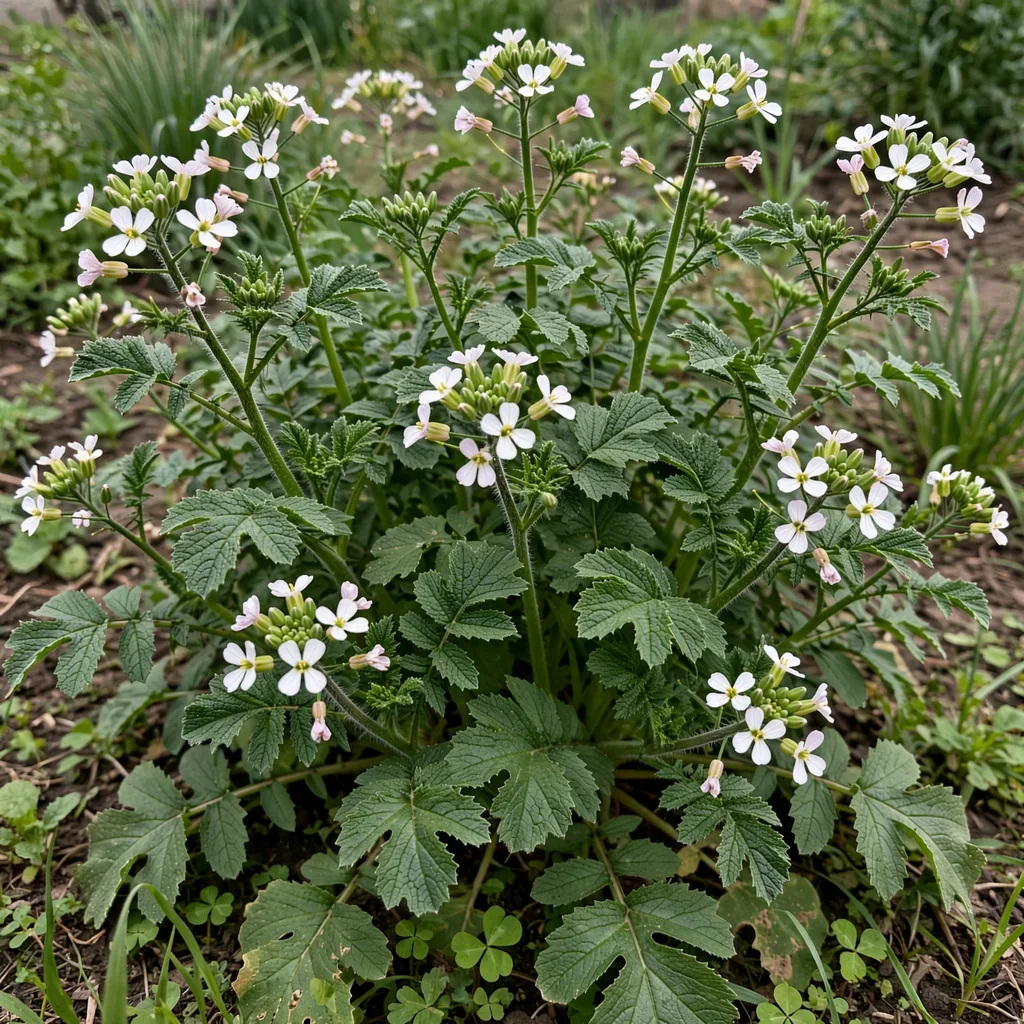
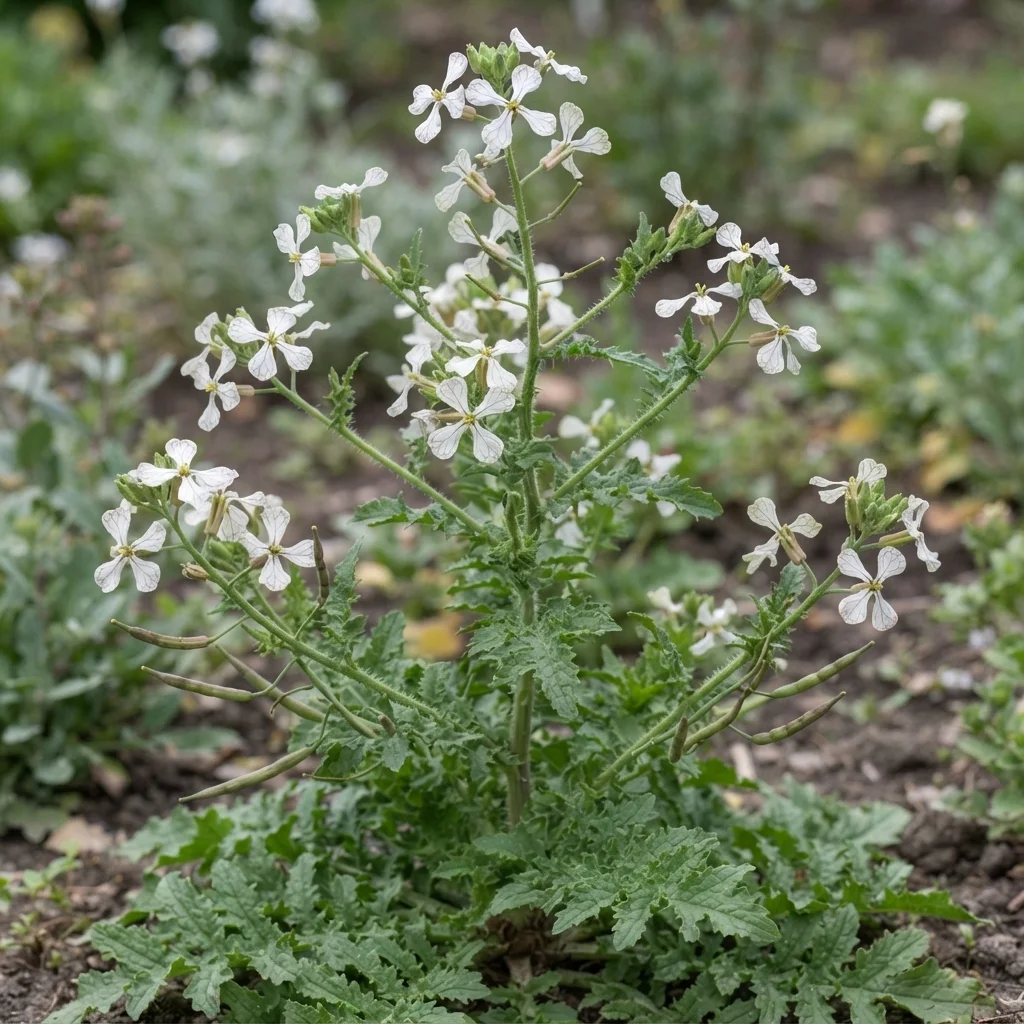
2 species of Raphanus
Each one is a parent of the varieties above.
Track your Raphanus in Sow
Save the Raphanus you grow and get care reminders timed to your zone.
How to grow Raphanus
Whats common across all Raphanus varieties in our catalog — drawn from the care records of the 3 most-grown of them.
The Raphanus year
- Check for PestsApril, May, September and October100% of varieties
Monitor foliage for aphids, flea beetles, and cabbage loopers.
- PlantMarch, April, May, September and October67% of varieties
Sow seeds every 2 weeks for a continuous harvest in cool weather.
- HarvestApril, May, June, October and November67% of varieties
Harvest roots when they reach 1-1.5 inches in diameter.


Do
- Pull or mechanically till plants before the flowering stage to prevent seed production.
- Wear gloves when handling the foliage to avoid skin irritation from the stiff, bristly hairs.
- Ensure soil is well-drained, as the root system is highly intolerant of waterlogging.
- Keep soil consistently moist for even root development 🌱
- Mulch to retain moisture and suppress weeds
Avoid
- Do not apply supplemental fertilizers, as this weed thrives and outcompetes other plants in low-fertility soils.
- Do not leave cut or mowed seed heads on the ground, as the jointed pods will still mature and release viable seeds.
- Do not allow livestock to heavily graze dense stands, as the plants can accumulate toxic levels of nitrates.
- Do not let soil dry out completely ❌
What goes wrong with Raphanus
| Problem | What you'll see | What to do |
|---|---|---|
| Flea Beetles | Small holes or pits on leaves | Use neem oil or insecticidal soap |
| Root Maggots | Swollen, rotted roots | Apply beneficial nematodes or crop rotation |
| Aphids | Curled, yellowing leaves and sticky honeydew deposits on new growth. | Knock pests off with a strong spray of water or apply insecticidal soap to heavily infested stems. |
| Flea beetles | Shot-hole damage and small chew marks on the foliage. | Use floating row covers on desirable crops nearby to exclude beetles, or apply diatomaceous earth. |
| Clubroot | Stunted growth, wilting during hot days, and distorted, swollen roots. | Avoid planting brassicas in infected soil, improve drainage, and raise the soil pH above 7.0. |
| Downy Mildew | Yellow patches on upper leaf surfaces | Improve air circulation and avoid overhead watering |
| Black rot | V-shaped yellow lesions starting at the leaf margins and darkening of the veins. | Remove and destroy infected plants immediately, and practice strict crop rotation in the area. |
Making more Raphanus
Seed
- Allow the jointed seed pods to dry completely on the parent plant until they turn brown.
- Harvest the pods and break them manually into individual, single-seeded segments.
- Sow the seed segments directly into loose, well-drained soil in early spring.
- Keep the soil lightly moist until germination occurs, though seeds may remain dormant for several seasons.
seeds
- Tuck seeds into moist soil in early spring or fall.
- Keep soil evenly moist for 7-10 days until germination occurs.
- Thin seedlings to 2-3 inches apart after emergence.
Raphanus questions
How many types of Raphanus are there?
The Sow catalog tracks 3 distinct Raphanus varieties. The most popular — ranked by 172 real gardeners — are shown first above.
What zones does Raphanus grow in?
Across its varieties, Raphanus covers USDA Zones 4–10. Individual varieties differ — each plant page lists its exact range, and Sow filters the catalog to your zone automatically.
When does Raphanus bloom?
Most Raphanus varieties bloom in early summer, late spring, spring. Staggering early, mid, and late varieties extends the genus's season in one bed.
Which Raphanus should I choose?
Start from the most-saved varieties above — popularity across thousands of gardens is a strong signal of reliability — then filter by your zone and sun. In the Sow app you can preview any of them in a photo of your actual yard before you buy.