
The Story
Plant Bio
Echeveria colorata is an evergreen perennial succulent forming a tight, solitary rosette of thick, upcurved leaves on a short stem. The minty silver-green or bluish-white foliage is coated in a powdery white farina and features distinctive pink to carmine-red margins.
This species is distinguished by its sharp, acute leaf tips and the intense coloration that develops under bright sunlight. In spring, it produces tall, arching, pinkish-red stems bearing bell-shaped flowers that are coral-red on the outside and orange within.
Uses & Benefits:
Essentials
At a Glance
Plant Type
Cactus Succulent
Height
12"
Width
16"
Light
Full Sun, Partial Sun
Zones
9, 10
Water
Low
Humidity
Low
Lifespan
Perennial
Native To
Mexico
Toxicity
Non-toxic
Bloom period
Spring
In flower about 3 months of the year
Planting
How to Grow
- Select a container with ample drainage holes and fill it with a gritty, porous cactus and succulent potting mix.
- Position the plant in a location that receives at least six hours of bright, direct sunlight daily to maintain its compact form.
- Water thoroughly until water drains out the bottom, then allow the soil to dry out completely before watering again.
- Protect the plant from freezing temperatures below twenty degrees Fahrenheit by moving it indoors for the winter.
Pro Tip
Water only when the soil is completely dry and avoid overhead watering; moisture trapped in the center of the rosette quickly induces fatal crown rot.
Keep It Thriving
Care Guide
Do
- Use a highly porous potting mix containing pumice, perlite, or coarse sand.
- Provide plenty of bright, direct sunlight to keep the rosette tight and the colors vibrant.
- Ensure excellent air circulation around the plant to prevent fungal issues.
- Water the soil directly rather than pouring water over the top of the rosette.
Don't
- Do not let the plant sit in standing water or a water-filled saucer.
- Do not touch the leaves unnecessarily, as this rubs off the protective white farina.
- Do not plant in heavy, organic-rich garden soils that retain moisture.
- Do not expose the plant to hard frosts or freezing temperatures.
Seasonal Care Calendar
| Task | Jan | Feb | Mar | Apr | May | Jun | Jul | Aug | Sep | Oct | Nov | Dec |
|---|---|---|---|---|---|---|---|---|---|---|---|---|
| Fertilize | ||||||||||||
| Pest Check | ||||||||||||
| Propagate | ||||||||||||
| Prune |
Watch Out For
Pests & Diseases
Common Pests
Common Diseases
In the Garden
Landscape Uses & Companions
Landscape Uses
Companion Plants
Multiply
Propagation Methods
Good to Know
Common Questions
Echeveria questions
What zones can Echeveria grow in?
Echeveria is hardy in USDA Zones 9–10. Inside that range it survives winter in the ground; outside it, grow it as an annual or a container plant you protect.
When does Echeveria bloom?
Echeveria typically blooms in spring through spring. Exact timing shifts a week or two with your zone — Sow's bloom calendar maps it to your garden.
Does Echeveria need full sun?
Echeveria does best in full sun to part shade. In hot climates, afternoon shade keeps blooms fresher longer.
Is Echeveria drought tolerant?
Yes — once established (usually after the first full season), Echeveria handles dry spells with minimal watering. Water deeply its first year to build the root system that makes that possible.
More Echeveria to compare
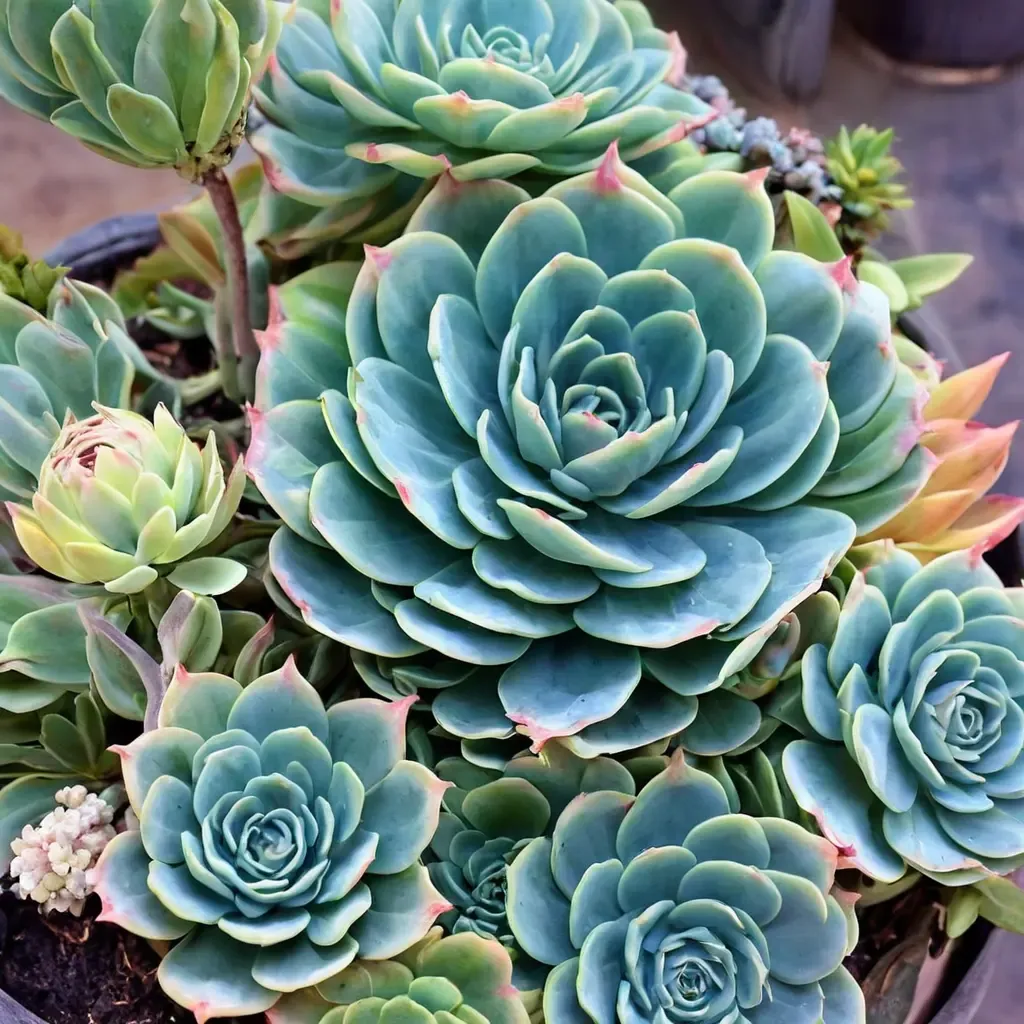
Blue Rose Echeveria
Echeveria imbricata
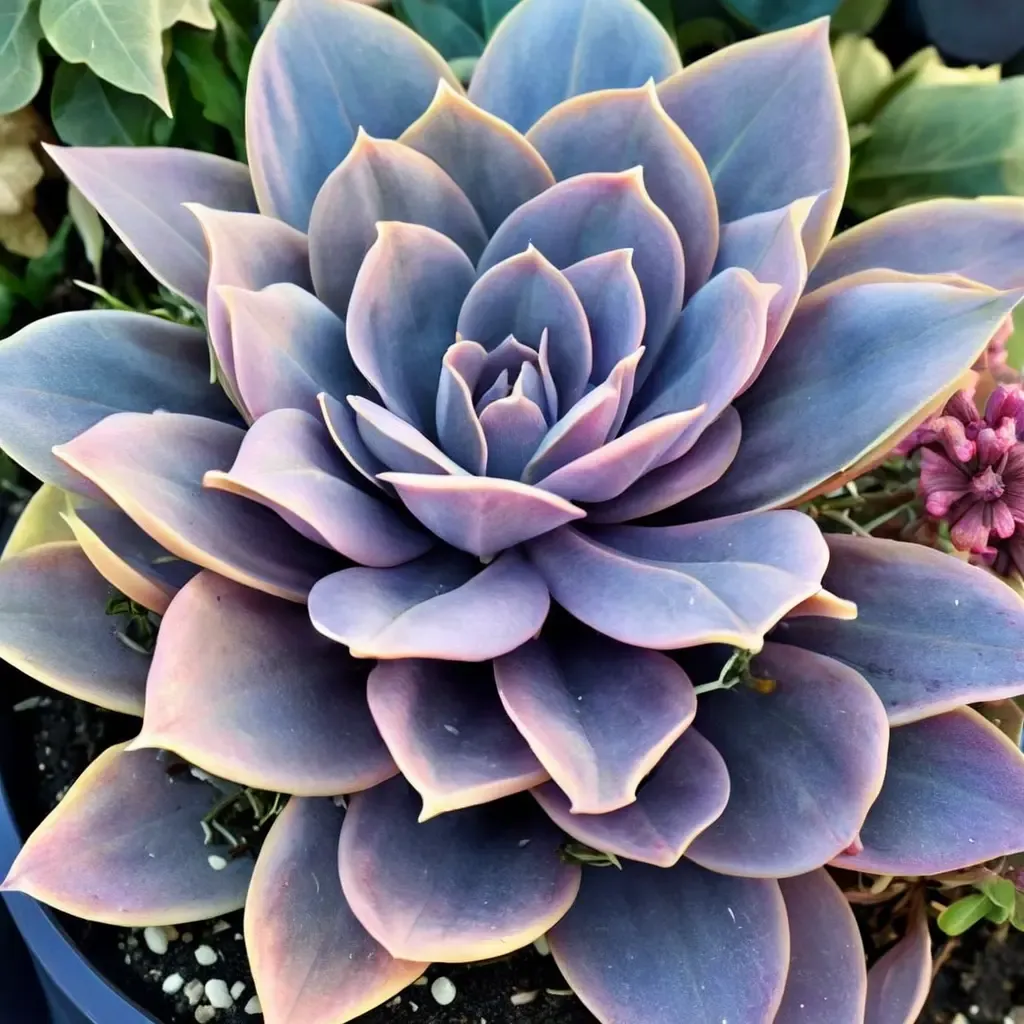
Perle Von Nurnberg
Echeveria secunda 'Perle Von Nurnberg'
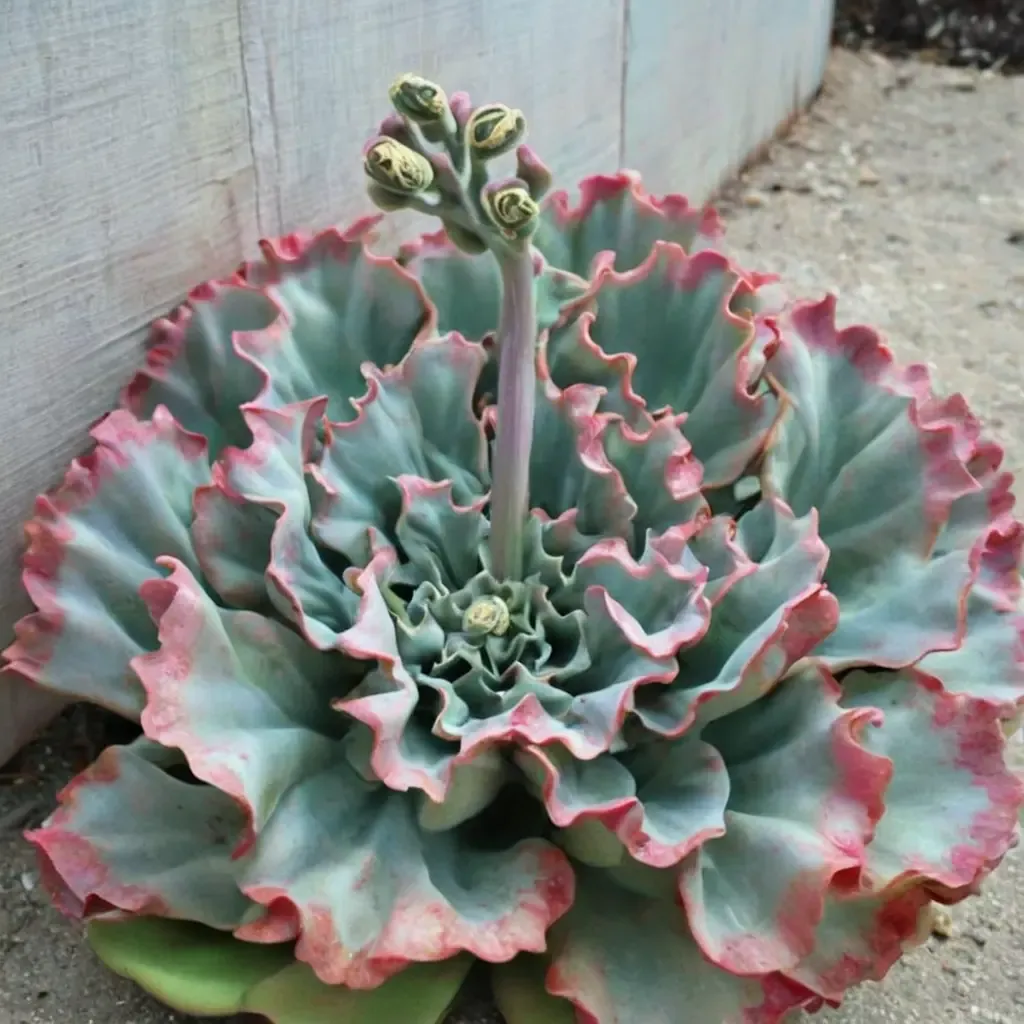
Lady Aquarius Echeveria
Echeveria gibbiflora 'Lady Aquarius'
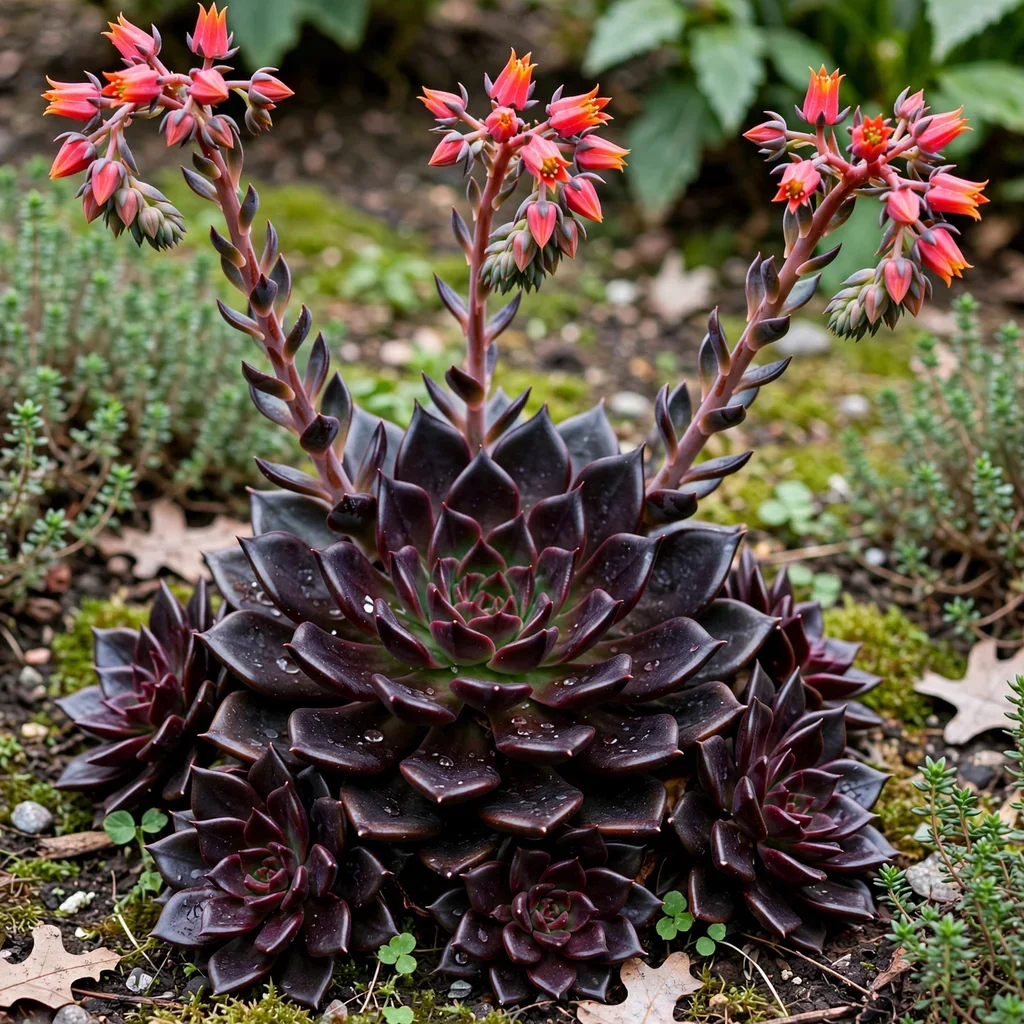
Echeveria Black Prince
Echeveria secunda 'Black Prince'
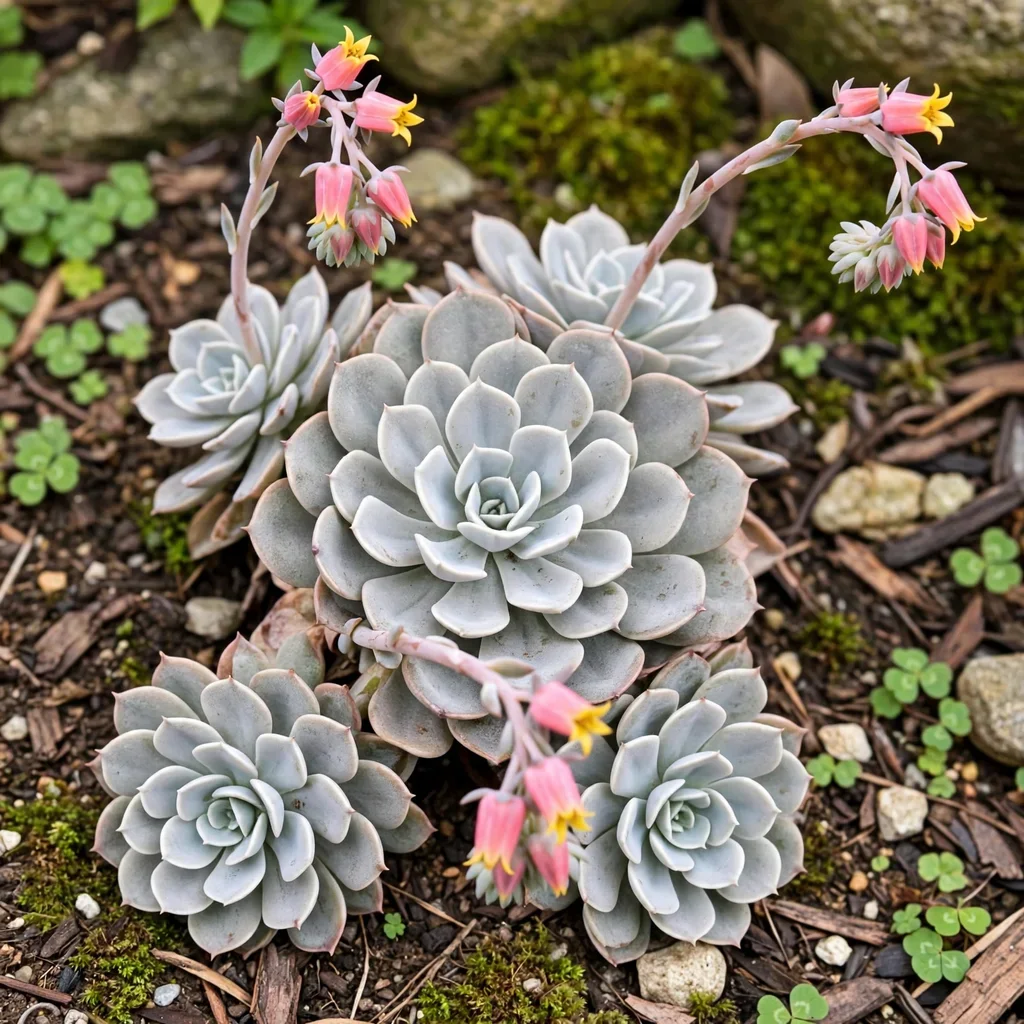
Mexican Snowball
Echeveria elegans 'Mexican Snowball'
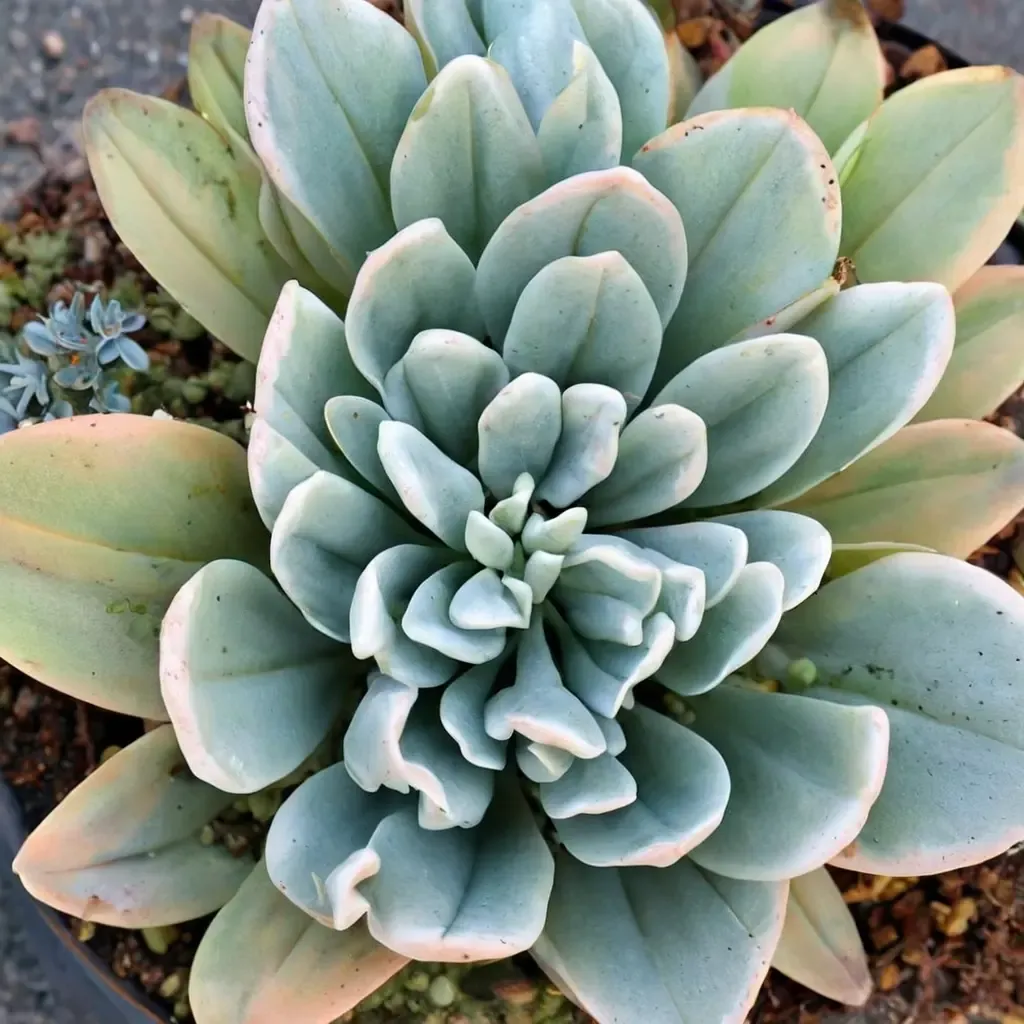
Caribbean Echeveria Echeveria Caribbean
Echeveria runyonii 'Caribbean'
Keep exploring
Explore the genus
Hardy in your zone?
Grow Echeveria with confidence
See it in a design of your actual yard, get zone-matched care reminders, and track it season by season in your garden journal.