The Story
Plant Bio
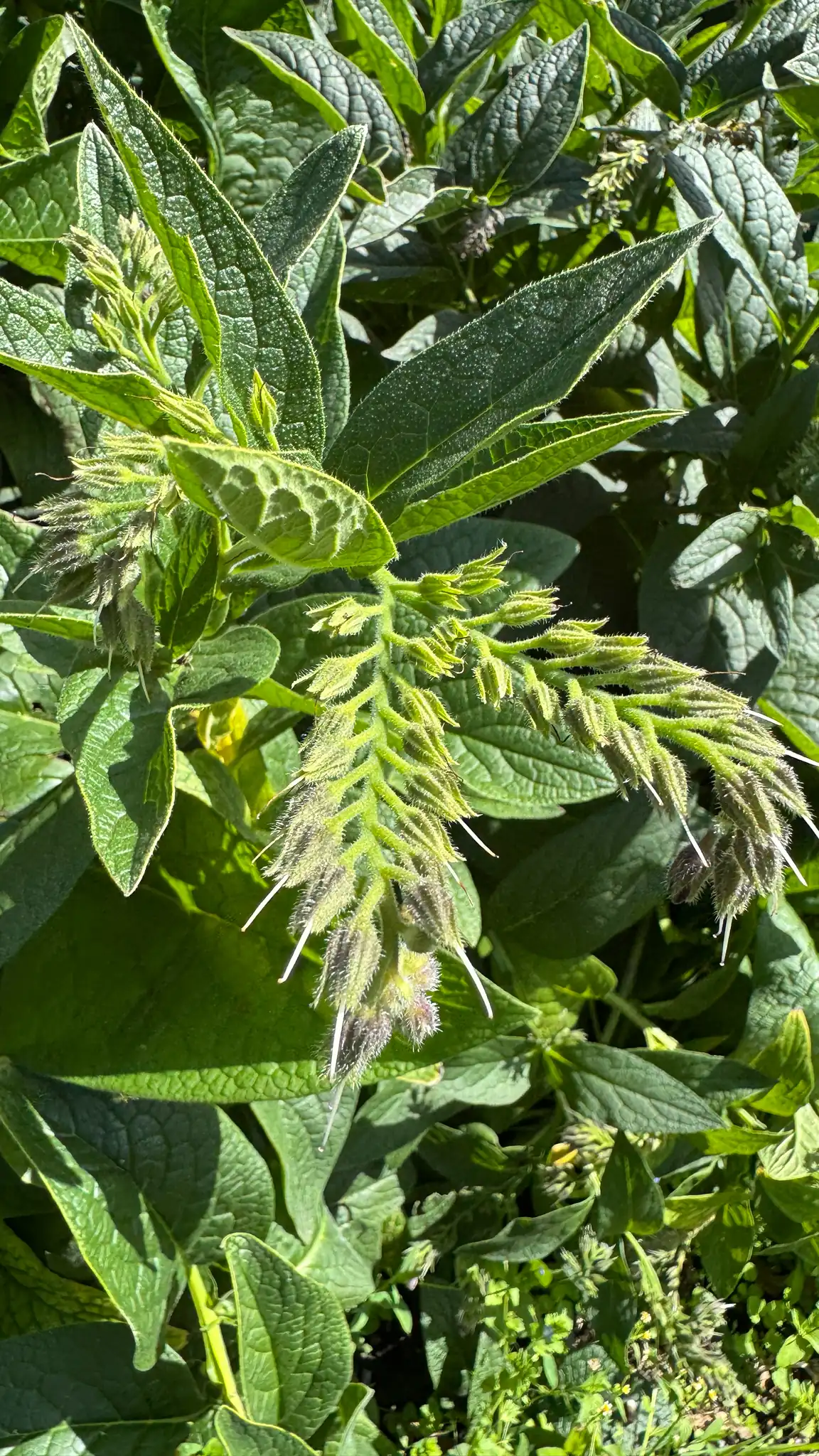
Symphytum officinale is a robust, clump-forming herbaceous perennial characterized by a deeply penetrating, fleshy taproot and rough-hairy, lanceolate to ovate leaves. The plant produces curved, drooping clusters of tubular flowers in shades of cream, pink, or purplish-blue from spring through summer.
This species is distinguished by its rapid foliage production and deep taproot network, which extracts nutrients from deep within the soil profile. The coarse, hirsute leaves emerge bright green in spring and can reach up to 45 centimeters in length on the lower stems.
Uses & Benefits:
Essentials
At a Glance
Plant Type
Perennial
Height
47"
Width
35"
Light
Full Sun, Partial Sun
Zones
4, 5, 6, 7, 8, 9
Water
Moderate
Humidity
Moderate
Lifespan
Perennial
Native To
Europe and temperate Asia
Toxicity
Toxic if ingested; can cause skin irritation
Bloom period
Spring – Summer
In flower about 6 months of the year
Planting
How to Grow
- Select a site in full sun to partial shade with moist, fertile loam or clay soil.
- Install a physical root barrier if planting near delicate perennial borders to restrict the taproot.
- Plant bare-root crowns or root cuttings in early spring or fall, burying them just below the soil surface.
- Water consistently to maintain moist soil conditions, ensuring the site has adequate drainage to prevent waterlogging.
Pro Tip
Plant comfrey within physical root barriers or in dedicated permaculture zones, as the aggressive taproot system makes the plant nearly impossible to eradicate once established from left-behind root fragments.
Keep It Thriving
Care Guide
Do
- Do cut foliage down to ground level two to three times per season to harvest leaves for mulch or liquid fertilizer.
- Do apply an annual layer of compost around the base of the plant in spring.
- Do wear gloves when handling the foliage if you have sensitive skin to avoid irritation from the rough leaf hairs.
Don't
- Don't prune the woody crowns down into dead tissue during the winter months.
- Don't allow the soil to dry out completely, as severe drought causes the foliage to wither and drop.
- Don't plant comfrey unrestricted in small garden borders where its deep root system cannot be contained.
Seasonal Care Calendar
| Task | Jan | Feb | Mar | Apr | May | Jun | Jul | Aug | Sep | Oct | Nov | Dec |
|---|---|---|---|---|---|---|---|---|---|---|---|---|
| Fertilize | ||||||||||||
| Harvest | ||||||||||||
| Pest Check | ||||||||||||
| Propagate |
Watch Out For
Pests & Diseases
Common Pests
Common Diseases
In the Garden
Landscape Uses & Companions
Landscape Uses
Companion Plants
Multiply
Propagation Methods
Good to Know
Common Questions
Common Comfrey questions
What zones can Common Comfrey grow in?
Common Comfrey is hardy in USDA Zones 4–9. Inside that range it survives winter in the ground; outside it, grow it as an annual or a container plant you protect.
When does Common Comfrey bloom?
Common Comfrey typically blooms in spring through summer. Exact timing shifts a week or two with your zone — Sow's bloom calendar maps it to your garden.
Does Common Comfrey need full sun?
Common Comfrey does best in full sun to part shade. In hot climates, afternoon shade keeps blooms fresher longer.
More Symphytum to compare
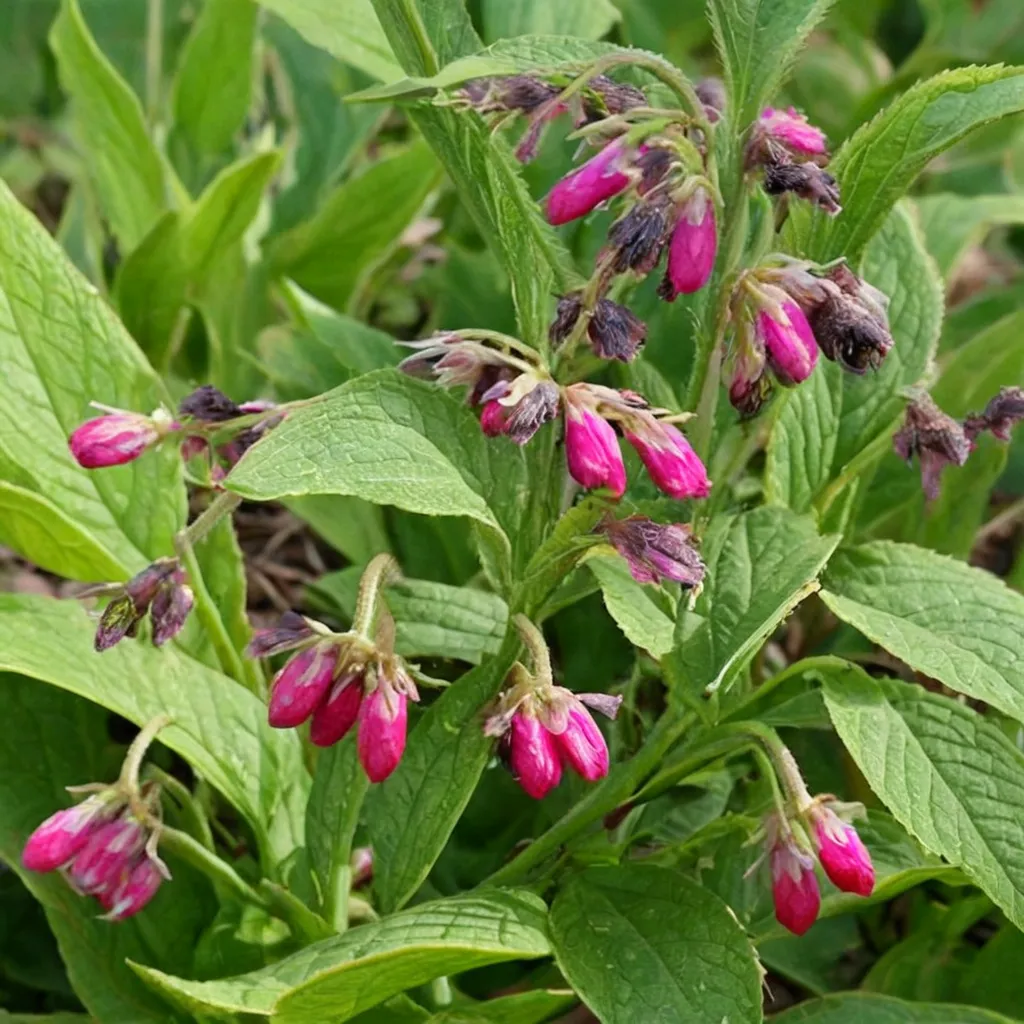
Red Comfrey
Symphytum x hybrida 'Rubrum'
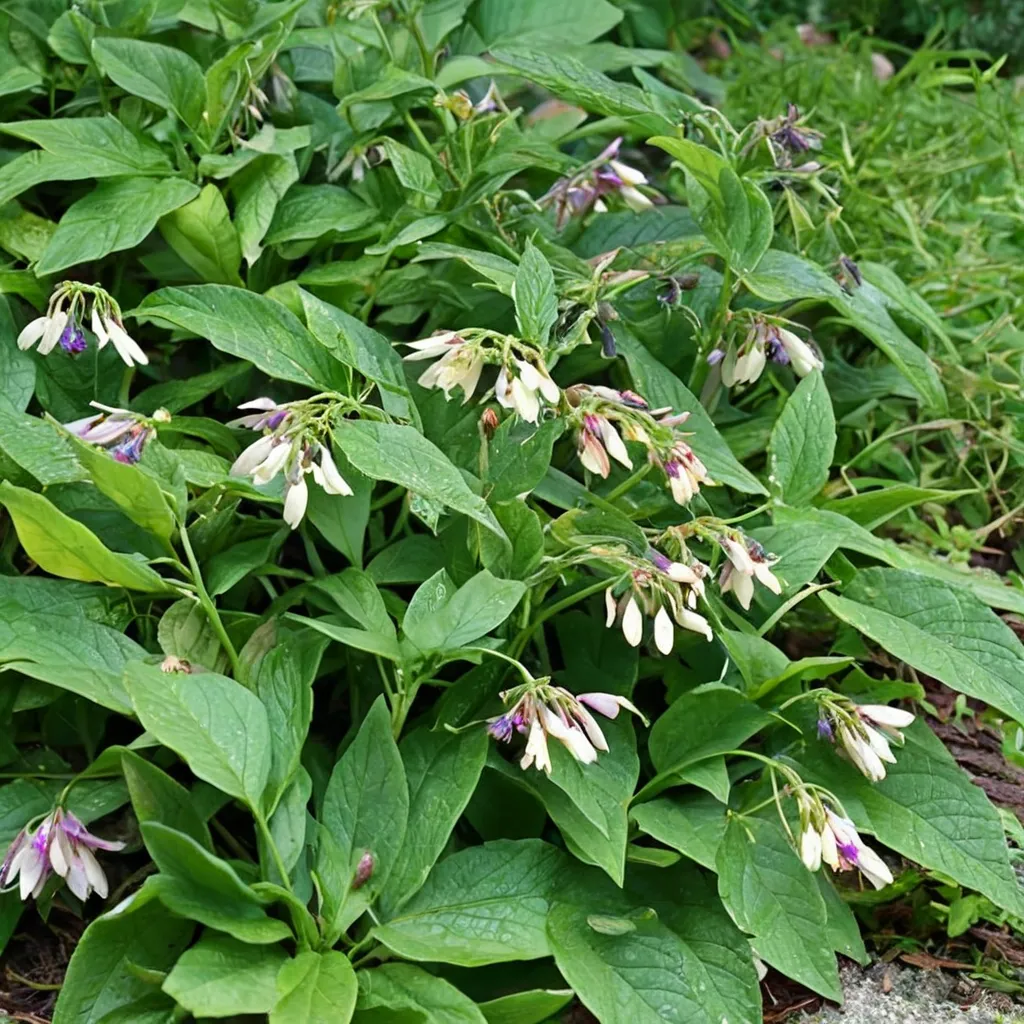
Creeping Comfrey
Symphytum grandiflorum
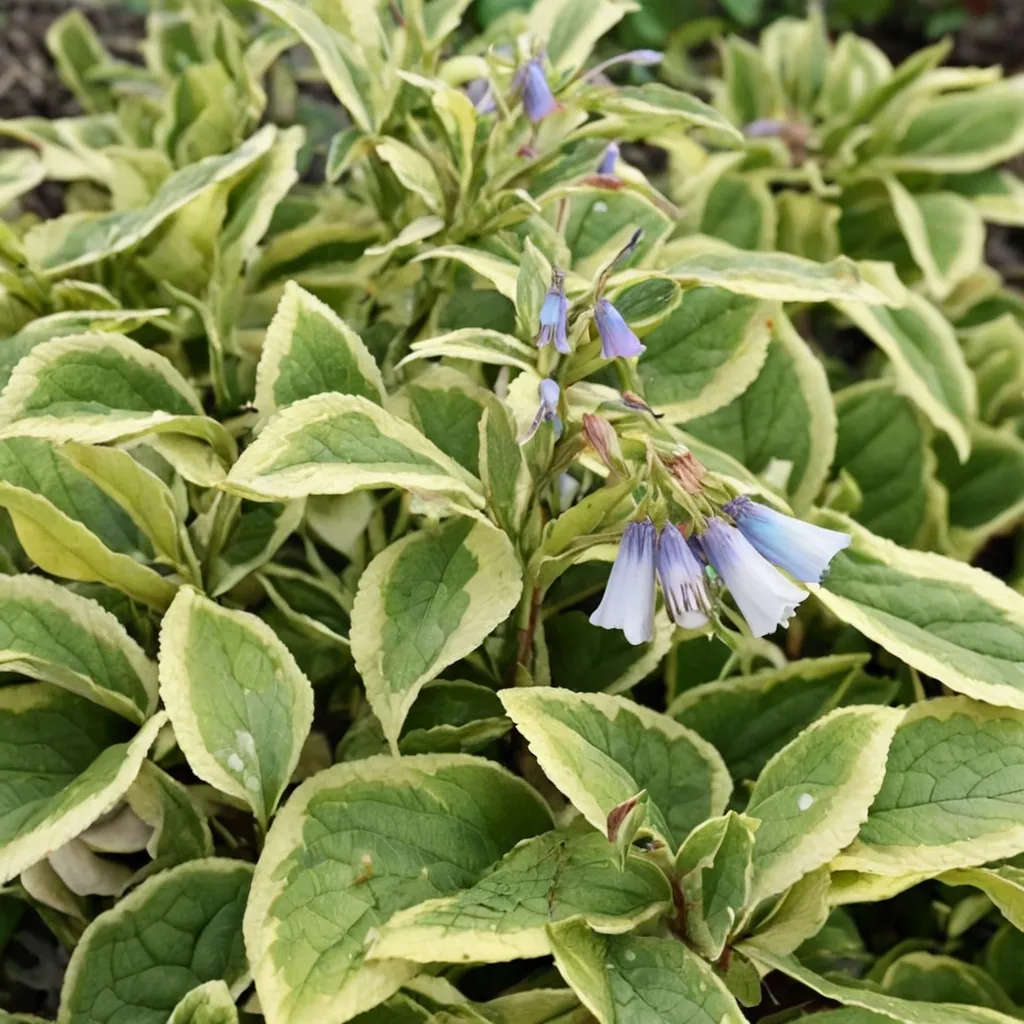
Common Comfrey Variegata
Symphytum grandiflorum 'Variegata'
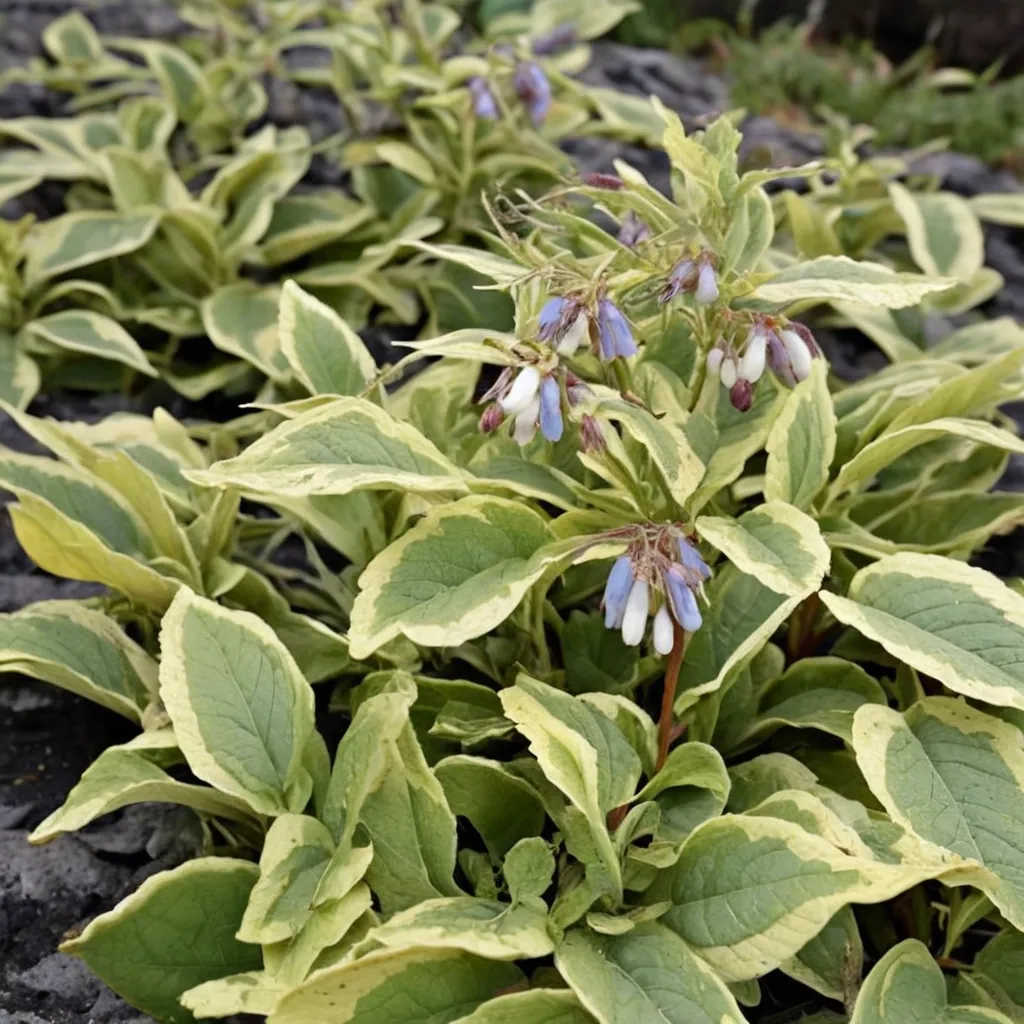
Goldsmith Variegated Comfrey
Symphytum grandiflorum 'Goldsmith'
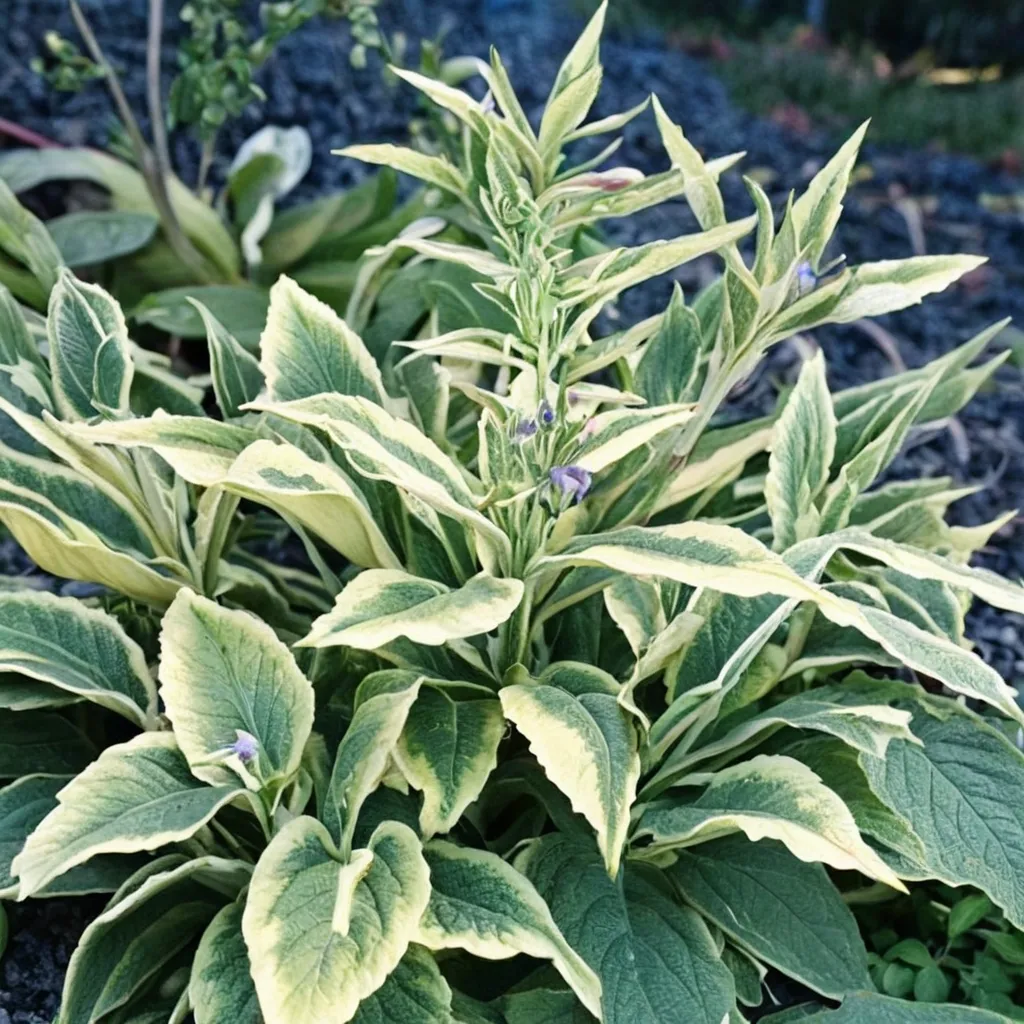
Variegated Russian Comfrey
Symphytum x uplandicum 'Variegatum'
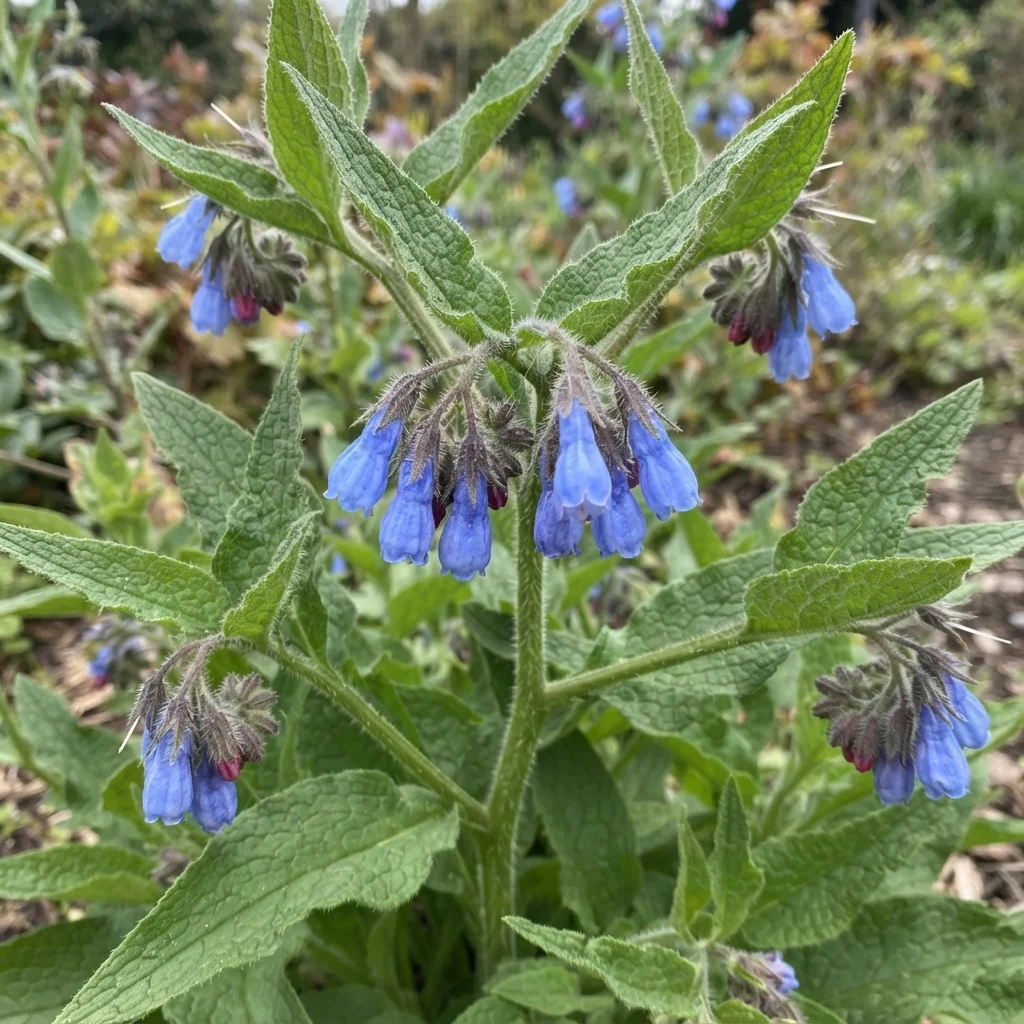
Prickly Comfrey
Symphytum asperum
Keep exploring
Explore the genus
Grow Common Comfrey with confidence
See it in a design of your actual yard, get zone-matched care reminders, and track it season by season in your garden journal.