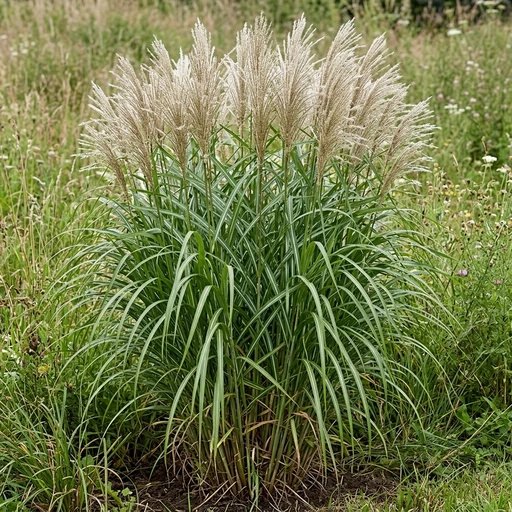
Species
2 other cultivars
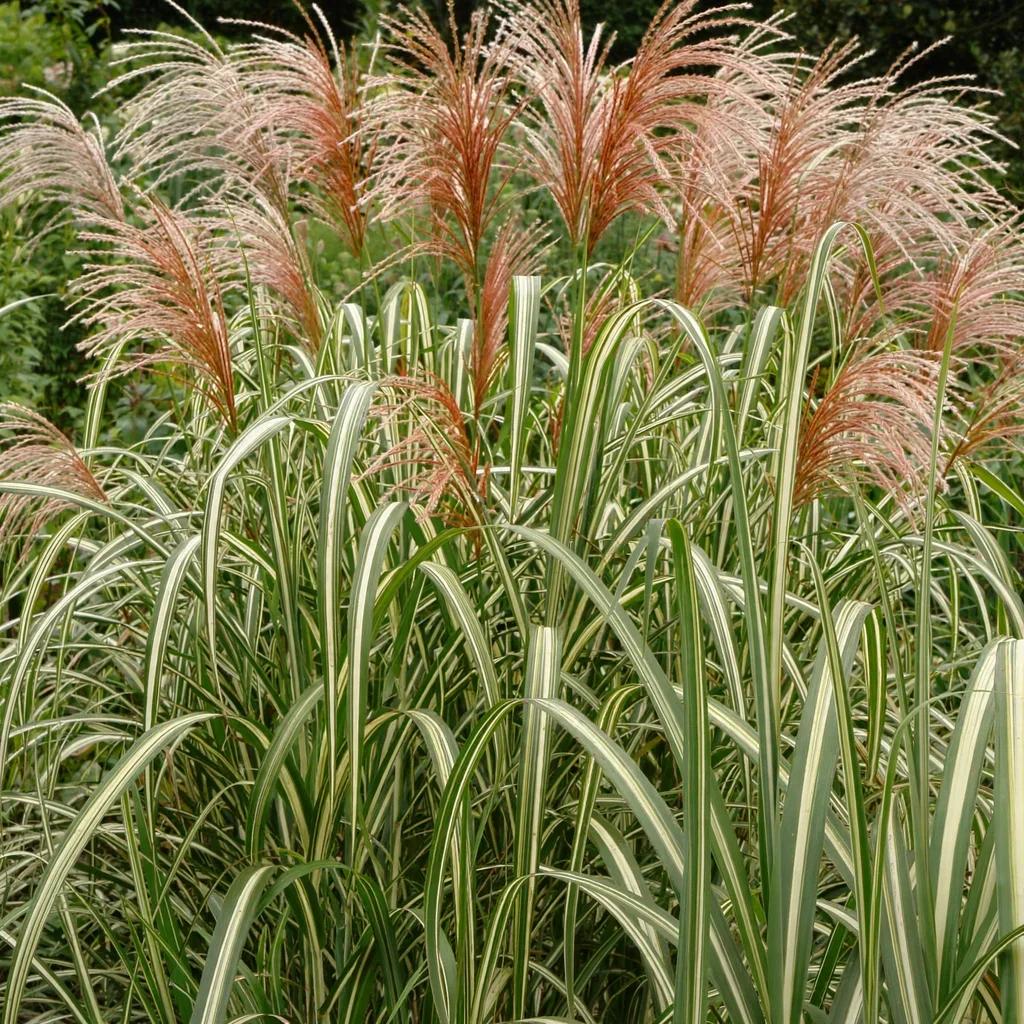
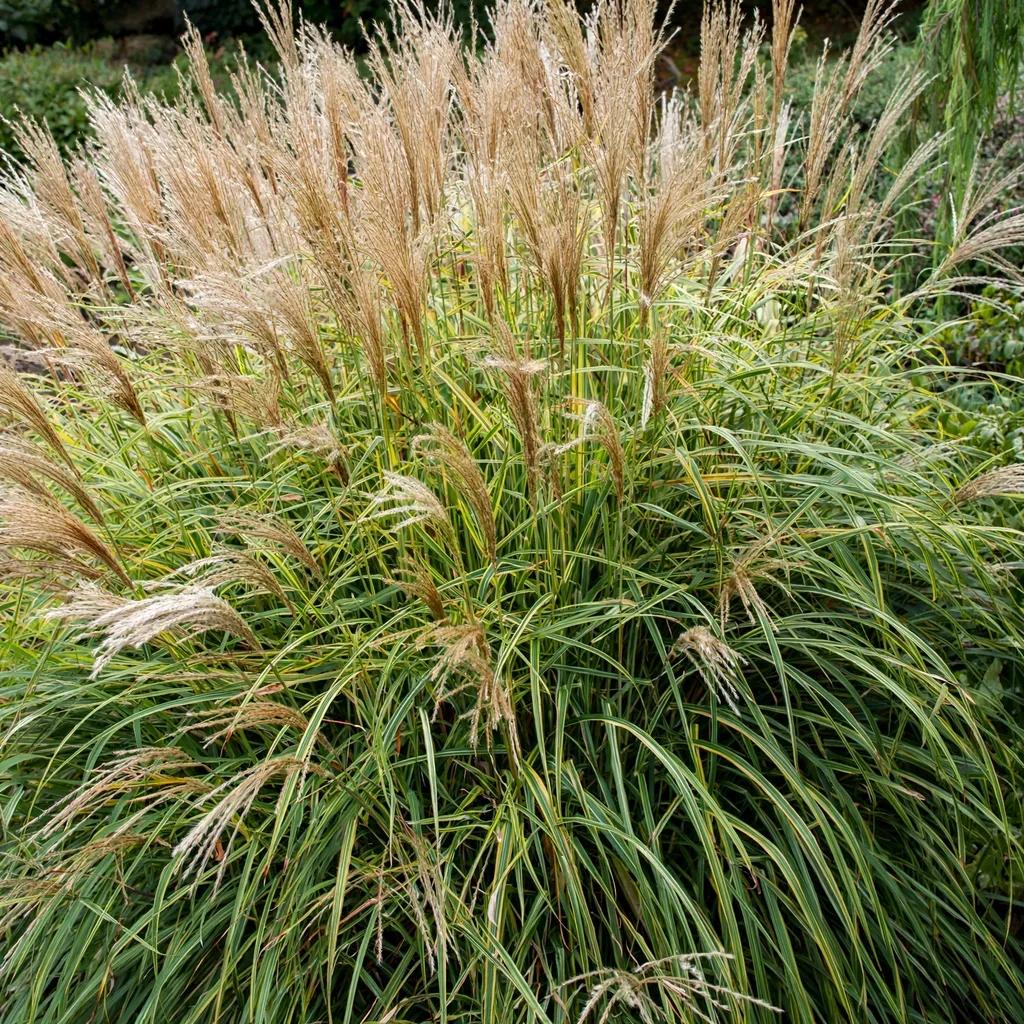
The Story
Plant Bio
Miscanthus x giganteus is a sterile hybrid ornamental grass, a cross between M. sinensis and M. sacchariflorus. It is renowned for its immense size and vigorous, clump-forming habit.
Its most distinguishing feature is its towering height, quickly reaching 10-14 feet in a single season. This makes it one of the best herbaceous plants for creating a fast, tall screen or windbreak.
Uses & Benefits:
Essentials
At a Glance
Plant Type
Grass
Height
144"
Width
60"
Light
Full Sun
Zones
5, 6, 7, 8, 9
Water
Moderate
Humidity
Adaptable
Lifespan
Long-lived perennial grass
Native To
Hybrid Origin (Asia)
Toxicity
Non-toxic
Bloom period
Early fall – Late fall
In flower about 3 months of the year
Planting
How to Grow
- Select a site in full sun with ample space to grow.
- The soil should be fertile and moist but well-drained.
- Plant rhizomes horizontally 2-4 inches deep.
- Space plants at least 3-4 feet apart.
- Water regularly during the first year to promote rapid growth.
- Cut stalks down to the ground in late winter before new shoots appear.
Pro Tip
Wear gloves and long sleeves when cutting it back in late winter; the leaf edges are sharp and can cause paper-like cuts.
Keep It Thriving
Care Guide
Do
- Provide full sun for the strongest stems.
- Water deeply during periods of drought to prevent leaf rolling.
- Cut back hard in late winter or early spring.
- Use a root barrier if you are concerned about its spreading rhizomes.
Don't
- Do not plant in shade, which causes weak, floppy stems.
- Avoid planting in small, confined spaces.
- Don't allow it to dry out for extended periods.
- Don't plant near septic fields as roots are vigorous.
Seasonal Care Calendar
| Task | Jan | Feb | Mar | Apr | May | Jun | Jul | Aug | Sep | Oct | Nov | Dec |
|---|---|---|---|---|---|---|---|---|---|---|---|---|
| Divide | ||||||||||||
| Plant | ||||||||||||
| Spring Cleanup |
Watch Out For
Pests & Diseases
Common Pests
Common Diseases
In the Garden
Landscape Uses & Companions
Landscape Uses
Multiply
Propagation Methods
Good to Know
Common Questions
Giganteus Giant Chinese Silver Grass questions
What zones can Giganteus Giant Chinese Silver Grass grow in?
Giganteus Giant Chinese Silver Grass is hardy in USDA Zones 5–9. Inside that range it survives winter in the ground; outside it, grow it as an annual or a container plant you protect.
Is Giganteus Giant Chinese Silver Grass deer resistant?
Yes — Giganteus Giant Chinese Silver Grass is rated deer-resistant. Deer typically pass it over, though extreme hunger can override any plant's defenses.
When does Giganteus Giant Chinese Silver Grass bloom?
Giganteus Giant Chinese Silver Grass typically blooms in early fall through late fall. Exact timing shifts a week or two with your zone — Sow's bloom calendar maps it to your garden.
Does Giganteus Giant Chinese Silver Grass need full sun?
Giganteus Giant Chinese Silver Grass does best in full sun (6+ hours).
Is Giganteus Giant Chinese Silver Grass drought tolerant?
Yes — once established (usually after the first full season), Giganteus Giant Chinese Silver Grass handles dry spells with minimal watering. Water deeply its first year to build the root system that makes that possible.
More Miscanthus to compare
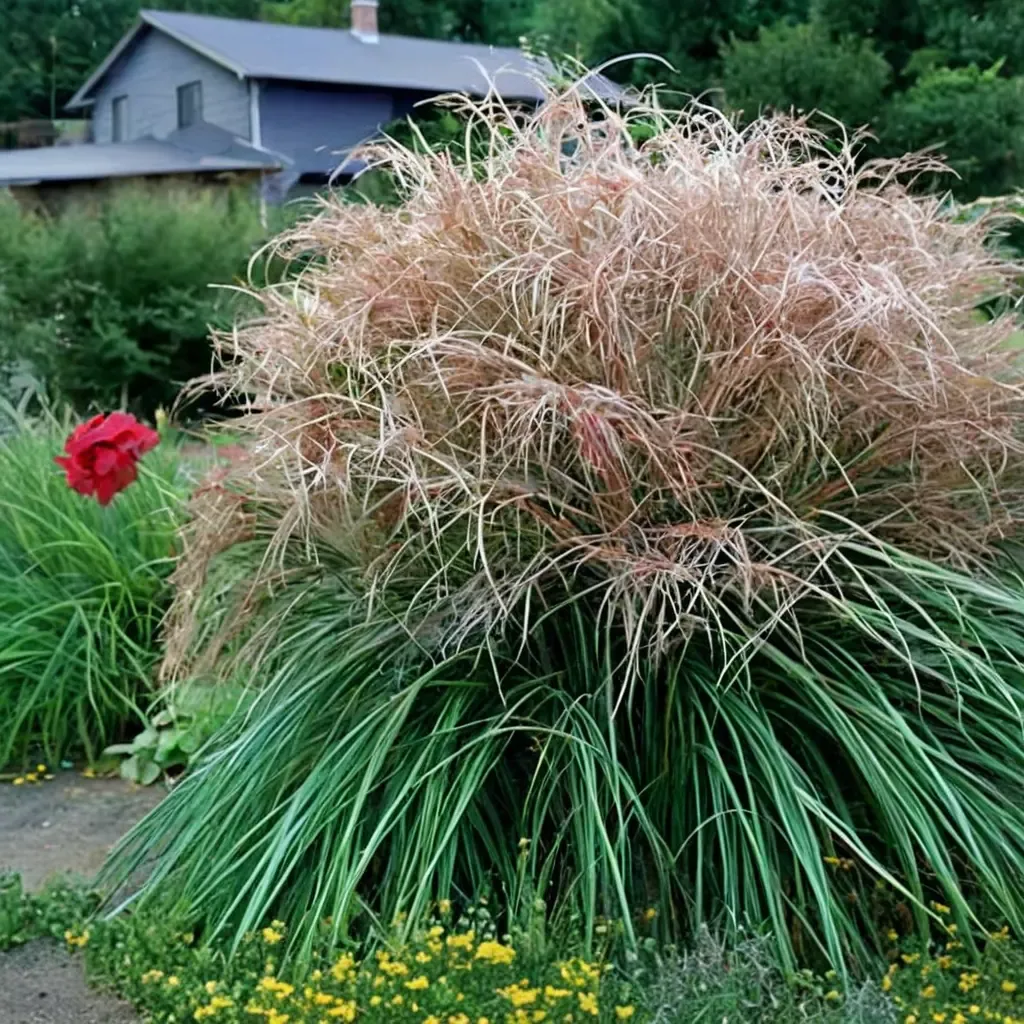
Huron Sunrise Maiden Grass
Miscanthus sinensis 'Huron Sunrise'
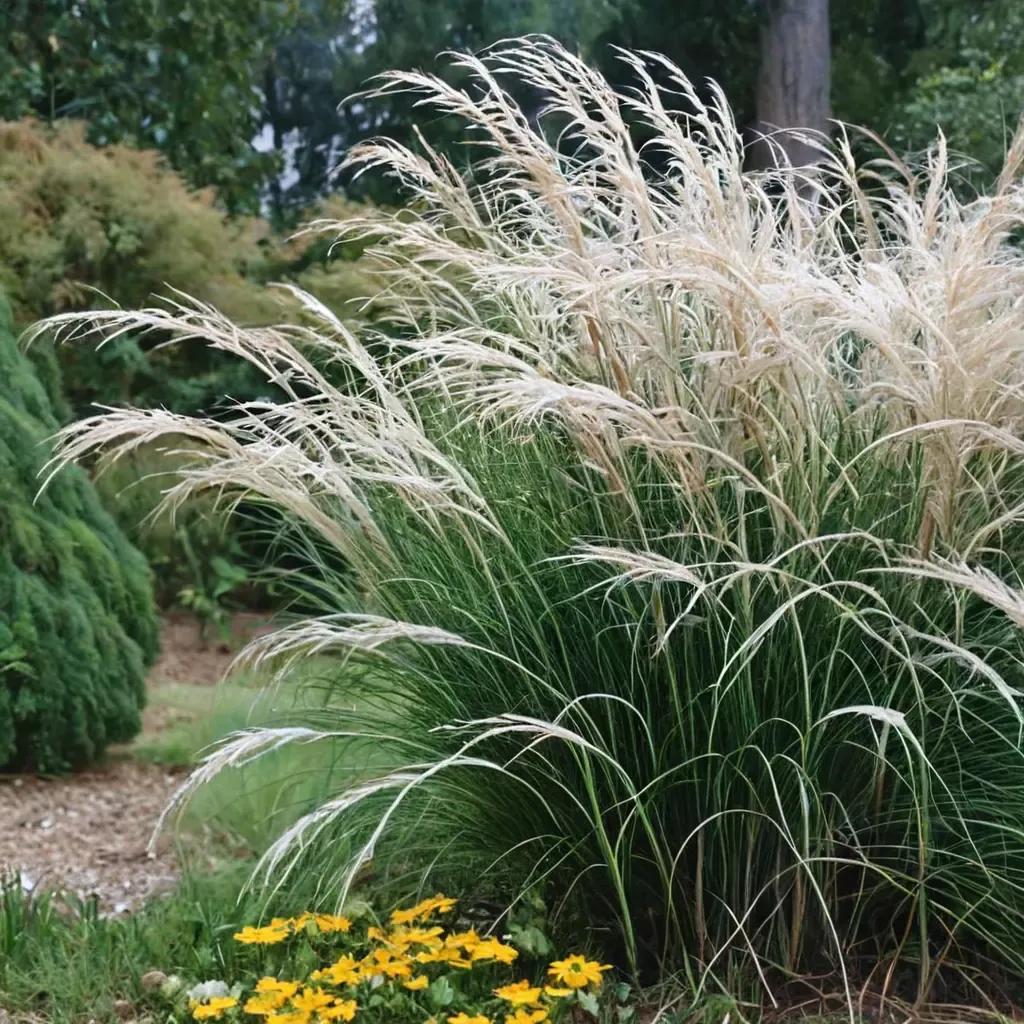
Graziella Chinese Silver Grass
Miscanthus sinensis 'Graziella'
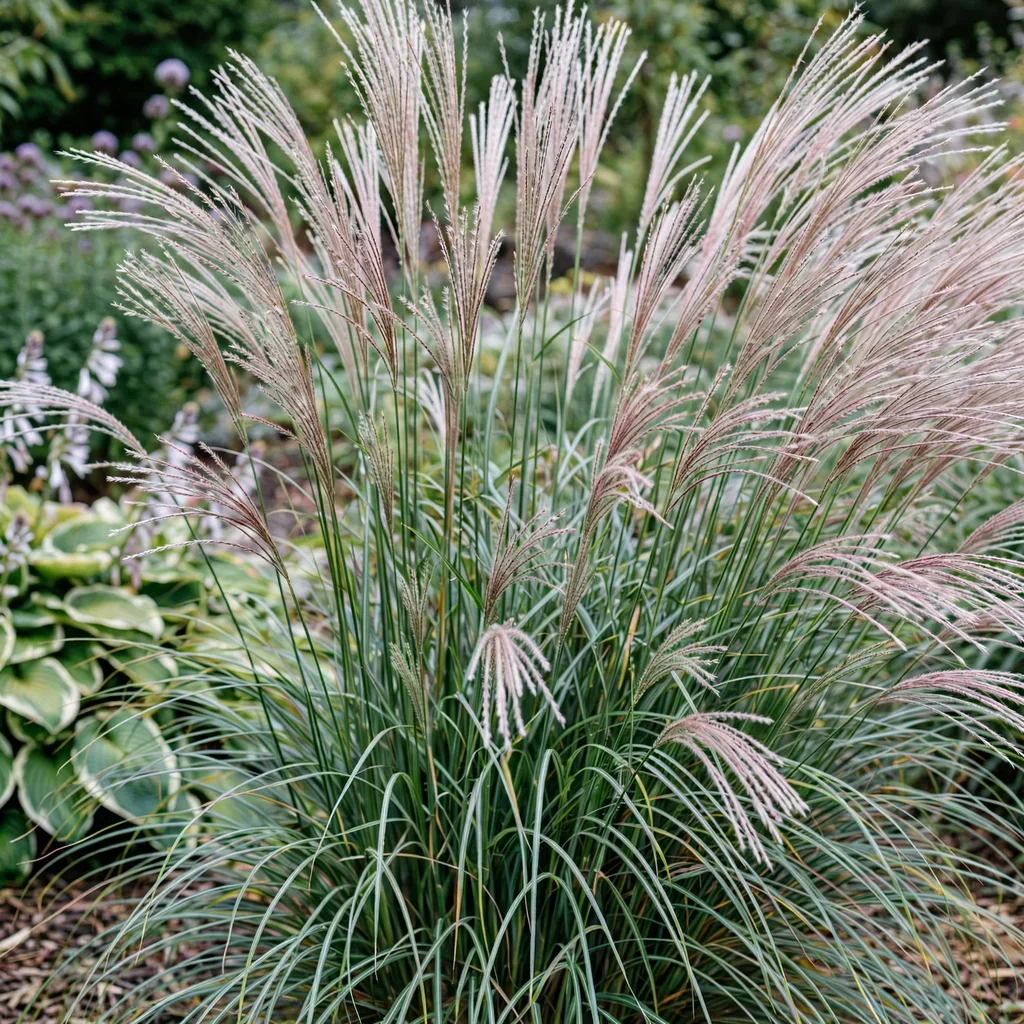
Dwarf Maiden Grass 'Adagio'
Miscanthus sinensis 'Adagio'
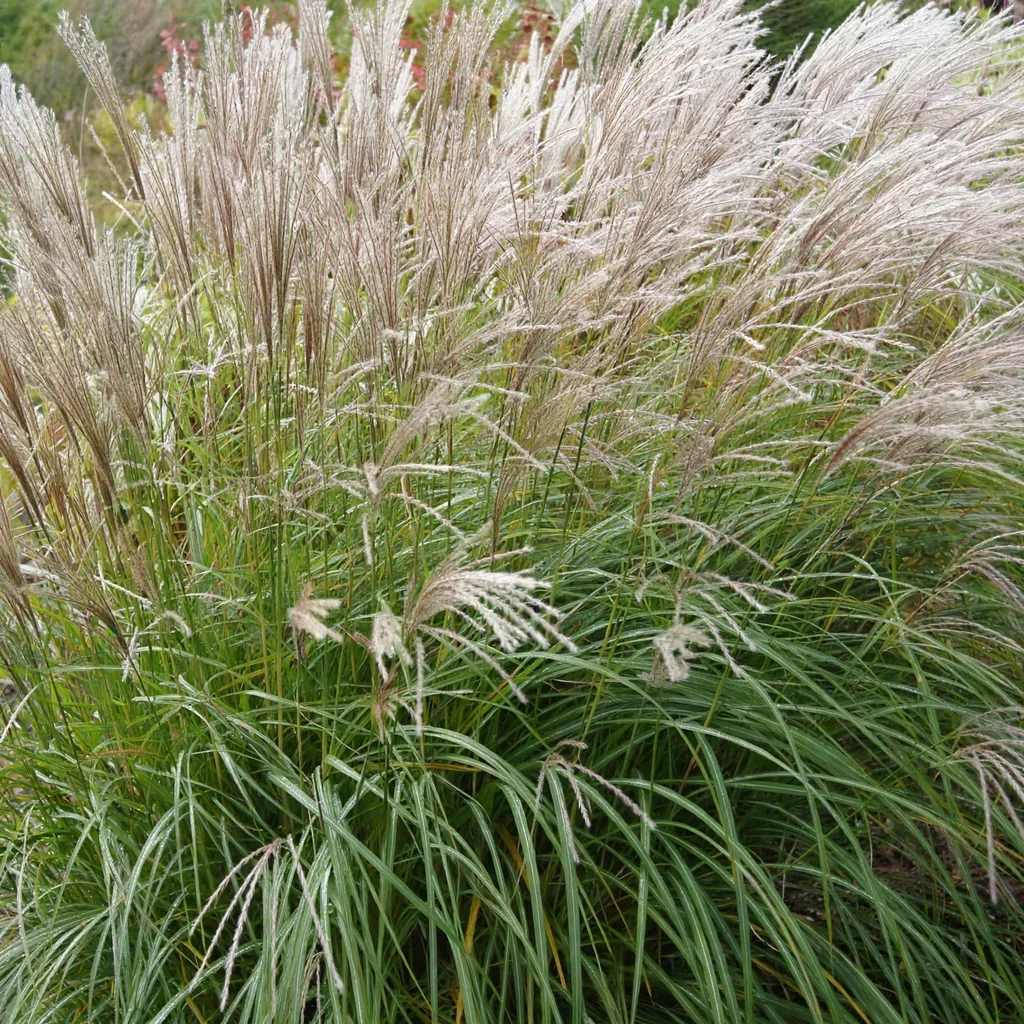
Yakushima Dwarf Maiden Grass
Miscanthus sinensis 'Yakushima Dwarf'
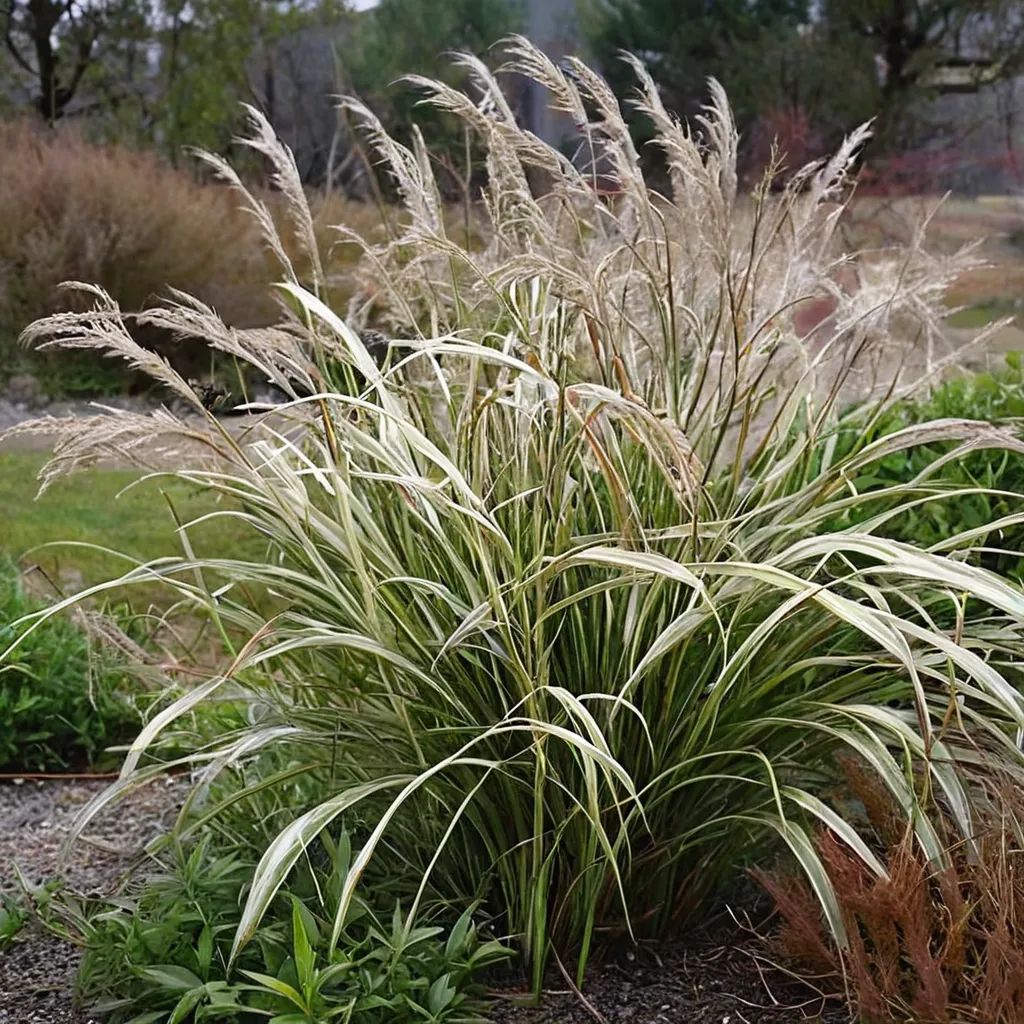
Silver Arrow Japanese Silver Grass
Miscanthus sinensis 'Silver Arrow'
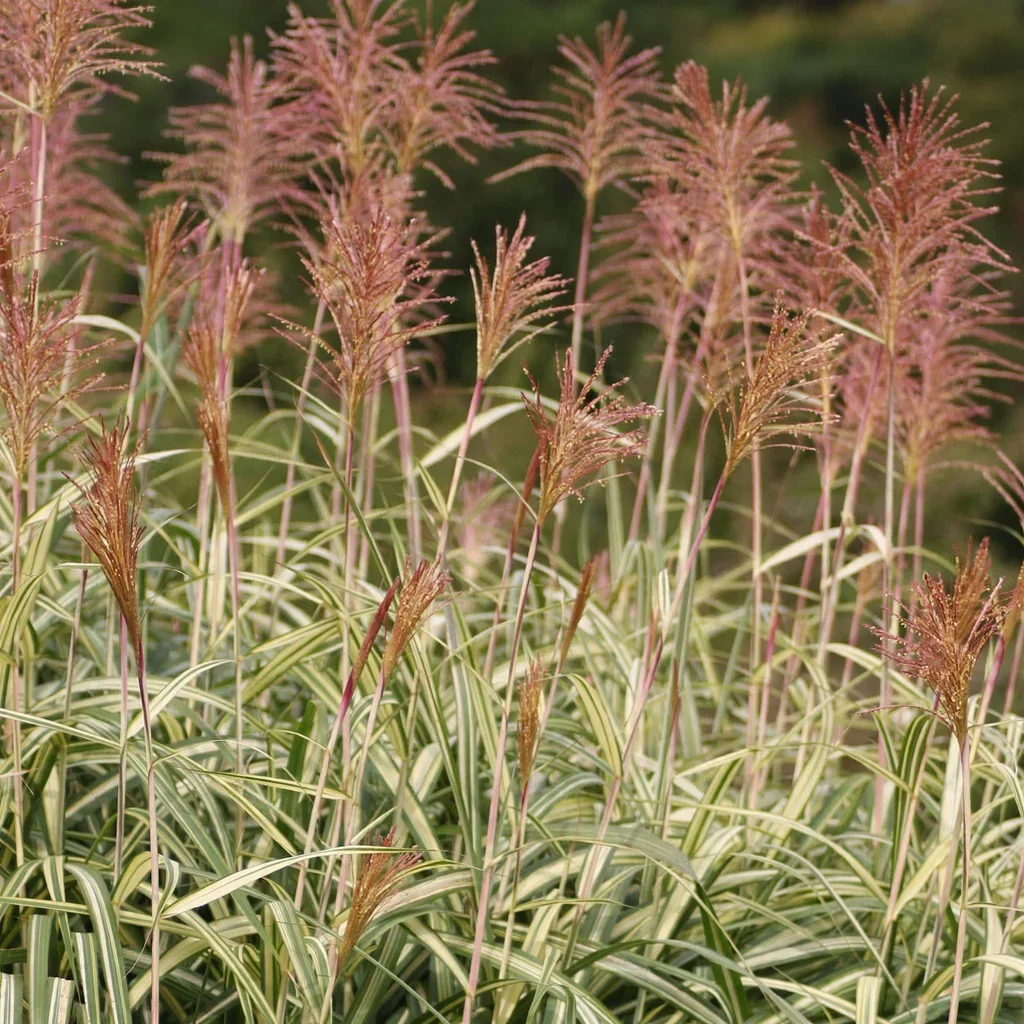
Variegated Japanese Silver Grass
Miscanthus sinensis 'Variegatus'
Keep exploring
Explore the genus
Hardy in your zone?
Grow Giganteus Giant Chinese Silver Grass with confidence
See it in a design of your actual yard, get zone-matched care reminders, and track it season by season in your garden journal.